OpenAI quietly rewrote its mission: "benefit of humanity" and safety are gone
OpenAI has rewritten its corporate mission without fanfare. Key phrases about benefiting "all of humanity" and a commitment to safety have disappeared from the wording — the very words that defined the company's public image for years. The change was spotted by Chinese and Western observers. Critics say it reflects a real shift in OpenAI's priorities, from a nonprofit research lab to an aggressive commercial corporation. The company has not yet given a detailed comment.
AI-processed from Jiqizhixin (机器之心); edited by Hamidun News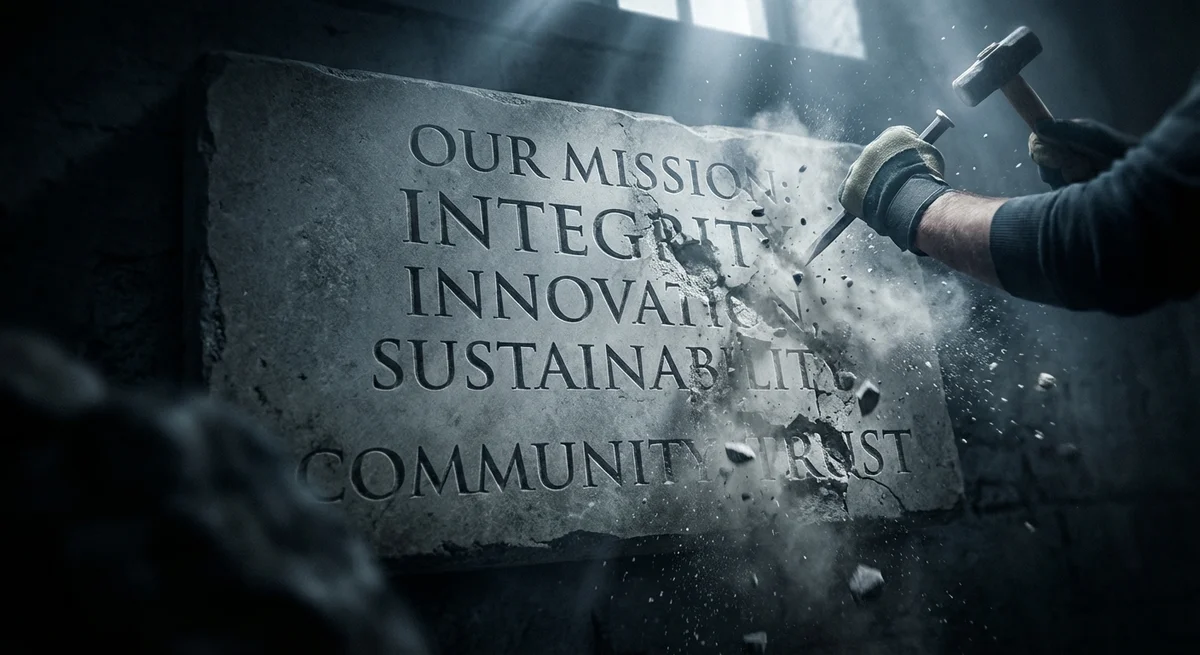
When the company building the most powerful AI systems on the planet quietly strikes the words about safety and the benefit of humanity from its mission, that's not an editorial tweak. It's a manifesto.
OpenAI has updated the wording of its corporate mission, and careful observers — first among them the Chinese outlet Jiqizhixin (机器之心) — noticed that two key elements have vanished from the text. First, the famous promise to build artificial general intelligence (AGI) that will "benefit all of humanity" is gone. Second, the mission no longer explicitly mentions a commitment to safety, which had been the company's calling card since its founding in 2015. The changes came with no press release and no public explanation — just new text on the website in place of the old.
To grasp the scale of this shift, it helps to remember where OpenAI came from. Sam Altman, Elon Musk, and a group of researchers founded it as a nonprofit with a radically altruistic goal: to make sure superpowerful AI would serve all people, not a handful of corporations. Safety sat at the center of everything. OpenAI cast itself as a counterweight to the AI arms race, an organization that would rather give up profit than release a dangerous technology. That mission drew the world's best researchers, gave the company moral authority and, just as importantly, public trust.
But over the past two years, OpenAI has gone through what many critics call a metamorphosis. The company has effectively stopped being a nonprofit: first came a "capped-profit" structure, then talk of a full reorganization into a for-profit corporation. Its valuation soared into the hundreds of billions of dollars. Key safety figures left. Ilya Sutskever, co-founder and chief scientist, departed after the dramatic conflict over Altman's firing and return. Jan Leike, who led the Superalignment team — a dedicated unit for ensuring the safety of superintelligent AI — left for Anthropic, saying publicly that at OpenAI "safety culture has taken a backseat to product culture." The Superalignment team was effectively disbanded.
Against this backdrop, the quiet edit to the mission looks less like an accident and more like a formalization of what had already happened in practice. Today's OpenAI ships products at breakneck speed, competes with Google, Anthropic, and Meta for market share, raises money on terms unthinkable for a nonprofit, and looks less and less like a research lab concerned with humanity's fate.
The company's defenders may counter that a mission is just words, and that real safety work continues internally. And indeed, OpenAI still publishes model testing reports, runs red-teaming, and formally follows safety protocols. But the words in a mission are not just words. They are a public commitment, a legal and cultural reference point for employees, regulators, and society. When a company removes safety from its mission, it sends a signal — both internally and externally — that its priorities have shifted.
For the industry, this sets a troubling precedent. OpenAI long served as a moral compass — imperfect, contradictory, but a compass nonetheless. If even OpenAI is abandoning the language of responsibility, what can we expect from everyone else? Anthropic, which builds its identity around safety, may gain in the short term by attracting disillusioned researchers and partners. But in the long run, a weaker safety norm at the market leader lowers the bar for everyone.
Regulators can't ignore this signal either. In Europe, the AI Act is already taking effect; in the US, the administration wavers between supporting innovation and controlling risk; China is building its own regulatory system. When the world's largest AI developer shows that safety is a variable rather than a constant, the case for strict external regulation gets considerably stronger.
Ultimately, OpenAI's story is about good intentions colliding with the realities of venture capital, market competition, and human ambition. A company created to save humanity from dangerous AI is increasingly becoming the very player it promised to protect us from. And the quiet disappearance of safety language from its mission is not the start of that transformation. It's the official acknowledgment of it.
*Meta is designated an extremist organization and banned in the Russian Federation.
- Nov 2, 2026Meta's Muse assistant keeps dossiers on loved ones and gets root on Ubuntu by default
- Nov 1, 2026Local models lose to Opus and Codex: 0.21 on a MacBook versus 1.00 for Codex
- Nov 1, 2026Kimi scores 96.2% on a 1C database analytics test and emerges as a fallback if Claude access is blocked
- Nov 1, 2026OpenAI Rewrites GPT Behavior Rules: Five Values and a Chain of Command
Test Frontier LLMs & Autonomous Agents in One Workspace
Run Claude Opus 5.5, GPT-6, Gemini 3.1, and DeepSeek side-by-side in Nomad AI (nomadnet.ai) — unified model routing, deep research, and multimodal workflows under one subscription.
The AI world, distilled — once a week
Seven stories that actually mattered, hand-picked. No noise, no reposts, no press releases.
Done! Check your inbox for a confirmation.