AI will replace tasks, not people, say startup CEOs
At Web Summit Qatar, the heads of the startups Read AI and Lucidya shared their view of the labor market in the age of AI. In their opinion, artificial intelligence will automate individual tasks and processes, but will not push employees out wholesale. Technology changes what a job consists of rather than making people redundant. That is the position of executives whose own companies build AI tools for business.
AI-processed from TechCrunch; edited by Hamidun News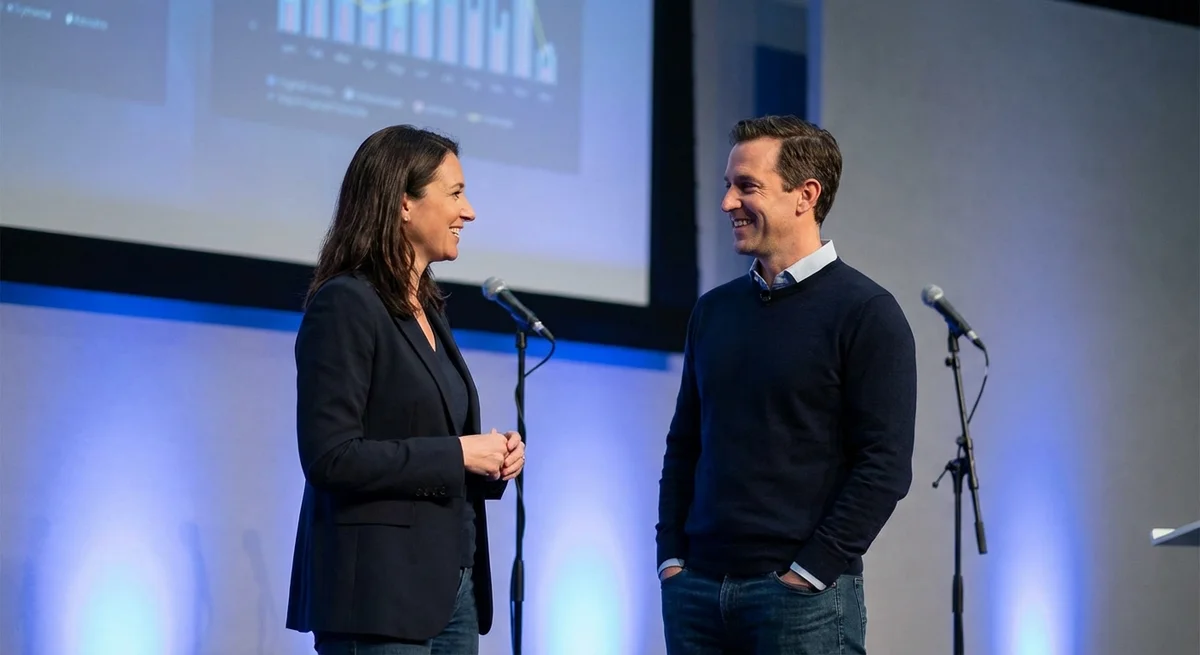
While the public debate about artificial intelligence increasingly slides into apocalyptic scenarios of mass layoffs, the founders of companies that build these technologies hold a far more measured view. At the Web Summit Qatar conference, the heads of the startups Read AI and Lucidya told TechCrunch that AI will displace specific tasks, not living employees. This is not just optimistic PR: the view reflects an understanding of how AI tools are actually adopted in everyday workflows.
The fear that machines will take people's places is not new: it has accompanied every major technological wave, from industrial automation to the spread of personal computers. Yet economic history shows the same pattern again and again: technology changes the structure of employment but does not zero out the need for human labor as such. The current wave of generative AI is unfolding faster than earlier ones, which is what feeds the anxiety. That is exactly why the words of people who see from the inside how companies really use AI deserve particular attention.
Read AI analyzes meetings, calls and correspondence, turning unstructured corporate communication into structured data and insights. Lucidya specializes in customer experience analytics for the Arabic-speaking market, a niche where understanding cultural and linguistic context is critical. Both products automate quite specific, measurable tasks: summarizing meetings, processing feedback, tracking the tone of messages. And both CEOs observe the same effect among their customers: time is freed up, but headcount is not cut.
The difference between "replacing a task" and "replacing an employee" may seem like wordplay, but in practice it is a fundamental difference in the logic of transformation. When an accountant stops reconciling spreadsheets by hand because an algorithm does it, he does not become redundant. He shifts to interpreting results, handling exceptions and communicating with colleagues. The routine part of his function is automated, but the function as a whole becomes more complex and demands more judgment, not less. This is the mechanism the leaders of both startups insist on: AI takes over execution, leaving thinking and decision-making to the human.
This position is also supported by broader labor market data. Companies that actively adopt AI tools more often report productivity gains than mass layoffs. McKinsey, Accenture and several other consulting giants record a shift in job roles, not their disappearance. At the same time, the most vulnerable positions are indeed those made up almost entirely of repeatable, templated operations. But even here it is more a matter of rethinking the role than abolishing it, provided that companies and workers themselves have the will and the resources to do so.
It is important to understand the context in which these statements are made. Web Summit Qatar is a venue where startups, investors and corporations build a narrative around their products. Founders of AI companies have an obvious interest in reducing public resistance to the technology. That does not make their words false, but it requires keeping this context in mind. The real test of the thesis "AI replaces tasks, not people" takes place not on conference panels but in how companies manage the transition period: whether they invest in retraining, whether they rebuild processes with the human factor in mind, or whether they simply cut the payroll under cover of technological progress.
Nevertheless, the framework offered by the CEOs of Read AI and Lucidya is productive in itself. Instead of the binary question "AI or people?", it poses a more useful one: which tasks should be handed to the machine, and what should people do with the freed-up capacity? The answer is not technical but managerial and cultural. And how businesses, politicians and workers answer it over the next few years will determine whether the current AI wave becomes a story about unlocking human potential or simply another tool for cutting costs.
- Oct 28, 2026Anthropic reveals how it builds Claude with Claude: the brain separate from the hands
- Oct 28, 2026Bayer Launches Multi-Agent Engine on AgentCore: 80% of Questions Handled Without Engineers
- Oct 28, 2026Liquid AI releases LFM2.5-24B-A2B: an agent model with 2B active parameters
- Oct 28, 2026AgentOrch: Pre-Planned AI Agents Now Trail Step-by-Step Execution by Just 8.5 Points
Ship AI Faster with Founders, Engineers & Weekly Architecture Reviews
Inside Vibe Club (hamidun.com/club) — weekly live masterminds with Zhemal Khamidun, Tech Radar, full LMS access, and 370+ production Claude Code skills.
The AI world, distilled — once a week
Seven stories that actually mattered, hand-picked. No noise, no reposts, no press releases.
Done! Check your inbox for a confirmation.