Schneider Electric: AI can save energy as well as consume it
Schneider Electric CEO Olivier Blum says artificial intelligence has enormous potential to save electricity, even though it is itself one of the main drivers of growth in global energy consumption. According to the head of the French industrial giant, AI systems can optimize power distribution, building management and industrial processes, offsetting their own consumption. The statement comes amid a global debate over how data centers are straining power grids around the world.
AI-processed from Bloomberg Tech; edited by Hamidun News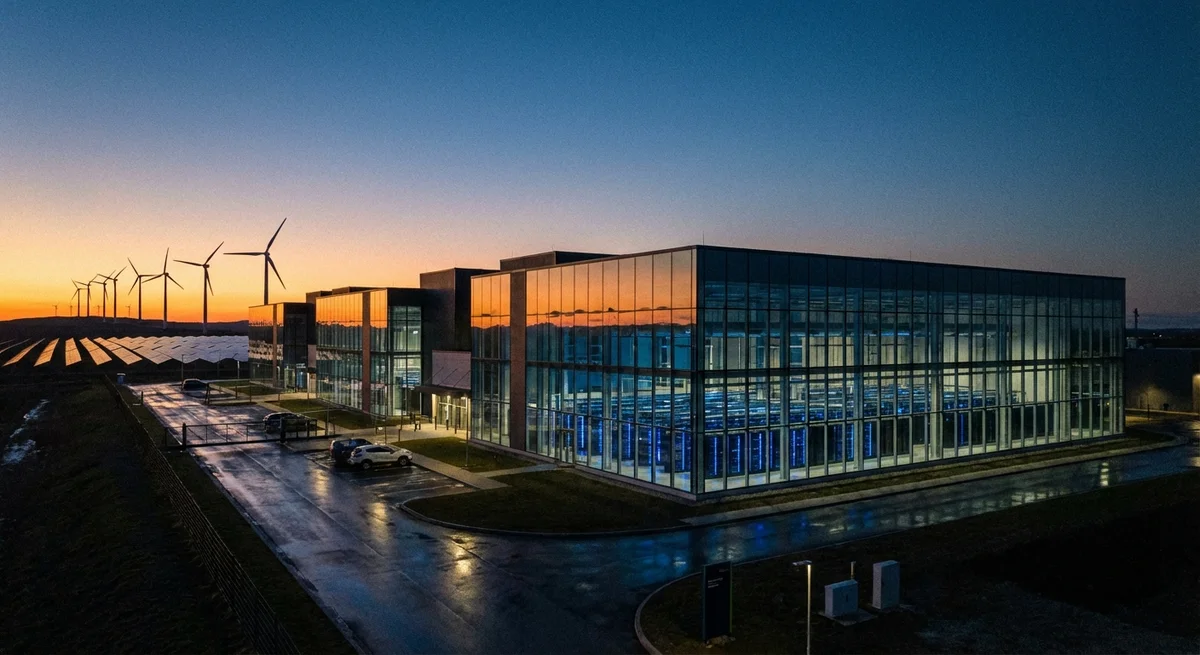
Artificial intelligence is devouring electricity on an unprecedented scale, and it may also become the most powerful energy-saving tool in history. That is the thesis put forward by Schneider Electric CEO Olivier Blum, and this paradox arguably holds the central energy storyline of the coming decade.
Schneider Electric is not just a large company. It is a French industrial giant with revenue of more than 35 billion euros and a dominant position in power management and industrial automation. When the head of such a corporation talks about AI's energy potential, it is worth listening: Schneider Electric supplies equipment and software for data centers, industrial plants and commercial buildings around the world. The company sees the situation from the inside, and from both sides of the equation.
The context of Blum's statement is hard to overstate. Over the past two years, global data center energy consumption has grown several-fold, fueled by the generative AI boom. By various estimates, global data center electricity consumption could reach 1,000–1,500 terawatt-hours a year by 2028, comparable to the consumption of all of Japan. Hyperscalers such as Microsoft, Google and Amazon are buying up nuclear plant capacity, investing in nuclear fusion and building solar farms across thousands of hectares. Powering AI has gone from an engineering problem to a geopolitical factor.
Against this backdrop, Blum suggests looking at the situation from a different angle. Yes, AI consumes huge amounts of energy. But the same technologies can radically optimize energy use in buildings, industrial facilities and entire power grids. He is not talking about theoretical models but about concrete applications: intelligent climate control systems in buildings, predictive maintenance of power grids, real-time load optimization at transformer substations, and balancing supply and demand in power systems with a high share of renewable sources. Schneider Electric is already deploying such solutions, and the results are impressive: in some projects, electricity savings reach 20–40 percent.
It is important to grasp the scale here. Buildings consume about 30 percent of all the world's electricity, and industry another 40 percent or so. If AI can cut that consumption by even 10–15 percent, the savings would many times over exceed all the electricity that data centers use. In effect, Blum paints a picture in which AI does not merely "pay back" its own energy costs but creates a net positive effect for the global energy system. This is a fundamentally different narrative from the alarmist forecasts that have dominated the media space over the past year.
That said, skeptics rightly note that the head of Schneider Electric has an obvious commercial interest in promoting this narrative. The company actively sells "smart" energy management solutions, and rising demand for AI optimization directly increases its revenue. Still, independent research backs Blum's position. In its latest report, the International Energy Agency stated that digitalization and intelligent management could reduce global energy consumption by 10 percent by 2030, provided there are targeted investments and sound regulation.
The topic is especially relevant for the Russian market. The energy intensity of the Russian economy remains one of the highest among developed countries, and the potential for AI optimization in industry and housing and utilities is practically untapped. At the same time, the build-out of Russia's own AI infrastructure is already putting additional load on the power system. Schneider Electric's experience shows that these two processes do not necessarily conflict: with the right approach, AI can both grow and help save resources.
Blum's statement marks an important shift in the debate over the energy footprint of artificial intelligence. The conversation is gradually moving from simply counting the megawatts that data centers draw to a more complex and more honest calculation: how much energy AI helps save at the other end of the chain. And if that arithmetic proves correct, the paradox of the energy-hungry, energy-saving AI could become one of the defining stories of the technology decade.
- Nov 2, 2026LLM Agent Built a Gearbox in KOMPAS-3D, but Scored Only 50 out of 100 on the Specification
- Nov 2, 2026Karpathy Built HackerTube, a Catalog of 6,454 Videos, in Two Hours with Claude Code
- Nov 2, 2026Я устроил допрос 6 нейросетям про себя и своё ИП глазами заказчика: как ИИ выдумал мне бизнес на Amazon в США и слил смету из закрытого КП
- Nov 2, 2026NVIDIA releases Nemotron 3.5 Bolt E4B: 4 GB and 133 tokens per second on an RTX 5070
Ship AI Faster with Founders, Engineers & Weekly Architecture Reviews
Inside Vibe Club (hamidun.com/club) — weekly live masterminds with Zhemal Khamidun, Tech Radar, full LMS access, and 370+ production Claude Code skills.
The AI world, distilled — once a week
Seven stories that actually mattered, hand-picked. No noise, no reposts, no press releases.
Done! Check your inbox for a confirmation.