Google expands its AI ecosystem: takeaways from AI Impact Summit 2026
At AI Impact Summit 2026, Google announced a series of strategic partnerships and financial commitments aimed at developing AI infrastructure. The main focus is on integrating neural-network solutions into the real economy and supporting promising startups. The initiatives confirm the company's push to strengthen its leadership by building a broad ecosystem that brings together software developers and hardware makers. The investments are meant to scale the use of AI and make the technology more accessible to enterprise customers worldwide.
AI-processed from Google AI Blog; edited by Hamidun News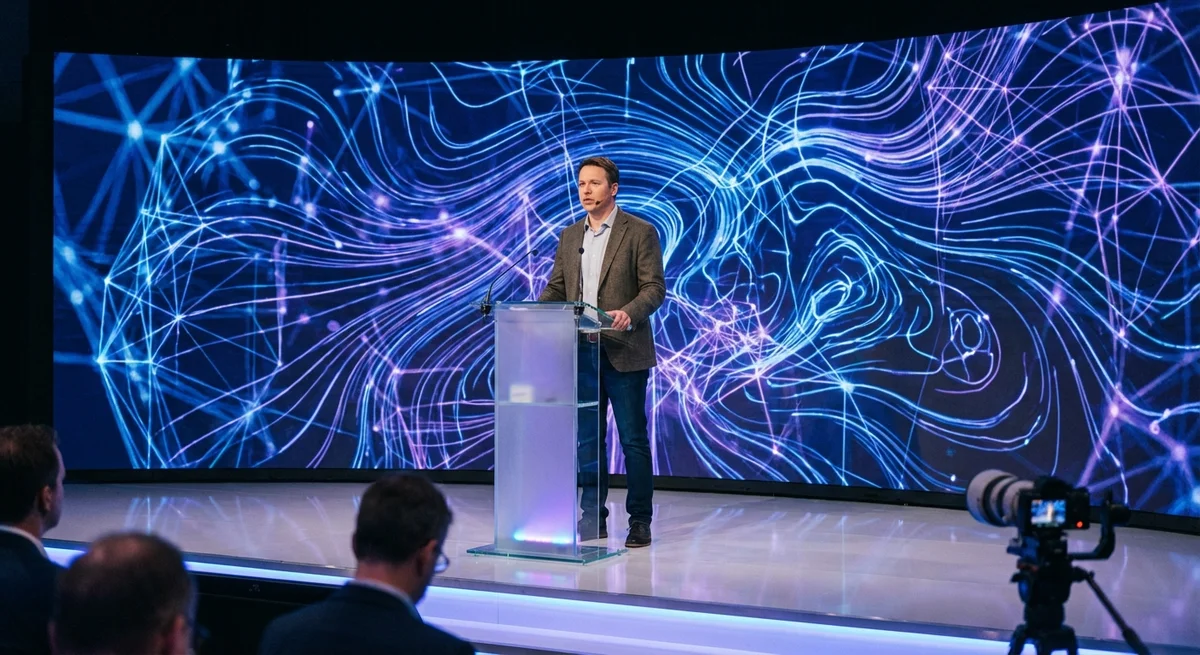
Google expands its AI ecosystem: takeaways from AI Impact Summit 2026
At the recent AI Impact Summit 2026, Google presented an ambitious strategy to expand its artificial intelligence ecosystem, announcing a number of key partnerships and substantial financial commitments. The initiatives, aimed at developing foundational AI infrastructure, show that the company wants not only to reinforce its leadership in advanced technology but also to ensure broad adoption in the real economy. The main emphasis was on integrating neural-network solutions into industrial processes, scientific research and everyday life, and on supporting promising startups capable of offering innovative approaches to applying AI.
AI Impact Summit 2026 served as the venue for announcing Google's strategic alliances with leading hardware manufacturers and software developers. These partnerships are meant to create synergy between hardware capabilities and intelligent algorithms, which should speed up the development and deployment of new AI solutions. Google's announced investments work on several levels: a significant share of the funds will go to research and development, including fundamental science, where AI opens up new horizons. Another important part of the budget will be allocated to scaling existing AI infrastructure, including cloud services and specialized computing capacity, to meet growing demand from enterprise customers. Particular attention goes to supporting startups whose breakthrough ideas could transform entire industries.
A closer look at the announced initiatives shows that Google is betting on a comprehensive approach. The company intends not merely to provide access to its AI models but to take an active part in building a cohesive ecosystem. That includes developing standards, creating collaboration platforms and training specialists.
For example, the announced partnerships with chipmakers aim to optimize AI algorithms at the hardware level, which promises higher performance and lower energy consumption. In parallel, cooperation with software developers is meant to simplify integrating AI into existing business processes, making it accessible even to companies with limited technical resources. Financial support for startups will be delivered through specialized funds and accelerator programs designed to identify and develop the most promising AI projects.
The consequences of these moves for the global economy and the technology landscape are hard to overstate. Expanding Google's AI ecosystem may accelerate digital transformation in many sectors, from healthcare and finance to manufacturing and agriculture. Wider access to advanced AI technology for enterprise customers around the world will allow them to improve their competitiveness, optimize operating costs and create new products and services. Supporting startups also helps build a healthy competitive environment and stimulates innovation, which ultimately benefits society as a whole. However, like any large-scale technological shift, it also raises questions about ethics, data security and the potential impact on the labor market, which will require careful consideration and regulation.
In conclusion, AI Impact Summit 2026 showed that Google is taking a proactive position in AI development and is trying to build a solid, all-encompassing ecosystem. The announced partnerships and investments are a strategic step toward democratizing AI and integrating it into the real economy. The success of these initiatives will depend on the company's ability to manage a complex network of relationships effectively, and on how quickly and efficiently the business community can adapt to the new opportunities that artificial intelligence opens up.
- Nov 2, 2026Bun creator uses Claude Code to port 750K lines from Zig to Rust in 11 days
- Nov 2, 2026The Verge reviewer builds a $50 Meta Muse Charm alternative with Claude Code
- Nov 1, 202616 models tested on 7 search tools: Exa averaged 10.5 out of 14, SearXNG about 3
- Nov 1, 2026Google's StreamVibe video agent beats other models by 10.7% on response timing and quality
Ship AI Faster with Founders, Engineers & Weekly Architecture Reviews
Inside Vibe Club (hamidun.com/club) — weekly live masterminds with Zhemal Khamidun, Tech Radar, full LMS access, and 370+ production Claude Code skills.
The AI world, distilled — once a week
Seven stories that actually mattered, hand-picked. No noise, no reposts, no press releases.
Done! Check your inbox for a confirmation.