Nvidia fully exits Arm stake years after failed takeover bid
Nvidia has sold off its entire stake in Arm Holdings Plc. The move formally ends a relationship that began five years ago, when Nvidia tried to buy the British chip designer for $40 billion. Regulators around the world blocked that deal over concerns that it would concentrate too much control over the semiconductor market. Nvidia has now fully traded its acquisition ambitions for a strategic partnership. The share sale signals that the company feels secure as the leader in AI accelerators and does not need direct control over the Arm architecture to keep its dominant position in the industry.
AI-processed from Bloomberg Tech; edited by Hamidun News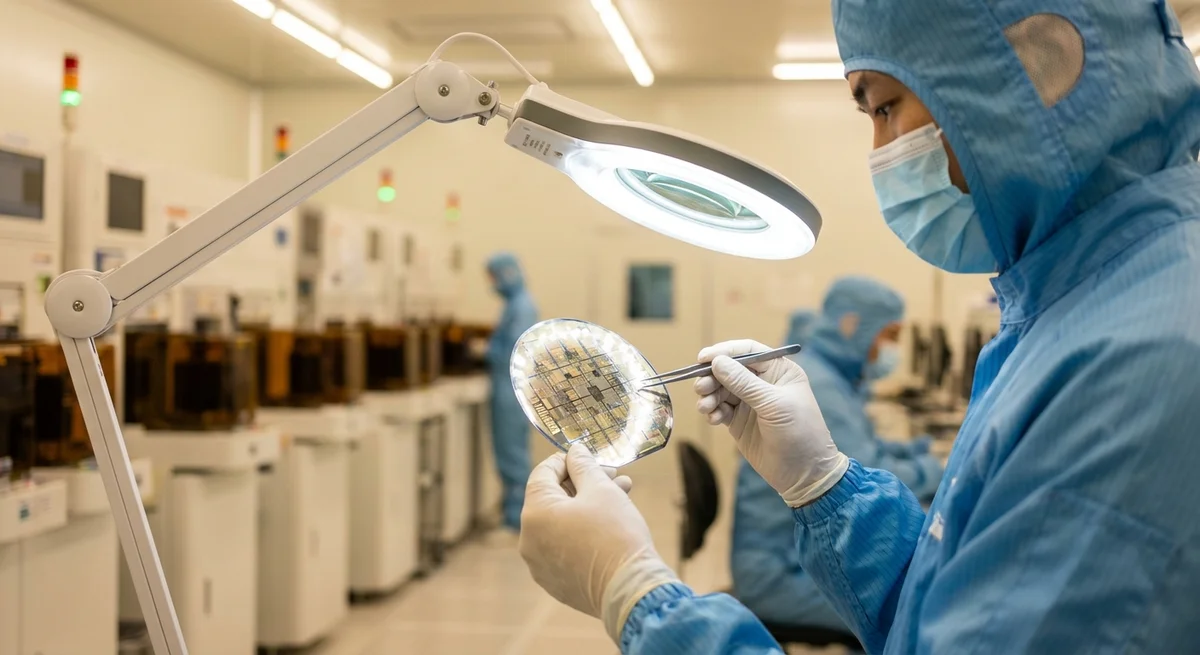
Nvidia fully exits Arm stake years after failed takeover bid
Nvidia has sold off its entire stake in Arm Holdings Plc. The move formally ends a relationship that began five years ago, when Nvidia tried to buy the British chip designer for $40 billion. Regulators around the world blocked that deal over concerns that it would concentrate too much control over the semiconductor market. Nvidia has now fully traded its acquisition ambitions for a strategic partnership. The share sale signals that the company feels secure as the leader in AI accelerators and does not need direct control over the Arm architecture to keep its dominant position in the industry.
The Nvidia–Arm saga is a clear example of how ambitious plans in high tech can run into regulatory barriers and strategic rethinking. Five years ago, in 2020, Nvidia announced plans to buy Arm Holdings from Japan's SoftBank for a hefty $40 billion. The deal promised to create a semiconductor powerhouse, combining Nvidia's lead in GPUs and AI with Arm's dominant architecture, which powers most mobile devices and is making growing inroads into servers and the automotive industry.
Those plans quickly met stiff resistance from regulators worldwide. Antitrust authorities in the US, the UK, the European Union, and China raised concerns that the merger could put too much power in the hands of a single company, potentially stifling competition and innovation in an industry critical to the global economy. After lengthy reviews and consultations, the deal was deemed unworkable, forcing Nvidia to abandon the acquisition. It was a significant disappointment for Nvidia, but it also opened the door to a strategic rethink.
Nvidia's decision to sell its entire Arm Holdings stake marks a final farewell to the idea of directly controlling the British company. Instead, Nvidia appears set to focus on building out the strategic partnership the two companies already have. That model lets Nvidia use the Arm architecture in its products while Arm continues to operate independently and license its technology to a broad range of customers. Given the regulatory complexity and market dynamics, this is likely a more flexible and sustainable approach over the long term.
The move could have several implications for Nvidia. First, it confirms the company's confidence in its position as the leader in AI accelerators. Nvidia keeps growing its market share and continues to dominate a segment where demand for its products is rising exponentially. The company apparently believes it does not need direct control over Arm to stay on top; effective collaboration is enough. Second, exiting the Arm stake frees up significant capital that Nvidia can put toward further R&D or other strategic investments. Third, it removes potential regulatory risks tied to holding a stake in a company that is a key supplier to many of Nvidia's competitors.
In short, Nvidia's final exit from Arm Holdings Plc is not an admission of defeat but a strategic move shaped by a changed market and regulatory environment. The company is showing it can adapt and find new paths to growth by focusing on its strengths and deepening partnerships rather than pursuing full control. The decision reflects Nvidia's maturity as a global player and its confidence in a future built on innovation and strategic collaboration.
- Nov 2, 2026TensorFold 1.2.0 boosts Qwen3.8-27B throughput on M3 Ultra by 44.2% at 16 streams
- Nov 1, 2026Local models lose to Opus and Codex: 0.21 on a MacBook versus 1.00 for Codex
- Nov 1, 2026Habr author fine-tunes YOLOv8l on dental X-rays and pushes mAP50 to 0.642
- Nov 1, 2026Voice bots built on LLMs turn to Jev, a fast classifier, for decisions in 200–500 ms
Ship AI Faster with Founders, Engineers & Weekly Architecture Reviews
Inside Vibe Club (hamidun.com/club) — weekly live masterminds with Zhemal Khamidun, Tech Radar, full LMS access, and 370+ production Claude Code skills.
The AI world, distilled — once a week
Seven stories that actually mattered, hand-picked. No noise, no reposts, no press releases.
Done! Check your inbox for a confirmation.