Modi Uses AI Summit to Reaffirm India's Global Ambitions
Indian Prime Minister Narendra Modi used an international artificial intelligence summit as a platform to showcase the country's technological ambitions. After a year marked by geopolitical challenges and economic difficulties, India is trying to secure its status as a key global player. Modi's strategy aims to attract investment and turn the country into a hub for developing innovative AI solutions. Facing tough competition from leading powers, India is betting on its human resources and the scalability of its market. Experts see the move as an attempt to restore investor confidence and strengthen the country's position on the world stage.
AI-processed from Bloomberg Tech; edited by Hamidun News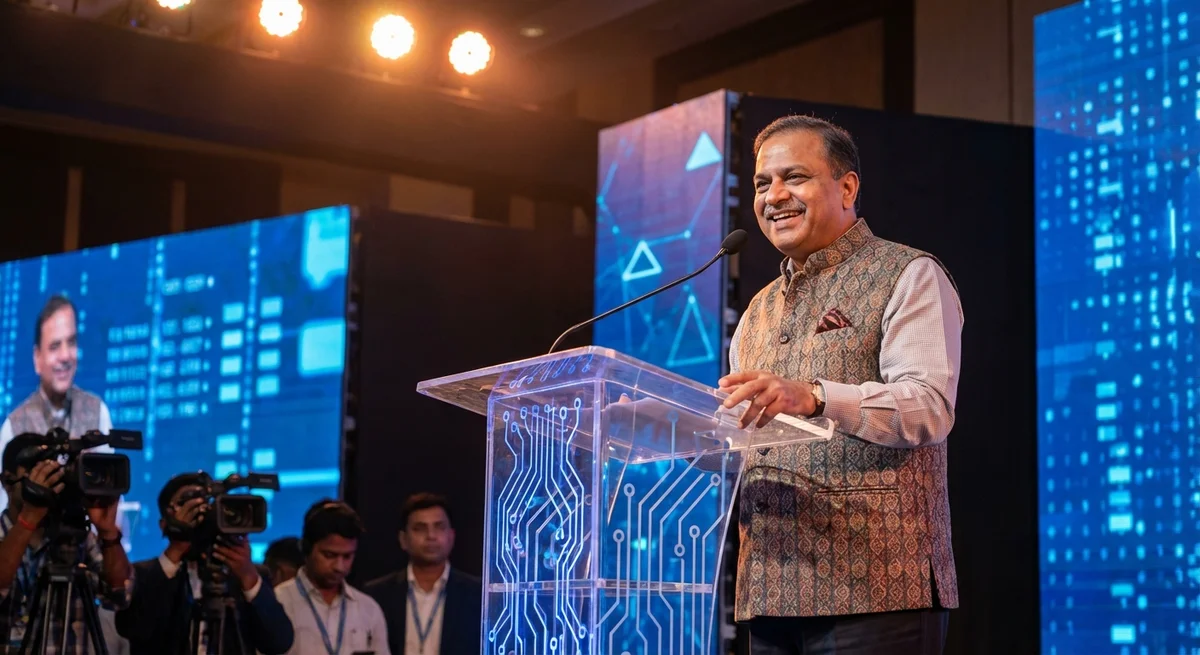
Modi Uses AI Summit to Reaffirm India's Global Ambitions
Indian Prime Minister Narendra Modi, looking to bolster his country's standing on the world stage after a year marked by geopolitical challenges and economic difficulties, used an international artificial intelligence summit as an important platform to showcase India's technological ambitions. Amid global uncertainty and growing competition, the summit gave Modi a chance not only to present India as an AI leader, but also to draw badly needed investment by positioning the country as a future center for developing advanced, innovative solutions.
The run-up to the summit was not easy for India. Just six months ago, Modi was at the center of tense diplomatic battles, including verbal spats with US President Donald Trump, and was trying to regain lost balance in relations with Pakistan after an armed conflict. The country's economy, meanwhile, faced questions about its growth prospects, which called for decisive action to restore the confidence of both domestic and foreign investors. In this context, the focus on the fast-growing artificial intelligence sector looks like a strategic move meant to redirect global attention to India's strengths and potential.
The strategy Modi presented at the summit rests on two key factors: India's vast human capital and the scalability of its domestic market. The country has one of the youngest and largest populations in the world, a significant share of which has the high level of education and the technical skills needed for high-tech work. India wants to use this demographic dividend to become a global center for outsourcing and AI development, competing with giants such as China and the US.
The emphasis is on building a favorable ecosystem for startups, attracting foreign investment into research centers, and developing national infrastructure to support AI projects. The government promises to simplify regulatory procedures and offer tax breaks to companies investing in this promising field.
The consequences of this approach could be far-reaching. A successful ambitious AI program may not only speed up India's economic growth but also strengthen its geopolitical influence. India could become not just a consumer but an active creator of global technology standards. It would also let the country tackle domestic problems such as improving healthcare, education and governance with advanced technology. But significant obstacles lie ahead. India will have to contend with tough competition from other countries that already have substantial AI know-how, and overcome internal problems tied to infrastructure, data access and the ethics of AI use. Attracting and retaining highly qualified specialists amid the global "talent hunt" will also remain a serious challenge.
The AI summit thus became for Prime Minister Modi more than a venue for discussing technology trends: it was a strategic tool for reaffirming India's global ambitions. As the country seeks to restore investor confidence and declare itself a key player of the 21st century, the bet on AI looks like a calculated move to leverage its strengths and shape a future in which India plays a leading role in the global technology landscape. The initiative's success will depend on the country's ability to carry out its plans effectively and overcome the challenges that remain.
- Oct 31, 2026Author puts his script before an AI jury: the verdict cost 850 thousand tokens
- Oct 30, 2026Agent traffic on Zocdoc is up 30x since July, and ChatGPT faces two health lawsuits
- Oct 29, 2026OvisOCR3: an 0.8B-parameter model that reads documents better than specialized systems
- Oct 29, 2026Tencent releases Youtu-Parsing-Omni: one model parses documents, audio and video
Test Frontier LLMs & Autonomous Agents in One Workspace
Run Claude Opus 5.5, GPT-6, Gemini 3.1, and DeepSeek side-by-side in Nomad AI (nomadnet.ai) — unified model routing, deep research, and multimodal workflows under one subscription.
The AI world, distilled — once a week
Seven stories that actually mattered, hand-picked. No noise, no reposts, no press releases.
Done! Check your inbox for a confirmation.