The AGI Myth: Why Universal Superintelligence Remains an Unreachable Dream
The concept of strong artificial intelligence (AGI), a system able to solve any task and make scientific discoveries, has become the central ideology for industry leaders such as OpenAI and Tesla. But the ambitious promises of Sam Altman and Elon Musk collide with the hard reality of technical limits. Critics argue that today's neural network architectures lack real understanding of context and genuine autonomy. Instead of chasing a "pill for all problems," the industry will probably have to focus on building better but narrowly specialized models, capable of deep knowledge synthesis without pretending to human consciousness.
AI-processed from Habr AI; edited by Hamidun News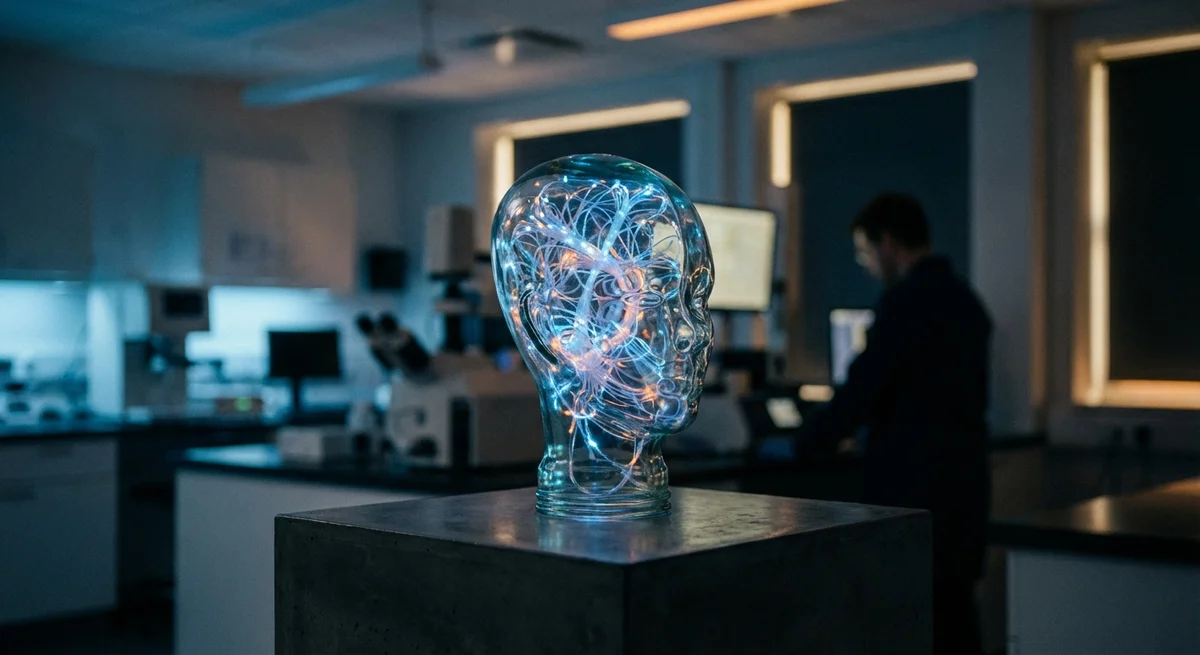
The AGI Myth: Why Universal Superintelligence Remains an Unreachable Dream
In recent years, the concept of strong artificial intelligence, or AGI (Artificial General Intelligence), has taken firm root in the public mind and become something of a mantra for technology leaders such as OpenAI and Tesla. Visionaries like Sam Altman and Elon Musk paint a future in which AGI can solve any task, make scientific breakthroughs and serve as a universal tool for global problems. Yet behind these ambitious promises lies a complicated reality of technical limitations, which leads many experts to doubt that this utopian goal is achievable in the foreseeable future.
The idea of AGI grew out of the exponential growth in computing power and the progress of machine learning algorithms, especially deep neural networks. These systems show impressive abilities in narrow domains, from image recognition and language translation to playing complex strategy games. The success of models such as GPT-3 and its successors fed the expectation that the next logical step is a universal intelligence comparable to or surpassing the human one on every measure. AGI's supporters see it as a "pill for all problems" that could speed up scientific progress, optimize the economy and even help address existential threats to humanity.
Critics, including many respected AI researchers, point to fundamental flaws in current architectures. Their main argument is that today's neural networks, despite their complexity, lack true understanding of context, of cause and effect, and the common sense humans have. They are powerful tools for statistical matching and generation, but their "knowledge" is often shallow and brittle.
Models can flawlessly imitate human speech or generate plausible text, but that does not mean they understand what is said or think autonomously. The absence of genuine autonomy and of the ability to learn independently in the broad sense casts doubt on whether AGI can be reached by simply scaling existing technology. Rather than building a universal superintelligence, which many consider more a philosophical abstraction than a technical goal, the industry will probably have to focus on developing better but still narrowly specialized models.
The consequences of this rethink could be significant. Instead of chasing the unreachable ideal of AGI, researchers and engineers can direct their efforts toward systems capable of deep knowledge synthesis in specific fields. Such models could become powerful assistants for scientists, doctors and engineers, automating routine tasks, analyzing huge volumes of data and proposing new hypotheses. This path, though less grandiose in its claims, appears far more realistic and potentially useful. Focusing on "strong narrow" models would avoid the ethical dilemmas of creating superintelligence and deliver tangible benefits to society in the coming years, without claiming to imitate human consciousness.
Thus the myth of AGI as a cure-all may need to be revisited. For now, universal superintelligence remains closer to science fiction than to a real prospect. Rather than striving to create artificial consciousness, the AI industry will probably move toward ever more powerful and specialized tools capable of deep analysis and synthesis of information. This pragmatic approach, grounded in real technical capabilities, may prove a far more fruitful path to progress than blind faith in the unreachable dream of superintelligence.
- Nov 2, 2026Meta's Muse assistant keeps dossiers on loved ones and gets root on Ubuntu by default
- Nov 1, 2026Local models lose to Opus and Codex: 0.21 on a MacBook versus 1.00 for Codex
- Nov 1, 2026Kimi scores 96.2% on a 1C database analytics test and emerges as a fallback if Claude access is blocked
- Nov 1, 2026OpenAI Rewrites GPT Behavior Rules: Five Values and a Chain of Command
Test Frontier LLMs & Autonomous Agents in One Workspace
Run Claude Opus 5.5, GPT-6, Gemini 3.1, and DeepSeek side-by-side in Nomad AI (nomadnet.ai) — unified model routing, deep research, and multimodal workflows under one subscription.
The AI world, distilled — once a week
Seven stories that actually mattered, hand-picked. No noise, no reposts, no press releases.
Done! Check your inbox for a confirmation.