Guangzhou Launches Investment Fund to Develop Its Semiconductor Industry
A new investment partnership, "Guangzhou Chantou Gongrong Dongjin," has been officially registered in Guangzhou with capital of 1 billion yuan. Its key participants include the Guangzhou Semiconductor Industry Development Fund and the investment arm of the bank ICBC. The new entity will focus on direct equity investment, asset management and support for venture projects. Its main priority will be microelectronics and integrated circuits. The move is part of China's broader strategy to achieve technological independence and stimulate innovation in critical industries through public-private financing.
AI-processed from 36Kr (36氪); edited by Hamidun News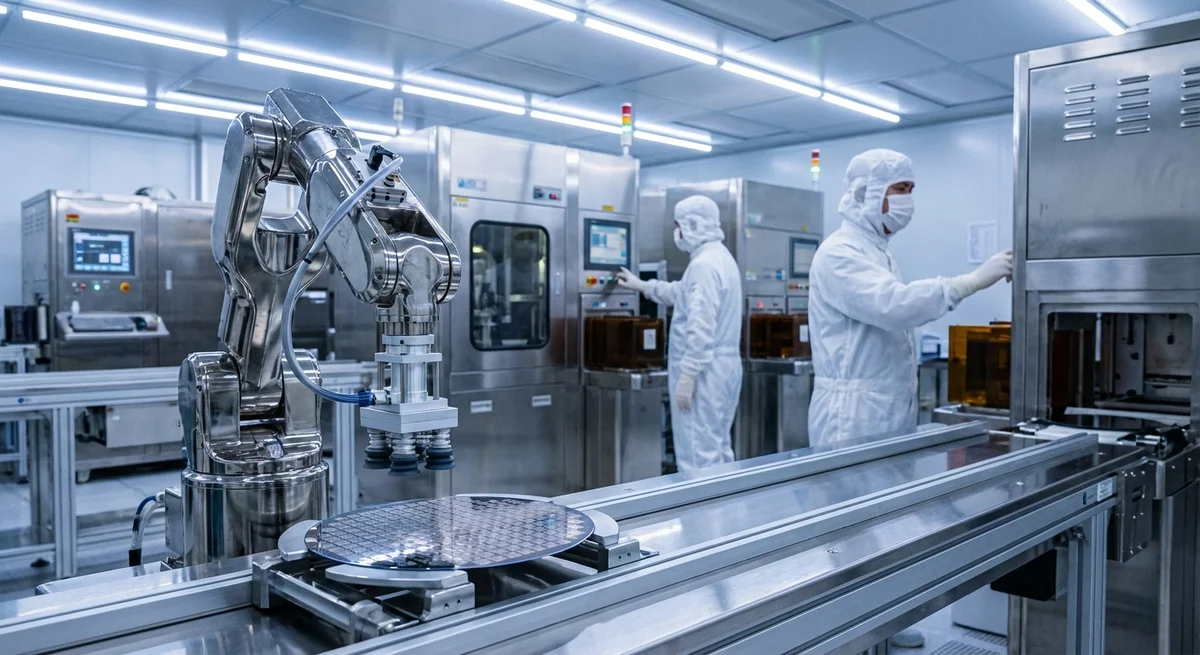
# Guangzhou Launches Investment Fund to Develop Its Semiconductor Industry
China is strengthening its position in the global semiconductor industry. A new investment partnership, "Guangzhou Chantou Gongrong Dongjin," has been officially registered in Guangzhou with capital of one billion yuan. The move reflects the state's consistent strategy of building a domestic base for producing critical electronic components. The founders include the Guangzhou Semiconductor Industry Development Fund and the investment arm of ICBC, the country's largest state-owned bank, which signals serious intent and the scale of the planned investments.
The background is directly tied to growing pressure from international sanctions on China's technology sector. After the US tightened export restrictions on advanced chips, Beijing stepped up its search for homegrown solutions. Guangzhou, one of China's largest technology hubs with well-developed electronics and information technology sectors, is becoming the centre of these ambitions. The new fund is expected to fit naturally into the city's existing ecosystem and to operate within national plans for self-sufficiency in microelectronics.
The partnership's structure covers several lines of work. The main emphasis is on direct equity investment in microelectronics and integrated circuit companies. In parallel, the fund will handle asset management and support venture projects, building an ecosystem for startups in this field. This integrated approach lets it do more than put money into existing companies: it can also help new players emerge on the market. One billion yuan is enough to invest in several promising projects or to take part in funding rounds of large enterprises.
ICBC's participation is critical to the initiative's success. The state bank has not only financial resources but also deep ties in political circles and an understanding of the central government's priorities. This ensures the fund's capital will be used in line with the national strategy and will receive policy-level support. The Guangzhou Semiconductor Industry Development Fund, in turn, brings specialized knowledge of the local market and existing companies, which is vital for sound investment decisions.
The fund's launch matters well beyond a single city. It is an element of a large-scale state policy aimed at technological independence. China understands that semiconductors underpin all modern electronics, from smartphones to military systems. Each such fund increases the capital available for investment in Chinese chipmakers and strengthens domestic players. At the same time, it stimulates innovation and creates competitive pressure on existing manufacturers, pushing them to develop faster.
For global electronics, this means a gradual reshuffling of production chains and supply sources. Strengthening China's semiconductor sector through such investments may, in the long term, reduce the region's dependence on foreign manufacturers and create alternative sources of critical components. Guangzhou, which is attracting ever more investment in this area, is gradually turning into a semiconductor industry centre with a full development and production cycle. This fund is one more brick in the wall of China's technological self-reliance.
- Oct 31, 2026Author puts his script before an AI jury: the verdict cost 850 thousand tokens
- Oct 30, 2026Agent traffic on Zocdoc is up 30x since July, and ChatGPT faces two health lawsuits
- Oct 29, 2026OvisOCR3: an 0.8B-parameter model that reads documents better than specialized systems
- Oct 29, 2026Tencent releases Youtu-Parsing-Omni: one model parses documents, audio and video
Ship AI Faster with Founders, Engineers & Weekly Architecture Reviews
Inside Vibe Club (hamidun.com/club) — weekly live masterminds with Zhemal Khamidun, Tech Radar, full LMS access, and 370+ production Claude Code skills.
The AI world, distilled — once a week
Seven stories that actually mattered, hand-picked. No noise, no reposts, no press releases.
Done! Check your inbox for a confirmation.