Amazon Uses Nova AI Models to Speed Up Launches of New Warehouses
Amazon has built its new multimodal Nova models, available through the Bedrock platform, into the process of preparing fulfillment centers. A computer vision system automatically recognizes and verifies the components of warehouse modules, which is critical before a new site goes live. The approach significantly cuts the time spent on manual inspection and minimizes the risk of errors when installing equipment. Using AI for operational readiness shows the company's push to fully automate its logistics infrastructure and make scaling its business more efficient.
AI-processed from AWS Machine Learning Blog; edited by Hamidun News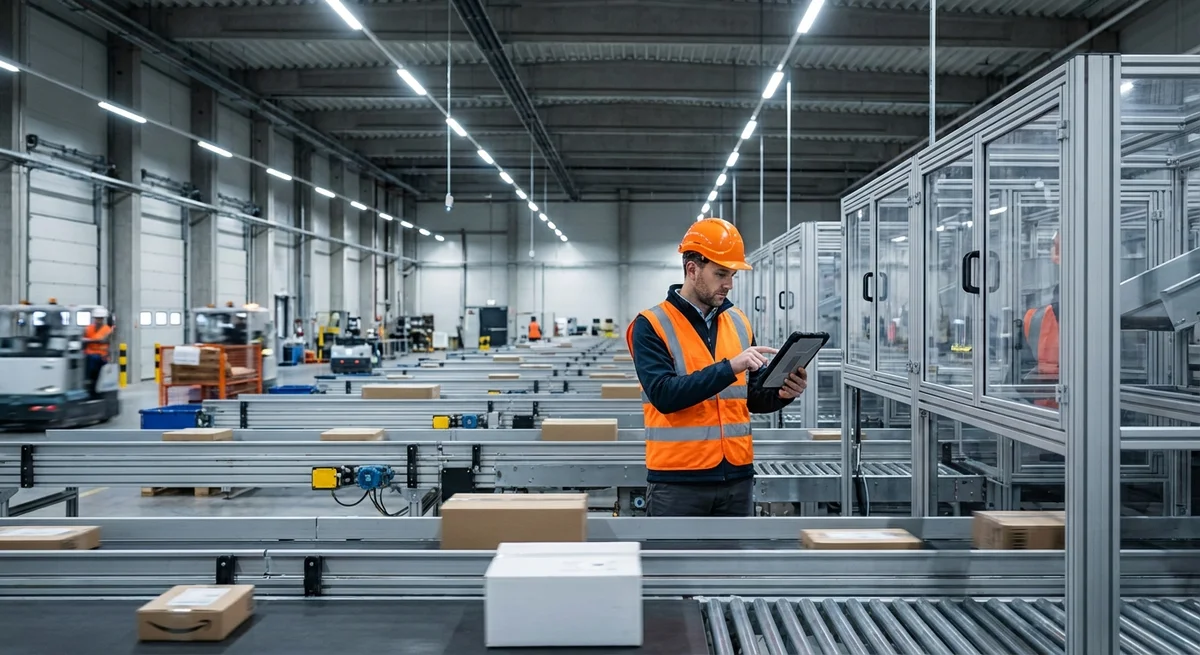
# Amazon Uses Nova AI Models to Speed Up Launches of New Warehouses
Amazon has found an unexpected use for its own computer vision models: they now check whether fulfillment centers are ready to operate. The company has built Nova, its new multimodal models available through the Bedrock platform, directly into the inspection of warehouse modules. Instead of workers walking the entire perimeter of a new center by hand and double-checking every component, an algorithm does it automatically, recognizing pieces of equipment in photographs and confirming that they match specifications. The result is substantial: less time spent on inspection and a near-total elimination of human error from the critical process of launching a new logistics site.
The development reveals a broader strategy behind Amazon's enormous warehouse network. The logistics giant, which runs hundreds of fulfillment centers worldwide, is literally putting up new facilities month after month. Each new center is a complex system of thousands of components: conveyors, sorting machines, storage systems, robotic manipulators. Before a center processes its first order, all of these elements must be installed correctly, tested and certified. The traditional process requires specialists who manually check each module against technical requirements. That is slow, expensive and error-prone, especially at Amazon's scale.
Nova changes this thanks to its multimodal capabilities. The model can process both images and text descriptions of components, so it does not merely see a part in a photo but can match it against the technical description in the documentation. The system runs photos of installed modules through the model and determines in real time whether all the necessary components are present, whether they are positioned correctly, and whether there are visible defects or signs of incorrect assembly. If the model detects a mismatch, the system flags it immediately and sends a notification to the relevant department. Human oversight remains, but only for critical cases rather than routine checks.
It is worth understanding why Amazon chose this approach right now. The company is actively expanding its logistics network, particularly given growing e-commerce volumes and consumer expectations for delivery speed. Every month of delay in launching a new center costs millions of dollars in lost throughput. Nova lets Amazon not only speed up the process but also improve its quality. Machine vision does not tire, does not get distracted, and checks absolutely everything within a given scope, without exceptions. That matters for operational reliability: any incorrectly installed part in a conveyor system can lead to costly downtime for the entire center.
Deploying Nova for operational readiness illustrates a broader industry trend: AI is moving from the category of fun experiments into critical operational technology. Amazon is not just testing the model on some marginal process; this is a central link in its logistics machine. If it works at Amazon's scale, it will set a new standard for the entire e-commerce and logistics industry. Competitors such as Walmart or Alibaba Group will soon realize they need something similar. Moreover, it shows that Amazon is integrating its own AI services back into its operations ever faster, creating a closed loop of efficiency gains.
Looking ahead, this technology is only a first step. Amazon will likely extend Nova to other aspects of operational readiness: checking packaging quality, monitoring on-site safety, analyzing system configurations. The company will gain a competitive advantage that will only grow with scale.
- Nov 2, 2026The Verge reviewer builds a $50 Meta Muse Charm alternative with Claude Code
- Oct 31, 2026Worldwide Express hands disputed invoices to AI agents and cuts unresolved disputes by 75%
- Oct 30, 2026AWS gives coding agents a live site preview straight from an isolated session
- Oct 30, 2026Agent traffic on Zocdoc is up 30x since July, and ChatGPT faces two health lawsuits
Test Frontier LLMs & Autonomous Agents in One Workspace
Run Claude Opus 5.5, GPT-6, Gemini 3.1, and DeepSeek side-by-side in Nomad AI (nomadnet.ai) — unified model routing, deep research, and multimodal workflows under one subscription.
The AI world, distilled — once a week
Seven stories that actually mattered, hand-picked. No noise, no reposts, no press releases.
Done! Check your inbox for a confirmation.