AI chip boom drives shortage of T-glass fiber; Nitto Boseki to raise prices
Booming demand for AI chips has created a shortage of T-glass fiber. Nitto Boseki plans to ramp up production by the end of this year and triple it by 2028. The company said, however, that even with the new lines it will not be able to meet demand, so it will raise prices. Citi analysts forecast an increase of 25% or more.
AI-processed from 36Kr (36氪); edited by Hamidun News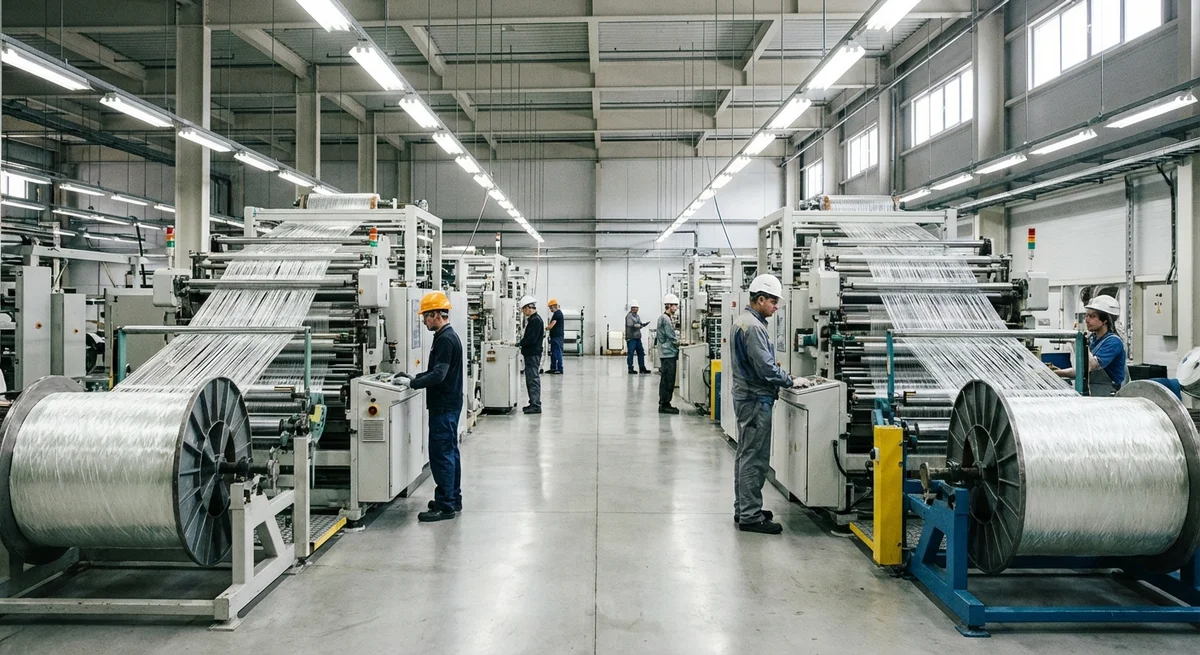
The explosive growth in demand for AI chips has had an unexpected side effect on the materials market: a shortage of T-glass fiber, a critical component in the printed circuit boards used in those chips. The largest supplier of the material, Japan's Nitto Boseki, has announced plans to boost production, but acknowledged that even these measures will not fully satisfy growing demand. As a result, the company plans to raise prices for its products this year.
T-type glass fiber is a specialized material used to make high-performance printed circuit boards, which go into servers, data centers and other hardware needed to run artificial intelligence. The rising popularity of generative AI models such as ChatGPT and DALL-E has sharply increased demand for these chips, and therefore for glass fiber. Current production capacity simply cannot cope with the surge.
Nitto Boseki plans to expand output gradually, starting at the end of this year, with the aim of tripling volumes by 2028 compared with 2025 levels. That will require significant investment in new equipment and the expansion of existing production lines. The company stresses, however, that even after the new capacity comes online, the gap between supply and demand will remain substantial.
Citigroup analysts forecast that T-glass fiber prices could rise by 25% or more. That will materially affect the cost of producing AI chips and, in turn, the final price of consumer electronics such as smartphones and laptops. Electronics makers will likely have to pass part of these costs on to consumers, which would push up prices on store shelves.
The price increase for glass fiber is just one example of how the rapid growth of the AI market is affecting the entire supply chain. Shortages of components and materials could become a serious obstacle to the industry's further development and slow the rollout of new technologies. Companies will need to adapt to the new conditions and look for ways to optimize production and cut costs.
In short, the shortage of T-glass fiber and the rise in its price stem from enormous demand for AI chips. The situation shows how interconnected different industries are and how the development of artificial intelligence affects the whole economy. Consumers should prepare for possible increases in electronics prices, and manufacturers should look for ways to solve the materials shortage.
- Nov 2, 2026Arca gives AI agents finance tasks lasting up to 10 days, but leaves the trades to humans
- Nov 2, 2026Meta's Muse assistant keeps dossiers on loved ones and gets root on Ubuntu by default
- Nov 1, 2026Local models lose to Opus and Codex: 0.21 on a MacBook versus 1.00 for Codex
- Nov 1, 2026Kimi scores 96.2% on a 1C database analytics test and emerges as a fallback if Claude access is blocked
Ship AI Faster with Founders, Engineers & Weekly Architecture Reviews
Inside Vibe Club (hamidun.com/club) — weekly live masterminds with Zhemal Khamidun, Tech Radar, full LMS access, and 370+ production Claude Code skills.
The AI world, distilled — once a week
Seven stories that actually mattered, hand-picked. No noise, no reposts, no press releases.
Done! Check your inbox for a confirmation.