Ad Apocalypse: AI Has Learned to Sell for Pennies (and That's Scary)
The era of expensive shoots and multimillion-dollar ad budgets is ending. Kalshi made a commercial with neural networks for just $2000, and that case has become a wake-up call for the entire creative industry. Agencies are rubbing their hands at the prospect of outsized profits, but the industry itself faces an existential crisis. AI is turning ad production into an assembly line, where art gives way to the raw math of reach. The shift goes beyond saving money: the rules themselves are changing, and "good" is being replaced by "cheap and fast." This year brings a real ad apocalypse, one that will permanently change how we consume content and how brands try to get inside our heads.
AI-processed from The Verge; edited by Hamidun News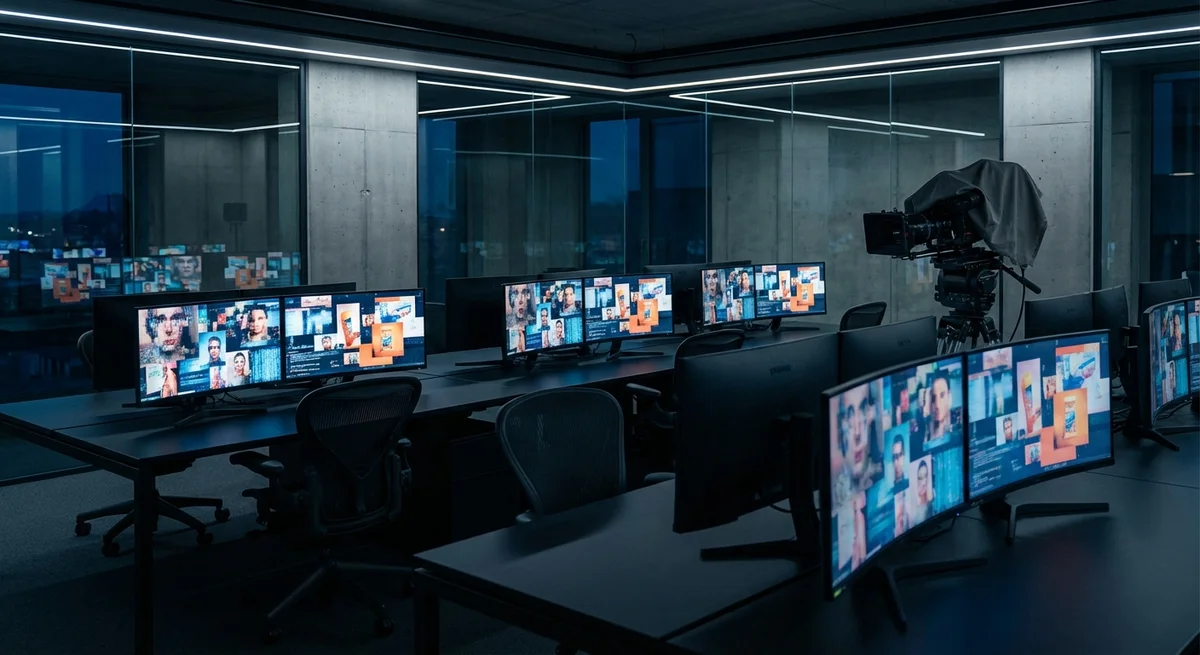
Let's be honest: we all loved ads at some point. The commercials that felt like tiny films made us laugh, cry, or simply freeze in front of the screen. For many of us, TV ad breaks in childhood were a kind of proto-TikTok: short, concentrated doses of creativity. But today an "ad apocalypse" looms on the horizon, and the cause isn't that people have run out of ideas. AI has simply started draining all the joy out of the process, turning art into cheap assembly-line production.
The recent Kalshi case gives real cause for concern. The company released a commercial that cost just two thousand dollars to produce. In professional marketing, that goes beyond cheap: it's practically free. For comparison, that sum once wouldn't have covered catering for a mid-sized film crew, let alone location rentals, actors' fees, and weeks of post-production. Neural networks did exactly what professionals feared: they devalued the process of making visual content while keeping quality at a level the mass audience finds acceptable.
Ad agencies, of course, are thrilled. To them, it looks like the perfect business plan: charge clients the same budgets as before, spend pennies on production, and pocket the lion's share of the profit. For the industry itself, though, this marks the beginning of the end. Advertising has always been a tool for burning a brand's image into consumers' memory. That took finesse, intuition, and an enormous amount of human labor. Now a prompt engineer stands in for the creative director, and an algorithm that generates frames from statistical probabilities stands in for the cinematographer.
The problem is that AI is derivative by nature. It produces averaged-out, "safe" content that looks like everything at once. We risk ending up in a world where endless streams of visual noise, made without a single spark of inspiration, bombard us. Advertising used to compete for our attention through originality; now it will wear us down through sheer volume and cheap production. This year the situation will only get worse, as video generation tools become more accessible and more capable every month.
We've already watched AI transform copywriting and illustration, making them mass-produced and faceless. Now it's video production's turn. Companies no longer want to wait months and pay hundreds of thousands of dollars for a commercial if a neural network can turn out something "good enough" in a couple of days for a couple thousand. It's a classic efficiency trap: in chasing savings, we lose the very magic that made advertising part of culture rather than just an irritant.
What does this mean for the job market? Photographers, illustrators, editors, and lighting artists already feel the ground shifting beneath their feet. When technology lets one person replace an entire studio, the value of skills honed over decades trends toward zero. The irony is that brands chasing savings may end up losing their identity, dissolving into an ocean of identical, AI-generated images.
The bottom line: Get ready for advertising to become even more intrusive and soulless. If a commercial costs $2000, brands can churn them out in batches and test hypotheses on you and me in real time. Can human creativity hold out against such cheap efficiency, or are we moving for good into an era of content made by machines for zombie consumers?
- Nov 1, 2026Pika Labs releases open video model H3 Flex: 6 steps instead of 50
- Nov 1, 2026Google's StreamVibe video agent beats other models by 10.7% on response timing and quality
- Oct 31, 2026AI cartoon series: a 24-second episode built ten ways, the best cost 162 credits
- Oct 31, 2026Anthropic: Fold Subagents Back Into a Single Loop — One Customer's Tasks Ran Twice as Fast
Test Frontier LLMs & Autonomous Agents in One Workspace
Run Claude Opus 5.5, GPT-6, Gemini 3.1, and DeepSeek side-by-side in Nomad AI (nomadnet.ai) — unified model routing, deep research, and multimodal workflows under one subscription.
The AI world, distilled — once a week
Seven stories that actually mattered, hand-picked. No noise, no reposts, no press releases.
Done! Check your inbox for a confirmation.