Maia 200: Microsoft Pits Its Own Silicon Against Amazon and Google
Microsoft has unveiled Maia 200, the second generation of its in-house AI accelerator, built on TSMC's 3-nanometer process. The chip packs more than 100 billion transistors and, on paper, delivers three times the FP4 performance of Amazon Trainium 3. Redmond is aggressively building out its own vertical hardware stack so it doesn't have to depend on NVIDIA's pricing or competitors' infrastructure. Google and Amazon spent years developing their chips; Microsoft is trying to close the gap in one sharp leap, claiming Maia 200 can handle the heaviest models of the future. That sends an important signal to the market: the era of general-purpose GPUs is ending, and the era of highly specialized silicon is beginning.
AI-processed from The Verge; edited by Hamidun News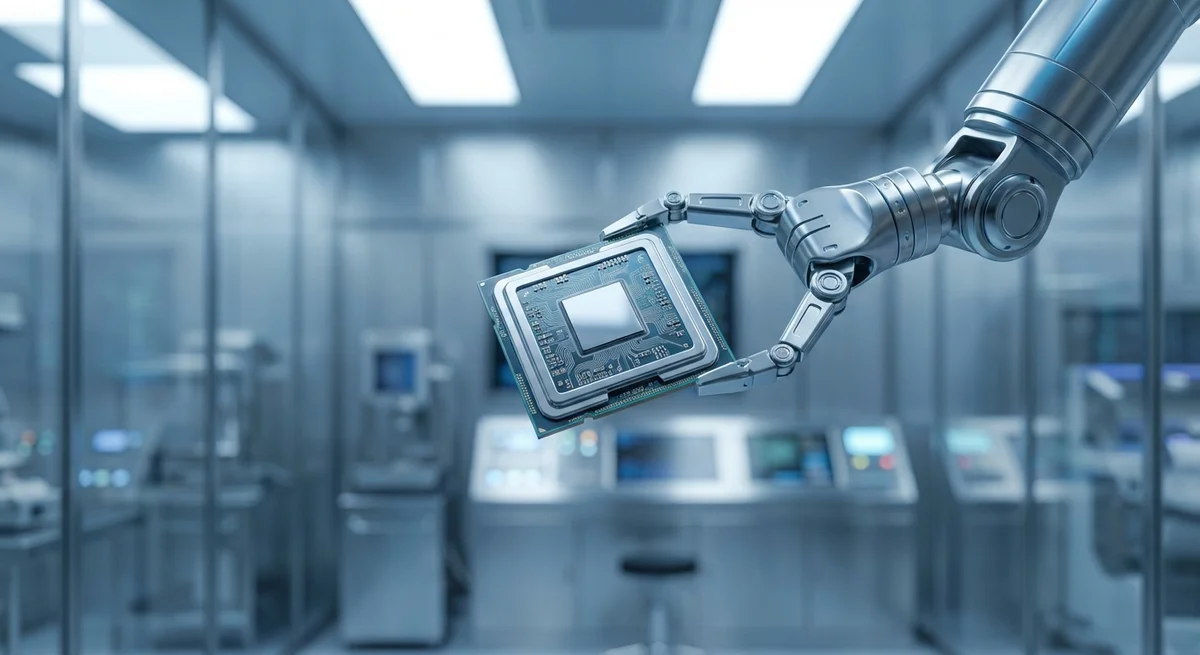
Microsoft appears to have finally had enough of waiting in line for NVIDIA chips and overpaying for every flop. The company has rolled out Maia 200, its latest answer to competitors' dominance in AI hardware. Redmond was once associated exclusively with Windows and Office. Now it is a full-fledged semiconductor player, ready to take on Amazon and Google on their own turf. Moving onto its own rails is not just Satya Nadella's whim: it is a hard necessity in a world where the cost of training models is growing exponentially.
The context is simple. The cloud giants realized long ago that buying off-the-shelf solutions is a road to the poorhouse. Google has spent years refining its TPUs, Amazon is actively rolling out Trainium, and only Microsoft relied on outside suppliers for a long time. After the first version of Maia launched, it became clear the company needed something more ambitious. Maia 200 is built on TSMC's cutting-edge 3-nanometer process and carries more than 100 billion transistors. That enormous density serves a single goal: running heavy neural networks faster and cheaper than competitors do.
The numbers Microsoft is citing read like a direct slap in the face to its peers. Scott Guthrie states outright that Maia 200 is three times faster than Amazon's third-generation Trainium in FP4 operations. On top of that, the chip reportedly beats Google's seventh-generation TPU in FP8 compute. Those are bold claims, considering Google has been working on its own processors for more than a decade. Microsoft is clearly betting on narrow specialization: its silicon is tuned for specific Azure workloads and OpenAI models, giving it an optimization edge that general-purpose solutions can't match.
Why should we care? Simple: the more efficient the hardware in data centers, the faster and cheaper AI services get. If Microsoft can cut inference costs for models like GPT-4 or the upcoming GPT-5, it gains room to maneuver in a price war with Anthropic and Google. Owning its own chip also lets the company design software and hardware together, building a unified stack where every transistor knows its job. This is the same strategy that once made Apple a leader in mobile processors, and now we're watching that approach migrate into server racks.
That said, NVIDIA doesn't need to pack its bags just yet. Jensen Huang still controls the CUDA software ecosystem, which is extremely hard to get off of. Microsoft is building Maia 200 primarily for its own internal needs and for key partners. It is an attempt to create a "safe harbor" inside Azure so that external shocks in the chip market can't stall the development of its AI products. The headroom the engineers talk about hints that Redmond already knows the specs of next-generation models that will demand even more compute.
Ultimately, the AI race is a race for energy and silicon. Whoever controls the physical layer of compute sets the terms for everyone else. Microsoft has long played catch-up, but Maia 200 shows it is willing to spend billions to become self-sufficient. It will be very interesting to see real-world cloud benchmarks once the chips start serving user requests at scale. Everything always looks great on paper, but real-world AI workloads have a way of quickly bringing even the most ambitious players back down to earth.
The bottom line: Microsoft is fully turning into a hardware company, which is bad news for NVIDIA but great news for Azure's infrastructure. Will that be enough to beat Google in the long run?
- Nov 1, 202616 models tested on 7 search tools: Exa averaged 10.5 out of 14, SearXNG about 3
- Nov 1, 2026Google's StreamVibe video agent beats other models by 10.7% on response timing and quality
- Nov 1, 2026OpenAI Rewrites GPT Behavior Rules: Five Values and a Chain of Command
- Nov 1, 2026Voice bots built on LLMs turn to Jev, a fast classifier, for decisions in 200–500 ms
Test Frontier LLMs & Autonomous Agents in One Workspace
Run Claude Opus 5.5, GPT-6, Gemini 3.1, and DeepSeek side-by-side in Nomad AI (nomadnet.ai) — unified model routing, deep research, and multimodal workflows under one subscription.
The AI world, distilled — once a week
Seven stories that actually mattered, hand-picked. No noise, no reposts, no press releases.
Done! Check your inbox for a confirmation.