Google Photos now lets you tell its AI exactly how your photos should come to life
Google Photos is moving from random animations to deliberate creative control. Its photo-to-video feature now supports text prompts. Before, you had to rely on the "I'm Feeling Lucky" button or the bare-bones "Subtle Movement" option; now you can spell out exactly how the camera or subject should move. It's a meaningful step: Google is turning a simple photo storage service into a full-fledged creative tool. While competitors build sophisticated video models, the search giant is putting them in every user's pocket. The era of static photo galleries appears to be ending for good.
AI-processed from The Verge; edited by Hamidun News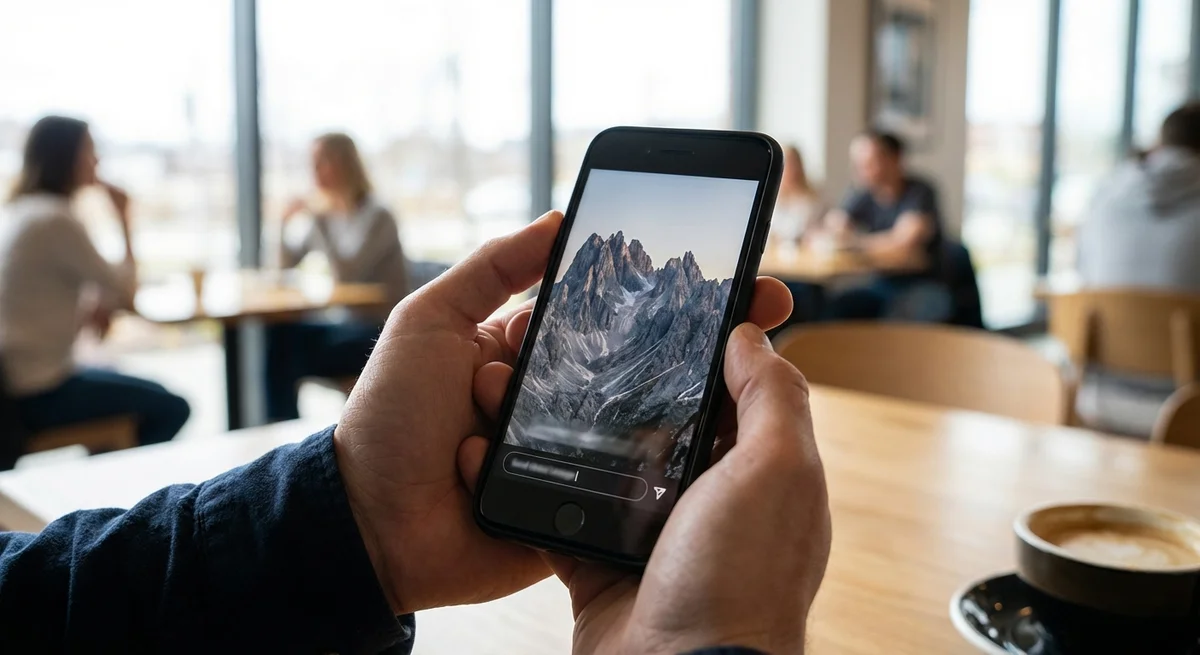
Google Photos is no longer just a gallery with canned animation templates. Its photo-to-video feature now supports text prompts, so users can describe for themselves how a shot should move: the camera can "slowly zoom in on the subject," and the leaves in the background can "rustle." That's according to an update announcement published on Monday, The Verge reports.
What changed
Before this update, the photo-to-video tool in Google Photos offered only two preset modes: Subtle Movement and I'm Feeling Lucky. Neither let users enter their own description — all you could do was press the button and take whatever the system generated. Now text prompt support sits alongside those two presets. You can write a specific instruction — for example, "the camera slowly zooms in on the subject" or "add an old film effect and make the leaves in the background rustle" — and the app will try to apply it to that particular image. So users don't freeze up in front of an empty input field, Google has added ready-made suggestions "for instant inspiration," according to the announcement.
Why this matters for Google
Google Photos is one of the most widely used image tools around. Adding full text control over generative video to it means technology once associated with professional platforms like Sora and Runway is coming down to the level of an ordinary smartphone gallery app. It's part of the company's broader strategy of building Gemini and other models into every product in its ecosystem. Facing criticism for falling behind in the AI race, Google is betting on reach and accessibility rather than polishing tools for a narrow circle of enthusiasts.
Limitations
Questions about generation quality remain. Producing a convincing video from a single still frame is a hard problem even for powerful servers, and visual artifacts are unavoidable for now. For home use, family archives, or social media, this level of quality is already good enough, but professional-grade results are out of the question.
What's new in Google Photos?
Google Photos now supports text prompts for its photo-to-video feature: users can describe the motion, style, or effect they want in text — for example, "the camera slowly zooms in on the subject" — instead of relying only on ready-made presets. The update was announced on Monday, according to The Verge.
What animation options were available before?
Before text prompts, Google Photos offered only two modes: Subtle Movement and I'm Feeling Lucky. Neither accepted a description: users simply started the generation and got a result they had no way to influence.
Does the new feature still have limitations?
Yes. Creating high-quality video from a single photo is a hard technical problem, and visual artifacts still show up in the results. For everyday use — social media, family archives, short stories — the quality is sufficient, but Google Photos' features don't yet match specialized tools like Sora or Runway.
- Nov 1, 2026Google's StreamVibe video agent beats other models by 10.7% on response timing and quality
- Nov 1, 2026OpenAI Rewrites GPT Behavior Rules: Five Values and a Chain of Command
- Nov 1, 2026Voice bots built on LLMs turn to Jev, a fast classifier, for decisions in 200–500 ms
- Nov 1, 2026Google admits AI Mode cuts search revenue, shares fall 15%
Key Questions Answered
What's new in Google Photos?
Google Photos now supports text prompts for its photo-to-video feature: users can describe the motion, style, or effect they want in text — for example, "the camera slowly zooms in on the subject" — instead of relying only on ready-made presets. The update was announced on Monday, according to The Verge.
What animation options were available before?
Before text prompts, Google Photos offered only two modes: Subtle Movement and I'm Feeling Lucky. Neither accepted a description: users simply started the generation and got a result they had no way to influence.
Does the new feature still have limitations?
Yes. Creating high-quality video from a single photo is a hard technical problem, and visual artifacts still show up in the results. For everyday use — social media, family archives, short stories — the quality is sufficient, but Google Photos' features don't yet match specialized tools like Sora or Runway.
Test Frontier LLMs & Autonomous Agents in One Workspace
Run Claude Opus 5.5, GPT-6, Gemini 3.1, and DeepSeek side-by-side in Nomad AI (nomadnet.ai) — unified model routing, deep research, and multimodal workflows under one subscription.
The AI world, distilled — once a week
Seven stories that actually mattered, hand-picked. No noise, no reposts, no press releases.
Done! Check your inbox for a confirmation.