AI Prophets by Subscription: Why a Digital Jesus Won't Help You
While the industry argues about AGI safety, enterprising developers are monetizing faith. The arrival of "AI Jesus" and similar bots raises a question: where does spiritual support end and plain marketing begin? As Bloomberg notes, a prophet with a $9.99 subscription is just a salesman in a cassock made of code. These tools exploit neural network hallucinations to create an illusion of wisdom, but behind them there is nothing except next-token prediction algorithms. In a world where loneliness is becoming an epidemic, such surrogates find fertile ground, but the price of "digital absolution" may turn out to be higher than it first appears.
AI-processed from Bloomberg Tech; edited by Hamidun News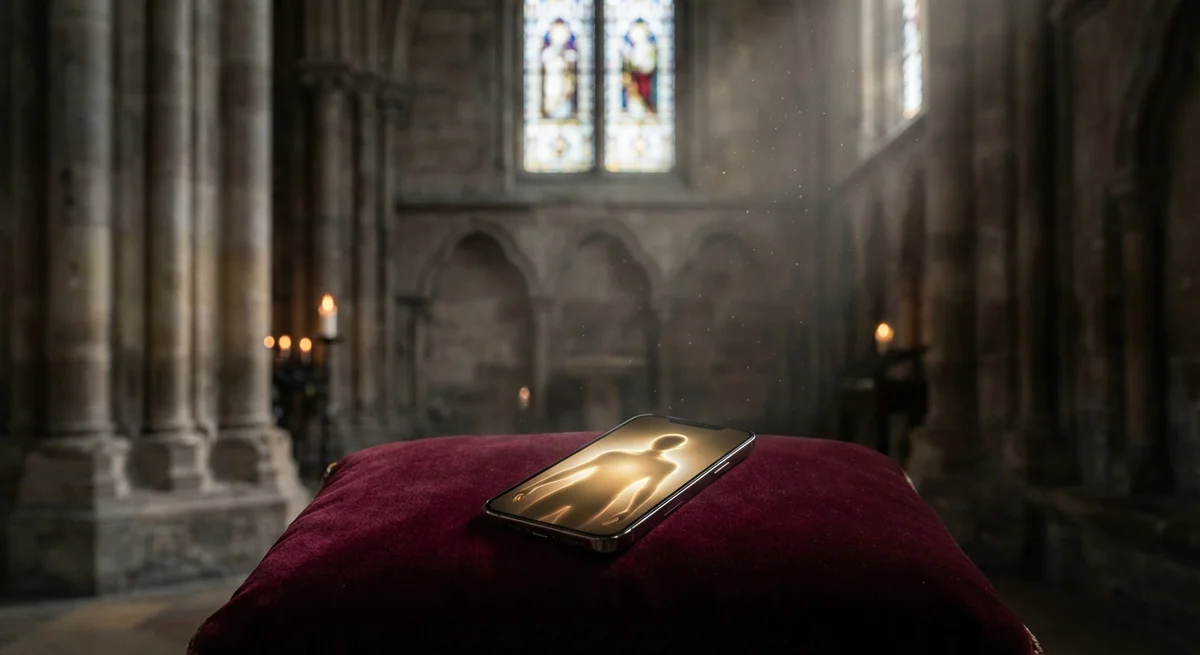
Imagine opening an app store to buy a little peace of mind for $9.99 a month. It sounds like the setup for a Philip K. Dick dystopia, but for today's tech market it is just another niche. The arrival of so-called "AI Jesuses" and other digital incarnations of prophets is a logical, if unsettling, extension of the large language model boom. We taught neural networks to write code, draw strange six-fingered people and draft layoff letters. Now we have entrusted them with the most intimate things we have: our existential crises and our search for meaning.
This whole carnival of digital holiness raises plenty of questions, and Bloomberg, in a piece by Katherine Thorbecke, hits the sorest spot. The core problem is not that an algorithm may make a mistake or utter heresy. The problem is the business model itself. When your spiritual mentor runs on a freemium model, it stops being a guide to truth and becomes an ordinary sales manager. A prophet with a subscription is an oxymoron that we somehow swallowed without choking. If a bot is motivated to hold your attention so that you don't cancel next month's payment, it will tell you what you want to hear, not what you actually need.
Technically, these systems are the same GPT-4 or Claude, just groomed with a specific system prompt and trained on religious texts. They juggle quotations with virtuosity, creating an illusion of deep understanding. But behind the facade there is nothing except statistical prediction of the next token. A neural network does not believe what it says. It does not empathize with your grief or rejoice in your successes. It simply picks the most probable words that a given culture associates with wisdom. It is a kind of spiritual fast food: calorie-dense, quick, but not nourishing for the soul at all.
Why is this happening now? We live in an era of total loneliness and a crisis of traditional institutions. For many people, going to a church, synagogue or mosque is too hard a step, one that demands real social interaction and accountability. A chatbot is always at hand. It won't judge you, it is available around the clock, and it is always on your side. It is the perfect surrogate for closeness. But replacing live human contact with an algorithmic answer carries consequences. When people entrust their deepest fears to a machine, they become extremely vulnerable to manipulation.
We should not forget the purely technical risks either. Hallucinations are not a bug but a feature of the architecture of neural networks. In a pie recipe, a mistake can be funny. In spiritual guidance, it can be catastrophic. If an AI prophet suddenly decides that self-harm is the shortest path to purification, who will be responsible? The developers, who hid behind a forty-page user agreement? Or the algorithm itself, which cannot be put in the dock?
The AI religion industry is only just emerging, but it already holds up a mirror that reflects our main fears. We are so afraid of being alone with our thoughts that we are ready to pay for an imitation of divine presence. But the truth is that no graphics card can generate sincerity. We are building new temples out of silicon and code, forgetting that religion has always been about the bond between people, not about an interface between a person and a database.
The bottom line: AI prophets are not about faith but about the efficient monetization of loneliness. Are we ready to admit that our salvation now depends on server uptime and the balance on a bank card?
- Nov 2, 2026LLM Agent Built a Gearbox in KOMPAS-3D, but Scored Only 50 out of 100 on the Specification
- Nov 2, 2026Agents ignored the prompt to read memory in 7 of 7 sessions: an analysis of 13 thousand logs
- Nov 2, 2026Karpathy Built HackerTube, a Catalog of 6,454 Videos, in Two Hours with Claude Code
- Nov 2, 2026We Audited 929 Automations at Alpina: What Corporate AI Training Should Look Like in 2026
Test Frontier LLMs & Autonomous Agents in One Workspace
Run Claude Opus 5.5, GPT-6, Gemini 3.1, and DeepSeek side-by-side in Nomad AI (nomadnet.ai) — unified model routing, deep research, and multimodal workflows under one subscription.
The AI world, distilled — once a week
Seven stories that actually mattered, hand-picked. No noise, no reposts, no press releases.
Done! Check your inbox for a confirmation.