AgentDoG: A Diagnostic Collar to Tame Your AI Agents
Chinese researchers have unveiled AgentDoG, a monitoring system for autonomous AI agents. The problem with today's agents is their unpredictability: when a task fails, developers often can't tell where things broke down, whether in planning, logic or tool calls. AgentDoG works like an aircraft's "black box," recording every reasoning step and every interaction with the outside world. That turns debugging from tea-leaf reading into a precise engineering discipline. For the industry, it is an important step from "toy" chatbots toward dependable business tools.
AI-processed from Jiqizhixin (机器之心); edited by Hamidun News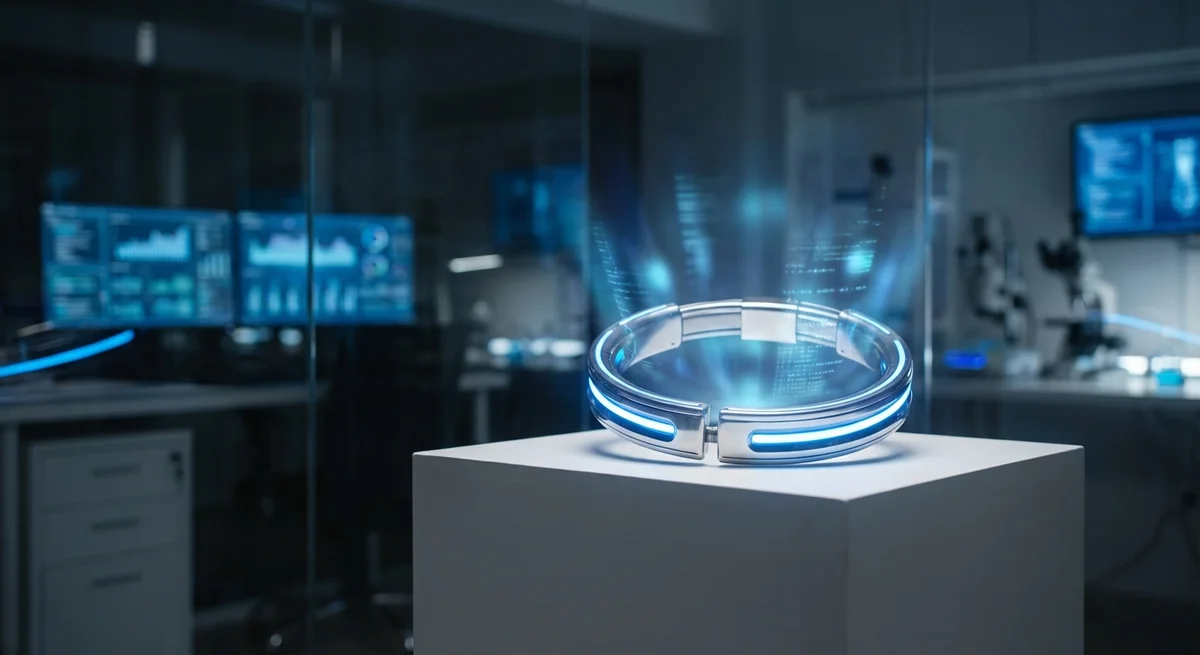
Remember the hype around AutoGPT and BabyAGI a year ago? It seemed we were a hair's breadth from handing an AI agent a credit card and letting it book our vacation, buy groceries and write our annual report. Reality turned out to be far more prosaic: agents got stuck in loops, hallucinated and burned thousands of dollars on useless API requests.
The industry's main problem today is a lack of transparency. We build complex systems on top of language models, but when they break, we stare at them like temperamental pets, unable to tell what exactly went wrong. Researchers decided to fix that by introducing AgentDoG, a system they metaphorically call a "diagnostic collar."
The core issue is that modern AI agents are "black boxes" nested inside other "black boxes." When you ask an agent to analyze a market, it carries out dozens of subtasks: it searches for information, filters sources and builds logical connections. If the output is nonsense, finding the culprit is almost impossible. Was it a bad search? A logic error? Or did the model simply "forget" the context halfway through?
AgentDoG embeds itself in the agent's workflow, tracking every stage of its "thought process" and its interactions with tools. This is not mere logging but deep diagnostics that compare the model's intentions with its actual actions in real time.
AgentDoG's developers bet on identifying bottlenecks. The system analyzes the task's execution trajectory and highlights moments when the model's confidence drops or when it starts contradicting its own earlier steps. This is critical for multi-agent systems, where several neural networks must coordinate their actions. In such setups, one agent's error snowballs and corrupts the work of the whole group. The "collar" lets you spot deviant behavior in time and correct it without waiting for the final failure. In effect, we get a level of control comparable to classical programming, applied to unpredictable neural networks.
Why does this matter right now? The AI industry is moving from the "wow effect" stage to the stage of hard business metrics. No bank or medical company will entrust its processes to an agent that works on an "sometimes it works, sometimes it doesn't" basis. Businesses need predictability and the ability to audit. AgentDoG provides exactly that: an evidence base showing how a decision was made. This makes AI agents look less like magical artifacts and more like standard software that can be tested, debugged and scaled without fear of sudden hallucinations.
Adopting monitoring systems like this will inevitably push the "prompt engineer" profession to transform into something more serious. Instead of hunting for "magic words," developers will design architectures with clear diagnostic metrics. AgentDoG is only the first swallow in the emergence of a new culture for building autonomous systems. Now that we have tools to observe machines' "thoughts," we can finally learn how smart (or dumb) they really are in specific work scenarios.
The key question: will transparency in AI agents end the era of black boxes, or will we simply discover that their logic is too chaotic to control fully?
- Nov 2, 2026DeepSeek open-sources Super-agent prototype: p95 task completion time of 15.7 minutes vs. 29.5
- Nov 2, 2026Bun creator uses Claude Code to port 750K lines from Zig to Rust in 11 days
- Nov 2, 2026Microsoft releases 4B model Mage-VL-Cowork, which solves 66.0% of OSWorld-Verified tasks
- Nov 2, 2026Meta's Muse assistant keeps dossiers on loved ones and gets root on Ubuntu by default
Test Frontier LLMs & Autonomous Agents in One Workspace
Run Claude Opus 5.5, GPT-6, Gemini 3.1, and DeepSeek side-by-side in Nomad AI (nomadnet.ai) — unified model routing, deep research, and multimodal workflows under one subscription.
The AI world, distilled — once a week
Seven stories that actually mattered, hand-picked. No noise, no reposts, no press releases.
Done! Check your inbox for a confirmation.