OpenClaw and 160,000 Stars: Why Agent Tooling Is a Trap
The OpenClaw project has racked up a staggering 160,000 stars on GitHub, which is a good excuse to talk about where AI agents are heading. We are moving from "smart chatbots" to systems that actually click buttons. But the coin has a flip side (AB). On one side is automation of routine work; on the other, chaos in security and unpredictable actions. While developers chase the sheer number of "tools," the industry is hitting a trust problem. If an agent makes a mistake in text, it's funny. If it makes a mistake with access to your server, it's a disaster. OpenClaw shows that we are ready to give AI hands, but it is not a given that we have taught it how to use them.
AI-processed from Jiqizhixin (机器之心); edited by Hamidun News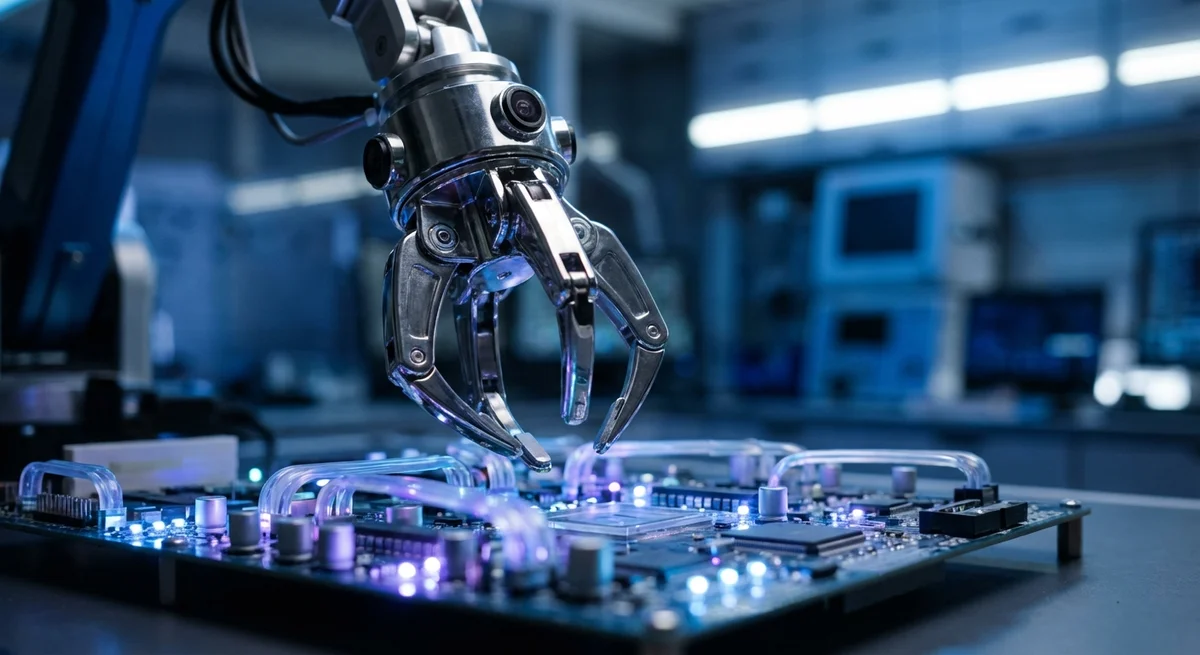
Listen, 160,000 GitHub stars don't just fall out of the sky. This is not merely the success of yet another repository; it is a collective cry for help from the industry. The OpenClaw project became a trigger for discussing what Chinese tech blogs call the "side A and side B" (AB) of agent tools.
While you and I were arguing over which model has the longer context window, the world went all in on the idea of autonomy. We no longer want a neural network to simply write poems. We want it to book tickets, fix bugs in production and manage our finances. But this is where things get interesting, and a little frightening.
Let's recall how we got here. First there were plain chats. Then came AutoGPT, which promised to flip the world upside down but in practice only burned tokens in empty loops endlessly. Now Agent Tools take the stage: essentially "hands" for large language models. OpenClaw offers a standardized way to give a neural network access to the outside world.
Side "A" of this coin looks brilliant: efficiency rises many times over. You hand over a task, and the agent picks the right API, pulls the levers and delivers a result. This is the AI employee that every startup founder in Silicon Valley and Shenzhen has dreamed of.
But the coin has a side "B" that developers often prefer to skip in investor decks. The problem is not that an agent cannot press a button. The problem is that it may press it at the wrong time, in the wrong place and with the wrong consequences. When we talk about "tool use," we run into fundamental fragility. Models still hallucinate, but now their hallucinations have physical or financial consequences. If an agent decides that optimizing your schedule means deleting "extra" meetings along with your calendar and mailbox, it will do so with truly machine-like diligence.
Why does this matter right now? Because we have hit the ceiling of the models' raw "intelligence." The gap between GPT-4 and its successors no longer looks so enormous. Growth now goes not deeper but wider, through integrations. OpenClaw became popular because it tries to bring order to this chaos of tools. The paradox, though, is that the more tools we give an agent, the higher the chance of error. This is called the agent's "cognitive load." Imagine being handed a Swiss Army knife with a thousand blades: you will probably cut yourself before you find the right one.
The Chinese developer community is now actively debating whether it is time to slow down. Instead of stuffing agents with hundreds of functions, it may be better to focus on verifying actions. We are building extremely complex control systems on a foundation of probabilistic next-token predictions. It's like building a skyscraper on a swamp and hoping the concrete sets faster than the building starts to lean. OpenClaw is an excellent tool, but it only highlights the core problem: we gave AI "claws" but forgot proprioception, the sense of one's own body and of the limits of what is permitted.
What does this mean for us? Most likely, in the next year we will see a retreat from "universal agents" toward narrowly specialized micro-services. Security and predictability will become a new currency, worth more than any GitHub "stars." We are entering an era in which an AI's ability to stop in time and ask permission will be valued above its ability to complete a task at any cost. The industry is finally starting to understand that "smart" does not mean "reliable."
The bottom line: the hype around OpenClaw proves that tools are the new frontier, but without strict security protocols these "claws" may pinch their own creators painfully. Are we ready to entrust an agent not just with text, but with our access credentials?
- Nov 2, 2026DeepSeek open-sources Super-agent prototype: p95 task completion time of 15.7 minutes vs. 29.5
- Nov 2, 2026Bun creator uses Claude Code to port 750K lines from Zig to Rust in 11 days
- Nov 2, 2026Microsoft releases 4B model Mage-VL-Cowork, which solves 66.0% of OSWorld-Verified tasks
- Nov 2, 2026Meta's Muse assistant keeps dossiers on loved ones and gets root on Ubuntu by default
Build & Ship Production AI Agents Without Boilerplate Code
Start your free 72-hour trial at Hamidun Academy (academy.hamidun.com) — interactive lessons on Claude Code & Cursor, live Tech Radar, and production agent templates.
The AI world, distilled — once a week
Seven stories that actually mattered, hand-picked. No noise, no reposts, no press releases.
Done! Check your inbox for a confirmation.