650 Billion on Silicon: Big Tech Betting Everything on AI
When we talk about hundreds of billions of dollars, the numbers stop being merely lines in financial reports and transform into a kind of geological force. Four major players in the American market — Microsoft, Alphabet, Amazon, and Meta — forecast that their combined capital investments by 2026 will reach the mind-boggling mark of $650 billion. To put it in perspective, this is more than the GDP of many developed countries, spent exclusively on 'hardware', concrete, and wires. We've entered a phase where software companies suddenly realized they are construction and energy conglomerates, because without a physical foundation, their neural networks remain nothing but beautiful code in the void. Let's recall how it all started. Just a couple of years ago, investors applauded Big Tech for 'efficiency' and staff reductions.
AI-processed from Bloomberg Tech; edited by Hamidun News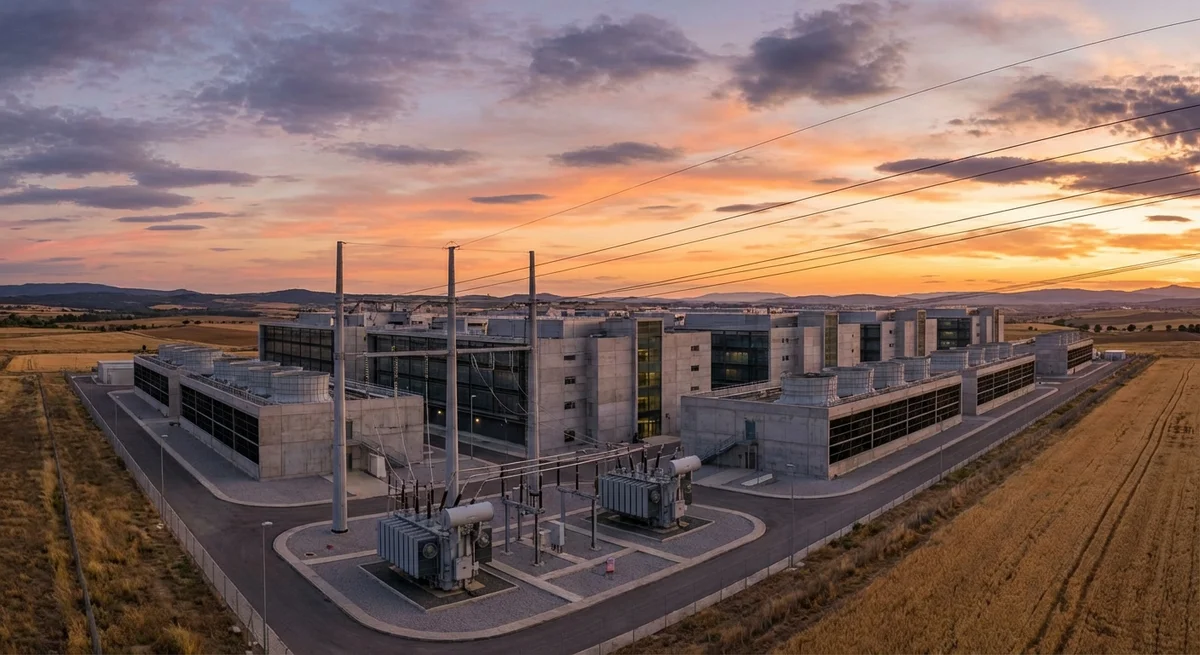
When we talk about hundreds of billions of dollars, the numbers stop being merely lines in financial reports and transform into a kind of geological force. Four major players in the American market — Microsoft, Alphabet, Amazon, and Meta — forecast that their combined capital investments by 2026 will reach the mind-boggling mark of $650 billion. To put it in perspective, this is more than the GDP of many developed countries, spent exclusively on 'hardware', concrete, and wires. We've entered a phase where software companies suddenly realized they are construction and energy conglomerates, because without a physical foundation, their neural networks remain nothing but beautiful code in the void.
Let's recall how it all started. Just a couple of years ago, investors applauded Big Tech for 'efficiency' and staff reductions. But then ChatGPT arrived, and the rules of the game changed overnight. Now success is measured not by lines of code, but by the number of Nvidia H100 chip clusters and a company's ability to negotiate building its own nuclear power plant. All this cash flow is directed towards creating giant data centers that consume electricity like cities. This is no longer just cloud storage for your photos, but real 'intelligence factories', where every square meter costs more than elite real estate in Manhattan.
The situation looks ironic if you remember previous industry development cycles. Once upon a time, IT was considered a low-capital-intensive business: write a program once and scale it infinitely. Now, every step toward a smarter model requires exponential growth in infrastructure investments. Companies buy everything: from specialized AI chips and next-generation network cables to backup generators with power in the hundreds of megawatts. This is a race for survival, where the entry fee is so high that any new competitors are cut off before the foundation design stage.
Wall Street is beginning to nervously glance at the clock. Investors are used to quick returns, but here they're being asked to wait while billions of dollars transform into working AGI (artificial general intelligence), which might repay everything many times over. Every quarterly earnings call features the same questions: 'When will we see profit from these investments?' The answers from executives sound like a mantra: underinvesting now means losing the future. They are literally burning their bridges, making a return to the previous business model impossible. If the AI bubble bursts, what's left behind won't just be empty offices, but entire fields of server farms that somehow need to be maintained.
And it's interesting how this process is changing related industries. The demand for Nvidia chips is just the tip of the iceberg. Now there's a battle for copper for cables, for transformers for substations, and for land plots with access to powerful power grids. Microsoft is already signing contracts to restart nuclear reactors, and Amazon is buying data centers located near nuclear power plants. We're seeing how the digital economy is fully merging with the energy and industrial sectors. This is no longer just 'big tech', it's a new form of industrial capitalism, where the main resource is no longer oil, but the computational token.
What does this mean for us? Most likely, we'll see further consolidation of power in the hands of those who can afford these expenses. The gap between leaders and followers will become insurmountable. Even wealthy startups like OpenAI or Anthropic are forced to seek shelter under the wing of these giants, because no one else can pay their electricity bills. We are witnessing a moment when the architecture of the world for the next 50 years is being created, and the price of this architecture is more than half a trillion dollars per year.
Bottom line: Big Tech has completely transformed into the 'heavy industry' of the 21st century, and now their success depends not so much on brilliant programmers as on uninterrupted supplies of concrete, copper, and uranium.
Want to stop reading about AI and start using it?
AI News is a curated feed of AI/tech news. Hamidun Academy teaches you to use AI systematically in your work.
The AI world, distilled — once a week
Seven stories that actually mattered, hand-picked. No noise, no reposts, no press releases.
Done! Check your inbox for a confirmation.