Meta Vibes: Why Zuckerberg Wants a Separate App for Hallucinations
Meta is spinning Vibes out into a standalone app. It lets you generate short clips and watch other people's creations in an endless feed. After a quiet launch in September inside its main services, the company decided to test whether we are ready to consume pure AI content with no admixture of reality. It is an important signal. Either Mark believes in a new media format, or he simply wants to isolate neural-network noise from ordinary posts so as not to anger conservative users. For now it is only a test, but the direction is clear: content will soon stop requiring human participation even at the filming stage. Get ready for the era of prompt directors. *Meta is designated an extremist organization and banned in Russia.
AI-processed from TechCrunch; edited by Hamidun News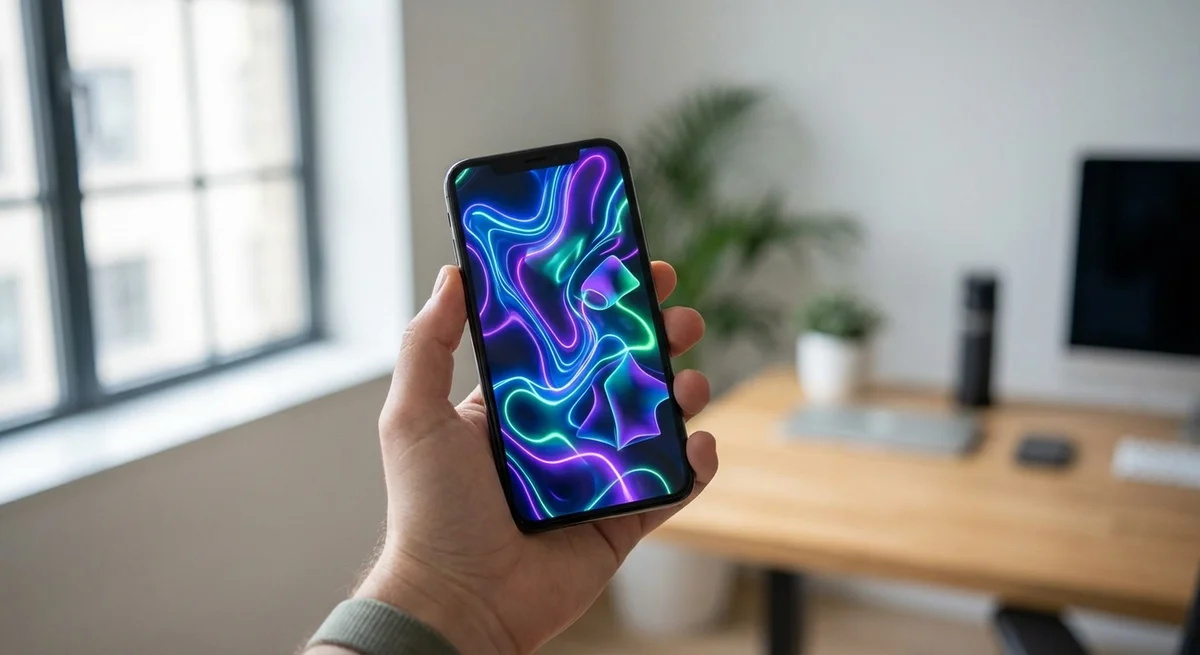
While we argue over whether Sora will replace real camera operators, Mark Zuckerberg is already preparing a separate shelf in his closet for this content. Meta has started testing Vibes as a standalone app. The idea is very simple: you generate short videos with AI and immediately post them to a shared feed, where other users are doing exactly the same thing. This is not just another set of filters or face masks. It is a full attempt to build a kind of TikTok with not a single real camera and not a single real frame. Just the pure flight of fancy of algorithms and your text prompts.
The Vibes project was quietly launched last September, but back then it lived in the shadow of its big brothers, Instagram and Facebook. Now the ambitions have grown. Meta clearly understands that shoving neural-network surrealism into the main Instagram feed is a risky move. Users already grumble constantly about the flood of algorithmic recommendations, and if the feed turns into an endless parade of six-fingered people and drifting backgrounds, audience loyalty could evaporate for good. That makes a separate app look like an ideal sandbox for experiments, where Meta can make mistakes without risking the market capitalization of the whole corporation.
What exactly happens inside Vibes? The app offers tools for creating short clips from text prompts. It is a blend of a generative model and a new type of social network. You enter a description, get a video, and a smart algorithm serves it to people who like that kind of aesthetic. It is important to understand that Meta is betting on speed and accessibility. You do not need to be an editing wizard or own a powerful graphics card in a server rack. All the heavy computation happens on the company's servers, and you get a finished product within seconds. This is the democratization of creativity in its most radical form.
Why does this matter right now? We are at a tipping point, with the cost of producing content rapidly falling toward zero. It used to take at least a smartphone and a drop of charisma to make a viral clip. Now imagination and the ability to talk coherently to a bot are enough. Meta is trying to stake out the territory of pure AI entertainment before bold startups like Runway or Luma do it. If Vibes takes off, we will see the birth of a new type of consumption, where the author is merely a curator of meaning rather than a creator of visual images in the usual sense of the word.
Global competition should not be forgotten either. TikTok is already rolling out generation tools inside its editor, and YouTube is actively experimenting with AI backgrounds for Shorts. But none of the giants has so far dared to spin this out into a separate brand and product. It is a bold step, and it shows that Meta's headquarters believes AI video is not a passing toy but a full-fledged genre, worthy of its own icon on your home screen. Perhaps it is an attempt to win over that very young audience that has had enough of ordinary dances to music and wants something stranger and more interactive.
Ultimately, the success of Vibes will depend on the quality of generation and on how far Meta lets users go beyond the bounds of boring censorship. If the videos look like cheap GIFs from ten years ago, the project will quickly die in beta testing. But if Meta's models catch up with the market leaders, we will get an endless generator of visual noise that is impossible to tear yourself away from. It is a giant social experiment meant to answer one question: do we need a human on the other side of the screen?
The bottom line: is the world ready for a social network where nothing is real at all, or will we quickly tire of flawless hallucinations?
*Meta is designated an extremist organization and banned in Russia.
- Nov 2, 2026Meta's Muse assistant keeps dossiers on loved ones and gets root on Ubuntu by default
- Nov 2, 2026The Verge reviewer builds a $50 Meta Muse Charm alternative with Claude Code
- Nov 1, 2026MoneyGate safety layer blocked all 42 fraudulent requests to local AI models
- Oct 31, 2026Open-source LLM gateway KTMS 1.0 plugs your own GPUs into the cloud and survives outages
Ship AI Faster with Founders, Engineers & Weekly Architecture Reviews
Inside Vibe Club (hamidun.com/club) — weekly live masterminds with Zhemal Khamidun, Tech Radar, full LMS access, and 370+ production Claude Code skills.
The AI world, distilled — once a week
Seven stories that actually mattered, hand-picked. No noise, no reposts, no press releases.
Done! Check your inbox for a confirmation.