Panic Ahead of the Evidence: How Anthropic's Legal AI Sank a Market Without Proof
The market is showing off its nerves again. As soon as news broke of new legal functionality from Anthropic, shares of related companies (such as document-management services and online legal providers) started falling. The irony is hard to miss: the big sell-off began before anyone had seen real tests or deployment case studies. Investors are afraid of repeating the fate of Chegg, which was crushed by ChatGPT, and are now overcautious. "Sell now, figure it out later" is becoming the dominant strategy in the AI era, even when the threat so far exists only in press-release headlines.
AI-processed from Bloomberg Tech; edited by Hamidun News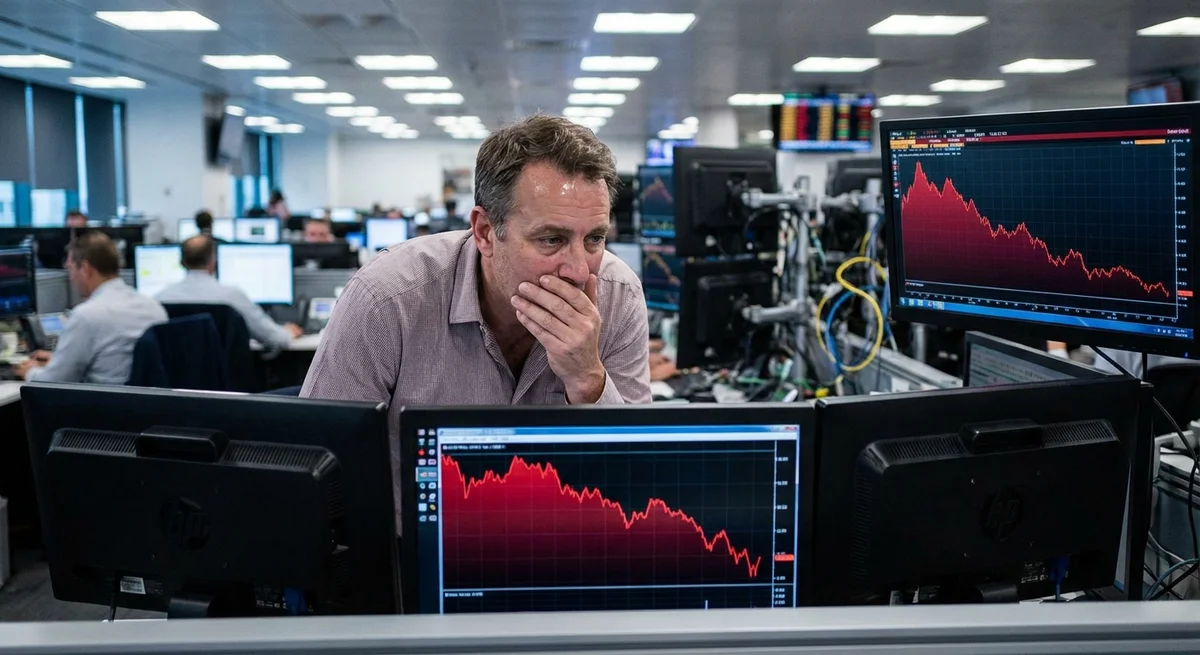
Wall Street has developed a new conditioned reflex: when an AI lab sneezes, traditional industries instantly come down with pneumonia. The latest victim is the legal sector. The market reacted to news of a new Anthropic tool by immediately dumping shares of companies that provide legal services and document management. All well and good, except for one catch: investors hit the "Sell" button before there was any evidence that this AI actually works as it should.
Why is this happening right now? The answer lies in the collective trauma of 2023. Everyone remembers the "Chegg moment," when the education platform's stock was wiped out by the popularity of ChatGPT. Now traders are scanning the horizon for the next victim. Law, an expensive, text-centric field built on logic, looks like ideal prey for models on the level of Claude. The market decided not to wait for Anthropic to "eat" legal-tech revenue and traded ahead of the news.
But common sense gets lost in the rush. Law is not writing a college essay. Here the cost of a mistake (or a neural-network hallucination) is measured in millions of dollars and prison sentences. We know that large language models still tend to make up facts. In court, citing a nonexistent precedent is the end of a career, not a "funny bug." The market ignored that. Investors sold based on the "AI will replace everyone" narrative, not on a technical audit of the product.
This behavior highlights a dangerous gap between reality and expectations. Company valuations are now tied not to their actual moats but to a hypothetical future in which AI works flawlessly. The market has already priced in a scenario where Claude fully replaces staffs of paralegals, ignoring the messy reality of deployment, regulation and questions of liability. It is classic hysteria: the fear of missing a trend (or being crushed by it) outweighs any fundamental analysis.
For Anthropic itself, this is of course a compliment. The company is simply doing its job: expanding context windows and improving model reasoning. But the financial world treats each of its updates as a dinosaur-extinction-level event for the incumbents. This volatility tells us we are far from equilibrium. Until investors learn to tell a "promising demo" from an "industrial-grade solution," expect constant swings.
Bottom line: The market has fully switched to "I believe in magic" mode. If OpenAI or Anthropic announces an "AI surgeon" tomorrow, will private clinic stocks collapse before the robot makes its first incision? We seem to already know the answer.
- Nov 2, 2026Arca gives AI agents finance tasks lasting up to 10 days, but leaves the trades to humans
- Nov 2, 2026Anthropic needs to grow revenue 32% a year to cover $850 billion in contracts
- Nov 2, 2026Bun creator uses Claude Code to port 750K lines from Zig to Rust in 11 days
- Nov 2, 2026mcp-linter finds 18 undescribed parameters in Anthropic's filesystem server
Test Frontier LLMs & Autonomous Agents in One Workspace
Run Claude Opus 5.5, GPT-6, Gemini 3.1, and DeepSeek side-by-side in Nomad AI (nomadnet.ai) — unified model routing, deep research, and multimodal workflows under one subscription.
The AI world, distilled — once a week
Seven stories that actually mattered, hand-picked. No noise, no reposts, no press releases.
Done! Check your inbox for a confirmation.