ML on the Factory Floor: Automating Chaos Only Produces More Chaos
Rolling out ML in industry often resembles building a skyscraper on a swamp. This case centers on calculating the labor intensity of operations, where neural networks ran into the harsh reality of factory archives. Even the most advanced models turn out to be helpless when historical data has piled up for years with no quality control. Instead of accurate forecasts, companies get an "error accelerator." It is a sobering example for anyone who believes in the magic power of AI without first cleaning up their processes. The main takeaway: fix the data and the methodology first, and only then call in the data scientists. Otherwise, automation will only speed up the road to losses.
AI-processed from Habr AI; edited by Hamidun News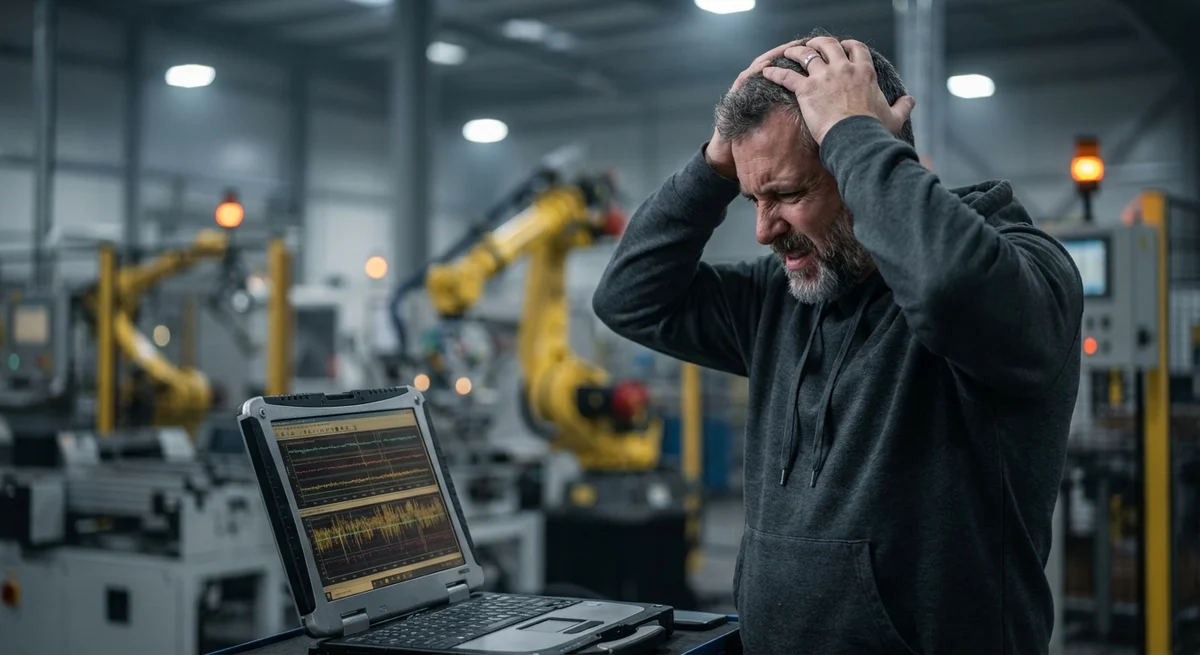
Imagine you have decided to build a perfect work schedule for a huge factory, but instead of a foundation you have quicksand made of notes on napkins and the fantasies of shop-floor foremen from the past ten years. This is the trap many IT directors fall into when they decide that machine learning is a magic wand that can instantly calculate production labor intensity. In theory, it all looks neat: feed the model data on past orders, and it returns the ideal time for each operation. In practice, it turns out that the AI does not just make mistakes. It makes them with alarming confidence, scaling up a mess that has been accumulating for decades.
Calculating labor intensity in machine building is not just a matter of math, it is a matter of business survival. Everything depends on these figures: from the unit cost of a part to machine-tool load and the final price for the customer. Traditionally, this is done by work-rate setters (normirovshchiks), but their work is often subjective and slow. The wish to replace them with an algorithm is understandable, but it ignores a fundamental law of working with data: garbage in, garbage out. If your historical data reflects not the real working time but the time a foreman "drew" in a report to get a bonus, the ML model will learn to "draw," not to calculate.
When a team of enthusiasts starts training models on "dirty" data, they quickly find that classic algorithms begin to hallucinate. Probabilistic models are excellent at finding patterns where none exist, or, worse, at mistaking systematic errors for truth. The result is an "error accelerator." Where a human might doubt a strange number, an automated system simply swallows it and produces a result that looks solid but has nothing to do with the reality of the shop floor. This creates an illusion of control that costs the company more than having no automation at all.
Why does this happen? The industry has developed a dangerous gap between the people who write code and the people who stand at the machine. Data scientists often see a factory as a set of tables in a SQL database, without thinking about how those numbers got there. And they got there through the hands of people who had their own incentives, fears and laziness. If a company has no culture of collecting clean data and no unified methodology for setting work norms, any attempt to bolt AI on top is just an expensive way to throw dust in management's eyes. You do not solve the problem, you preserve it in digital form.
The real breakthrough in industrial AI will come not when we invent a new transformer architecture, but when companies recognize the importance of "process hygiene." Before training a model, you need to build a system of objective monitoring, remove the human factor from time recording and, possibly, throw out 90% of the accumulated digital junk. This is boring, long and thankless work that cannot be sold as an "innovative breakthrough," but it is exactly what separates working solutions from polished presentations that will never leave the pilot project.
The bottom line: machine learning does not cure broken processes, it scales them. Are you ready to admit that your data is garbage before spending millions on automating it?
- Oct 28, 2026Anthropic reveals how it builds Claude with Claude: the brain separate from the hands
- Oct 28, 2026Bayer Launches Multi-Agent Engine on AgentCore: 80% of Questions Handled Without Engineers
- Oct 28, 2026Liquid AI releases LFM2.5-24B-A2B: an agent model with 2B active parameters
- Oct 28, 2026AgentOrch: Pre-Planned AI Agents Now Trail Step-by-Step Execution by Just 8.5 Points
Test Frontier LLMs & Autonomous Agents in One Workspace
Run Claude Opus 5.5, GPT-6, Gemini 3.1, and DeepSeek side-by-side in Nomad AI (nomadnet.ai) — unified model routing, deep research, and multimodal workflows under one subscription.
The AI world, distilled — once a week
Seven stories that actually mattered, hand-picked. No noise, no reposts, no press releases.
Done! Check your inbox for a confirmation.