Mistral Puts GPUs on a Diet: Faster, Cheaper Translation
Mistral is swimming against the current again. While OpenAI and Google buy H100s by the thousand, the French startup has released a narrowly specialized translation model that runs faster and lighter than its competitors. The company's vice president said bluntly that an abundance of computing power makes developers lazy. It points to an important shift in the industry: from trying to throw money at a problem to building efficient algorithms. For businesses, that means quality translation without delays and without enormous API bills. The era of brute force in AI may be in for a serious shake-up.
AI-processed from Wired; edited by Hamidun News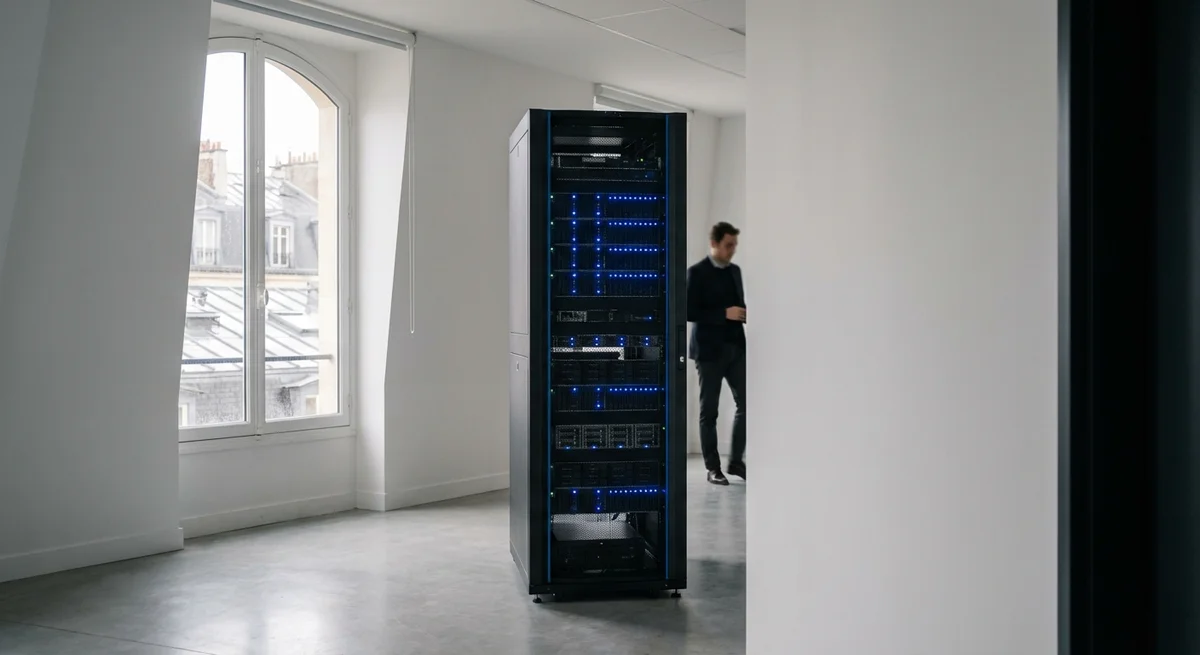
While Sam Altman dreams of trillions of dollars for new chip factories, the team at Mistral has decided it is time to go on a strict diet. The company's vice president of science dropped a line that probably made engineers in Palo Alto flinch: "Too many GPUs make you lazy." It is not just a catchy headline quote but a whole philosophy, which the French have packed into their new translation model.
Let's be honest: we have grown used to the idea that progress in AI simply means burning more electricity and taking over a couple more data centers. Mistral keeps going a different way. Its new model targets one of the most down-to-earth yet critically important tasks: translation. And here the company wants to show that optimizing architecture still matters more than an endless stack of NVIDIA GPUs. While American giants build universal all-in-one models that can do a bit of everything but cost as much as an airplane wing, Mistral aims straight at the target.
Why does this matter right now? The industry has clearly hit a scaling ceiling. Training giant models keeps getting more expensive, and the quality gains no longer look so obvious. Mistral is betting on specialized solutions that run lightning-fast. This is a direct challenge not only to Google Translate but also to DeepL, long considered the king of the niche. The French startup has positioned itself from the start as the "European answer" to Silicon Valley. While the Americans build closed ecosystems, Mistral talks about efficiency and ships tools that businesses can realistically deploy without selling a kidney to pay for servers.
Remember how the market developed over the past two years. We watched an endless race of parameters. Billions, trillions, quadrillions. At some point engineers simply stopped thinking about how to make the algorithm smarter and focused on how to feed it more data. Mistral brings us back to an era when the elegance of a mathematical solution mattered. If you can reach the same translation quality with a model ten times smaller than your competitors', you are not just saving investors' money. You are changing the rules of the game for the entire enterprise sector, which needs to process terabytes of text in real time without delays of several seconds.
It also calls the strategy of the Valley giants into serious question. If a small team from Paris can deliver results comparable to the products of monster corporations, what are those billions of investment actually being spent on? Possibly on the very "laziness" Mistral talks about. When you have unlimited access to computing power, the incentive to look for elegant workarounds and optimize every byte disappears. Why think, when you can just buy another ten thousand H100s?
For end users and businesses, this move means just one thing: competition will push prices down. Translation is finally ceasing to be an expensive service and becoming a cheap utility available in every application. And if Mistral keeps this up, we will soon see equally efficient solutions in coding and data analysis, running on an ordinary laptop as well as today's monsters run on server clusters.
The bottom line: the era of brute force in AI may end sooner than we thought. Mistral has shown that a sharp mind and skilled hands can still compete with an unlimited budget. Which of the giants will be the first to admit its dependence on GPUs and go on a diet?
- Nov 1, 202616 models tested on 7 search tools: Exa averaged 10.5 out of 14, SearXNG about 3
- Oct 30, 2026Mistral opens Large 4 weights: strong at code, but Chinese models score 32 to its 26
- Oct 30, 2026Claude Enterprise Gets Smart Reports: Who Uses AI How, and What It Costs
- Oct 30, 2026SkyRL and vLLM Fine-Tune Mistral Large 4 with RL: AIME Score Rises from 64% to 75%
Test Frontier LLMs & Autonomous Agents in One Workspace
Run Claude Opus 5.5, GPT-6, Gemini 3.1, and DeepSeek side-by-side in Nomad AI (nomadnet.ai) — unified model routing, deep research, and multimodal workflows under one subscription.
The AI world, distilled — once a week
Seven stories that actually mattered, hand-picked. No noise, no reposts, no press releases.
Done! Check your inbox for a confirmation.