ChatGPT Goes Offline: The World Suddenly Remembers How to Think for Itself
A large-scale ChatGPT outage has hit users worldwide, from students to developers at major corporations. The interface won't load, the API returns errors, and OpenAI is staying silent about the specific causes. This is not just a technical incident but a clear demonstration of how heavily the modern workflow depends on a single neural network. While Sam Altman's company works to bring its "brains" back online, the industry is again talking about the need for local models and a more diverse set of AI tools. The key point: we have become too dependent on cloud intelligence that can vanish at any moment.
AI-processed from 3DNews AI; edited by Hamidun News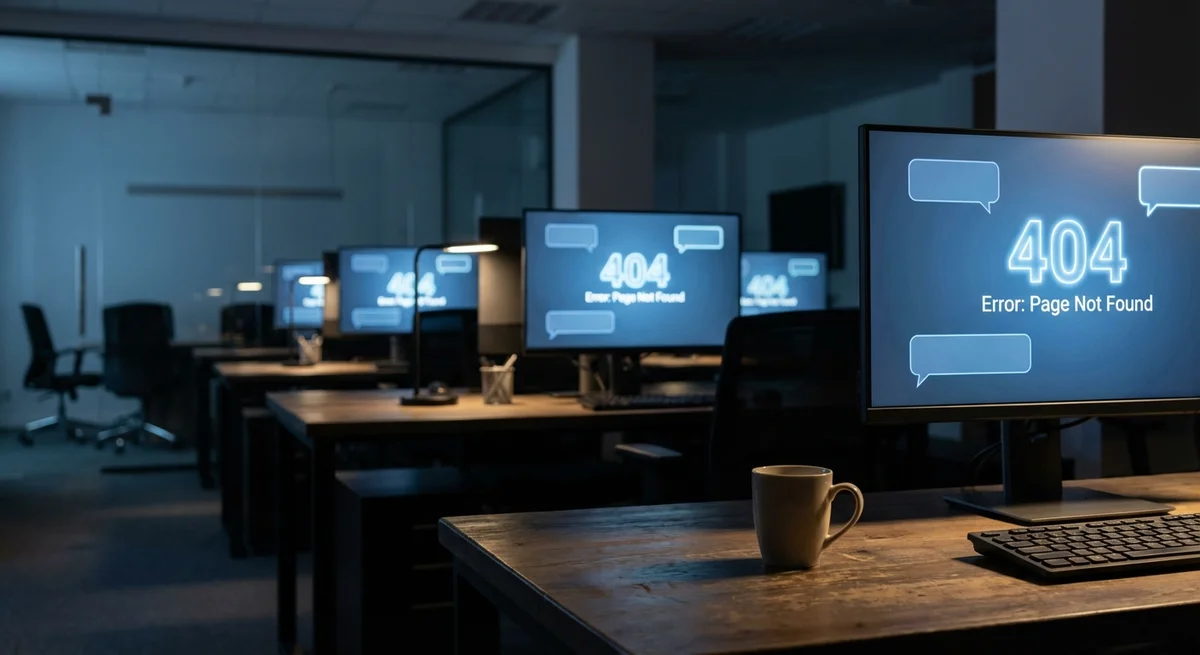
Picture a typical developer's or marketer's morning in 2024. You open your usual tab to hand the routine work to your digital assistant, but instead of a cheerful reply you see a blank screen or an endless loading animation. Today that became reality for millions of people. ChatGPT, the world's most popular AI chatbot, suddenly decided to take a day off, leaving humanity alone with its own thoughts and unsolved tasks. This is not the first time OpenAI's infrastructure has buckled under load, but each such incident makes the industry noticeably more nervous.
The problems started abruptly: users around the world began reporting that they could not send messages or access their conversation history. Those who use the API for their own products faced even more serious trouble: their services, built on GPT-4 logic, turned into "pumpkins". OpenAI promptly confirmed the problem and started working on a fix, but dry lines in a system status log do little to reassure those whose business processes have ground to a halt. The irony is that we are striving to build artificial general intelligence (AGI), yet we cannot keep an ordinary web interface running reliably.
Looking back, OpenAI has been through similar crises. Recall November of last year, when, after the first DevDay conference, the company's servers literally "went down" under the rush of people wanting to create their own custom GPTs. That was blamed on unprecedented success and DDoS attacks. Today's outage looks different: it feels like a systemic reminder of how fragile the centralized AI model is. We have entrusted critical functions to a cloud service controlled by one private company, and now we pay for it with minutes, and sometimes hours, of downtime.
Why does this matter right now? Because AI has stopped being a toy for generating pictures of cats. Today customer support systems are built on OpenAI models, code writing is automated, and analytical decisions are made with them. When ChatGPT goes down, the productivity of entire departments goes down with it. That pushes many people to think about a plan B. In tech community back channels, calls are growing louder to switch to open models such as Llama from Meta* or to develop in-house local solutions that don't depend on the state of servers in San Francisco.
The reaction on social media is interesting: while some panic and look for a replacement in Claude or Gemini, others joke that people have forgotten how to write emails without a neural network. This outage is a good occasion for a digital detox, even if a forced one. It exposes our new vulnerability: we have come to lean so heavily on a "smart crutch" that without it we start stumbling on flat ground. And although OpenAI's engineers will most likely fix everything within hours, an aftertaste will remain.
Security and fault tolerance now come to the fore. If a similar outage lasts not a couple of hours but a full day, the consequences for the digital economy will be measured in billions of dollars. Companies that are first to adopt hybrid setups for working with AI, using several independent models, will come out ahead. Everyone else can only refresh the page and hope for a miracle. Ultimately, every technology goes through a stage of "teething problems", but in OpenAI's case these problems are starting to look like chronic growing pains.
The key point: this outage is the best marketing gift for competitors and advocates of local LLMs. Will it become a lesson for business, or will we keep putting all our neural-network eggs in Sam Altman's one basket?
*Meta is designated an extremist organization and banned in Russia.
- Nov 2, 2026Arca gives AI agents finance tasks lasting up to 10 days, but leaves the trades to humans
- Nov 2, 2026Meta's Muse assistant keeps dossiers on loved ones and gets root on Ubuntu by default
- Nov 1, 2026Local models lose to Opus and Codex: 0.21 on a MacBook versus 1.00 for Codex
- Nov 1, 2026Kimi scores 96.2% on a 1C database analytics test and emerges as a fallback if Claude access is blocked
Delegate Deep Research, Coding & Multi-Step Workflows to Nomad Agent
Deploy autonomous task execution with Nomad Agent (agent.nomadnet.ai) — automated web research, data synthesis, code generation, and MCP tool orchestration.
The AI world, distilled — once a week
Seven stories that actually mattered, hand-picked. No noise, no reposts, no press releases.
Done! Check your inbox for a confirmation.