A $100 Million AGI Bet: Hong Kong's Old Money Moves to Claim the Future
Hong Kong has a new heavyweight: 3C AGI Partners, a venture fund with $100 million in capital. Behind it is Esther Wong, a former senior executive at Chinese giant SenseTime, along with the family offices of the region's wealthiest dynasties. It is an important signal: old money has stopped fearing the complexity of neural networks and is ready to invest in artificial general intelligence (AGI). While Silicon Valley argues about safety, Asian billionaires are betting on the infrastructure that will reshape the global economy. For the industry, this means the arrival of "patient money" that is willing to wait for real breakthroughs, not just for hype-driven stock gains.
AI-processed from Bloomberg Tech; edited by Hamidun News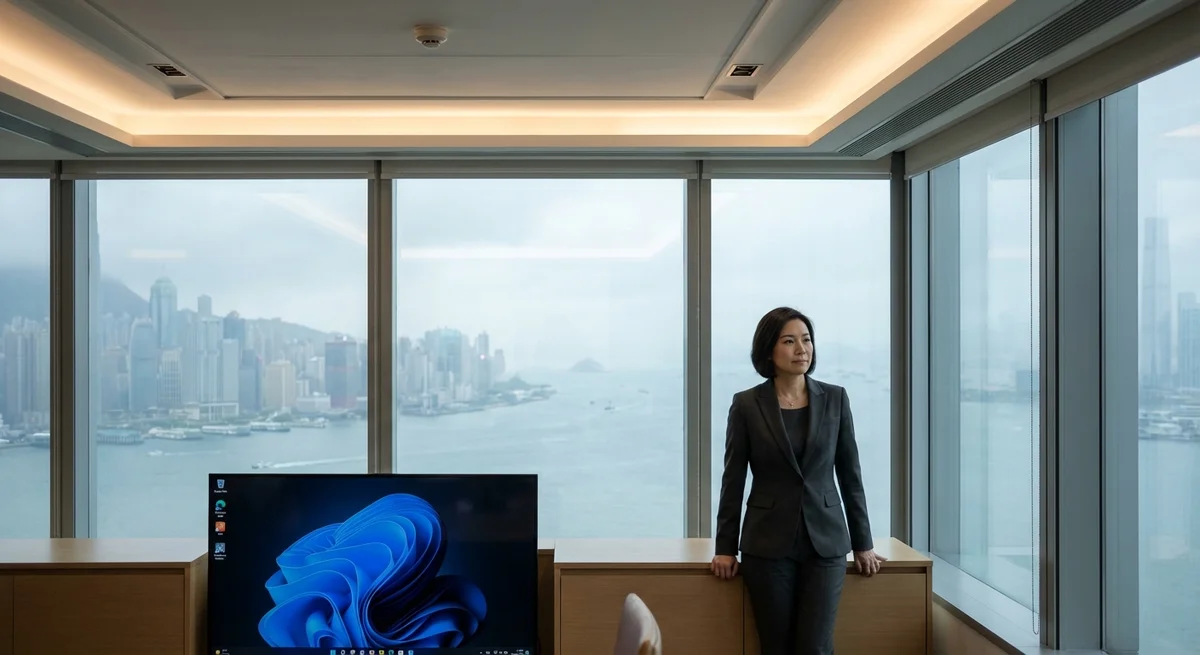
While Western venture capitalists try to guess when the next chatbot subscription will finally pay off, Hong Kong has decided to play big and play long. Esther Wong, who watched the rise and transformation of Chinese giant SenseTime from the inside, is launching a new fund, 3C AGI Partners. The sum of $100 million may look modest next to OpenAI's multibillion-dollar rounds, but what matters is not only the size but also where the money comes from.
It is capital from some of Hong Kong's oldest and wealthiest family offices, which usually prefer understandable real estate and logistics to abstract algorithms. If these people are opening their checkbooks, the time of experiments is over and the era of large-scale construction has begun.
To gauge the scale of the event, you need to understand the context and the founder's background. As a managing director at SenseTime, Esther Wong handled strategic investments while the company was becoming the world's most valuable developer of facial recognition systems. She knows how to turn academic research into a billion-dollar business and, more importantly, she knows exactly where the rakes lie that AI startups step on.
After the industry ran into regulatory pressure and market volatility, Wong chose to build her own fund, aimed at the industry's holy grail: AGI (Artificial General Intelligence). It is a logical move for someone who understands that narrow AI has already become a commodity, and that real capital will be created where machines learn to think in a general-purpose way.
3C AGI Partners does not intend to spread itself thin across small consumer apps or yet another image generator. Wong's strategy is to find companies building the foundation for general intelligence. That means a focus on model architecture, new training methods and specialized hardware. Backing from family offices gives the fund a distinctive advantage: so-called "patient capital." Unlike classic venture funds, which demand an exit within five to seven years, these investors are ready to wait decades. They understand that building AGI is a marathon, not a sprint, and that the winner takes all.
Why is this happening now, and why in Hong Kong? The city has long been trying to find its new place in the global AI arms race. As a bridge between mainland China and the West, Hong Kong holds a unique, if politically difficult, position.
Launching a fund like this is an attempt to keep talent and technology in the region by building a financial ecosystem that does not depend on the whims of the US stock market or the constraints of Silicon Valley. Wong is effectively creating an alternative center of power, where real-economy experience meets the ambitions of scientists. For startups, it is a chance to access resources that do not demand instant viral metrics but do demand deep scientific rigor.
It is interesting to watch the very nature of AI investing change. Two years ago everyone was hunting for a "ChatGPT killer"; now the focus has shifted to durability and deep integration into industry and finance. The investors behind 3C AGI Partners understand that the road to general intelligence runs through extremely hard engineering problems, not marketing fluff. It is a mature approach, one that young funds in Palo Alto, living from one round to the next, often lack. Wong is betting that the next breakthrough will happen not in the user interface but in the logic of information processing itself.
Ultimately, the emergence of 3C AGI Partners suggests that global capital has finally accepted the inevitability of AGI. It is no longer science fiction or a conference topic; it is an object of portfolio diversification for the world's richest families. When conservative billionaires start putting money into a technology that could potentially change the very notion of labor and capital, it means we have passed the point of no return. The question is no longer whether general intelligence will appear, but under whose financial control it will sit.
The bottom line: Hong Kong's old money is entering the AGI field, which means the stage of "mere curiosity" is over. The future of neural networks will now be contested not only by geeks from California but also by pragmatic billionaires from the East. Can Esther Wong build a new SenseTime without its systemic mistakes?
- Nov 2, 2026Arca gives AI agents finance tasks lasting up to 10 days, but leaves the trades to humans
- Nov 2, 2026Meta's Muse assistant keeps dossiers on loved ones and gets root on Ubuntu by default
- Nov 1, 2026Local models lose to Opus and Codex: 0.21 on a MacBook versus 1.00 for Codex
- Nov 1, 2026Kimi scores 96.2% on a 1C database analytics test and emerges as a fallback if Claude access is blocked
Test Frontier LLMs & Autonomous Agents in One Workspace
Run Claude Opus 5.5, GPT-6, Gemini 3.1, and DeepSeek side-by-side in Nomad AI (nomadnet.ai) — unified model routing, deep research, and multimodal workflows under one subscription.
The AI world, distilled — once a week
Seven stories that actually mattered, hand-picked. No noise, no reposts, no press releases.
Done! Check your inbox for a confirmation.