OpenAI Eyes the Medicine Cabinet: Sam Altman Wants a Cut of Your Drugs
Sam Altman has hinted at a radical change in business model: OpenAI may start investing in drug development not for the sake of science, but for a percentage of sales. Instead of simply selling API access, the company is ready to subsidize computing costs for pharma giants in exchange for a stake in intellectual property. It is a direct challenge to Google DeepMind and its Isomorphic Labs. There are no direct deals yet, but the signal to the market is clear: OpenAI wants to be a co-author of the next blockbuster drug, claiming a share of the profit from every pill created with the help of its models.
AI-processed from 36Kr (36氪); edited by Hamidun News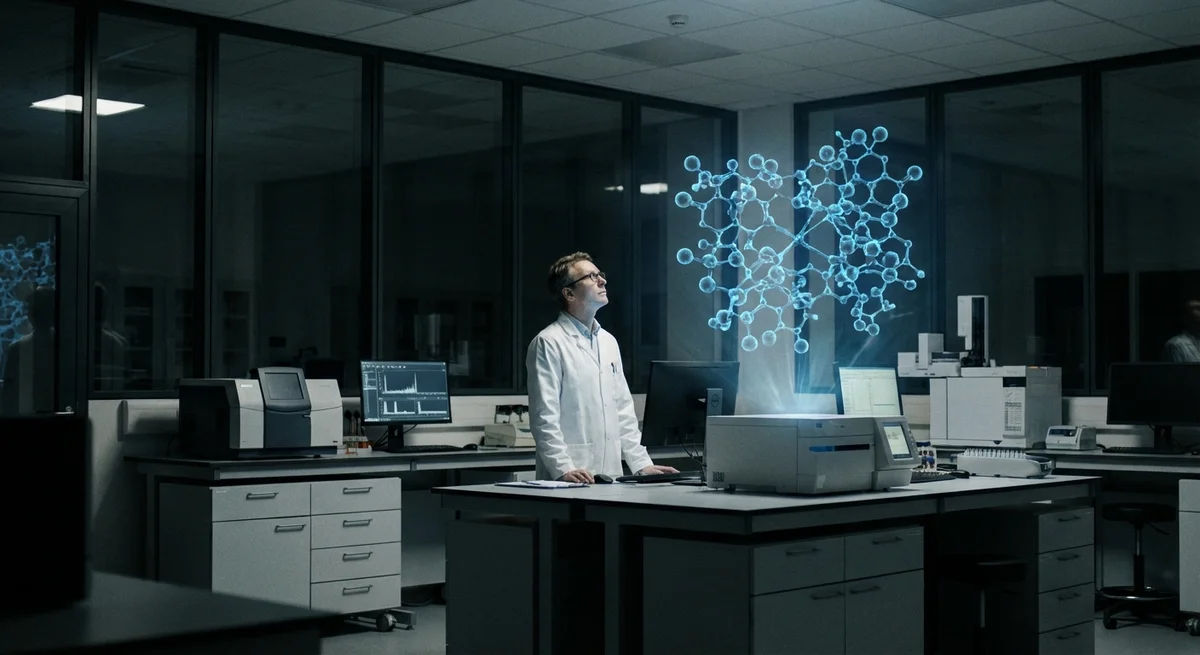
Sam Altman seems to have finally realized that twenty-dollar-a-month subscriptions will not get you far when your electricity and NVIDIA chip bills run into the billions. While the world debates how GPT-5 will write essays, the head of OpenAI is eyeing the most lucrative and unwieldy market on the planet: pharmaceuticals. The idea is simple and cynical at once: the company is ready not just to give access to its brains, but to effectively act as a venture investor for those searching for new ways to treat disease. Instead of the standard fee per token, OpenAI wants a percentage of future drug sales.
The context matters more than the news itself. Developing a new drug today is a casino where the stake is two billion dollars and the development cycle drags on for ten years. Most of that money goes to trying out options that ultimately do not work. AI promises to cut that path several times over. Google, with its DeepMind division, has long played in this field and created Isomorphic Labs, but Altman is proposing a different scheme. He wants to build an ecosystem where OpenAI takes on the computing risk in exchange for long-term royalties. That turns an IT company into a full partner of Big Pharma, sharing both the risks and the enormous profits.
This approach radically changes the rules of the industry. AI models used to be seen as a tool, like an advanced microscope or a powerful calculator. Now Altman is laying claim to intellectual co-authorship. If a model helped find a molecule that treats a rare disease, why should the model's developer settle for a couple of cents per request? It is a logical step in OpenAI's evolution: from a purely technology startup to a global holding company that controls key intellectual assets in medicine and biology.
For biotech startups, the offer looks like a deal with the devil. On one hand, they get access to computing power and models they cannot afford. On the other, they give up part of their future independence and profit to a company that already strives for dominance in every field. Altman stresses that there are no such agreements yet, but the very publicity of the statement suggests that negotiations behind closed doors are already in full swing.
The question is how far regulators will let OpenAI monopolize the process of discovering new knowledge. If one company holds the keys to creating most new drugs, it would gain unprecedented leverage over the healthcare system. But such trifles are unlikely to stop Sam Altman: his goal has always been broader than building a chatbot. He is laying the foundation for a world where every valuable thought or discovery carries a built-in tax in favor of OpenAI.
The bottom line: OpenAI is turning from a software vendor into an investment fund with a supercomputer in tow. Is the industry ready to pay Sam Altman a tax on intelligence?
- Nov 2, 2026Meta's Muse assistant keeps dossiers on loved ones and gets root on Ubuntu by default
- Nov 1, 2026Local models lose to Opus and Codex: 0.21 on a MacBook versus 1.00 for Codex
- Nov 1, 2026Kimi scores 96.2% on a 1C database analytics test and emerges as a fallback if Claude access is blocked
- Nov 1, 2026OpenAI Rewrites GPT Behavior Rules: Five Values and a Chain of Command
Test Frontier LLMs & Autonomous Agents in One Workspace
Run Claude Opus 5.5, GPT-6, Gemini 3.1, and DeepSeek side-by-side in Nomad AI (nomadnet.ai) — unified model routing, deep research, and multimodal workflows under one subscription.
The AI world, distilled — once a week
Seven stories that actually mattered, hand-picked. No noise, no reposts, no press releases.
Done! Check your inbox for a confirmation.