Adobe Burns the Bridge: Why Animate Became Expendable in the AI Era
Adobe is officially ending the history of Animate, the tool we knew for decades as Flash. The application, which survived the move from Macromedia to Adobe and a rename in 2016, is headed for the scrap heap of history. The reason is simple and pragmatic: the corporation is reallocating resources toward artificial intelligence. While users voice their discontent, Adobe is betting on Firefly and generative tools. This is not just the shutdown of a piece of software; it symbolizes the end of the era of hand-drawn animation in favor of algorithmic automation. The old world is giving way to a new one, where generation speed matters more than fine-tuning every frame.
AI-processed from CNews AI; edited by Hamidun News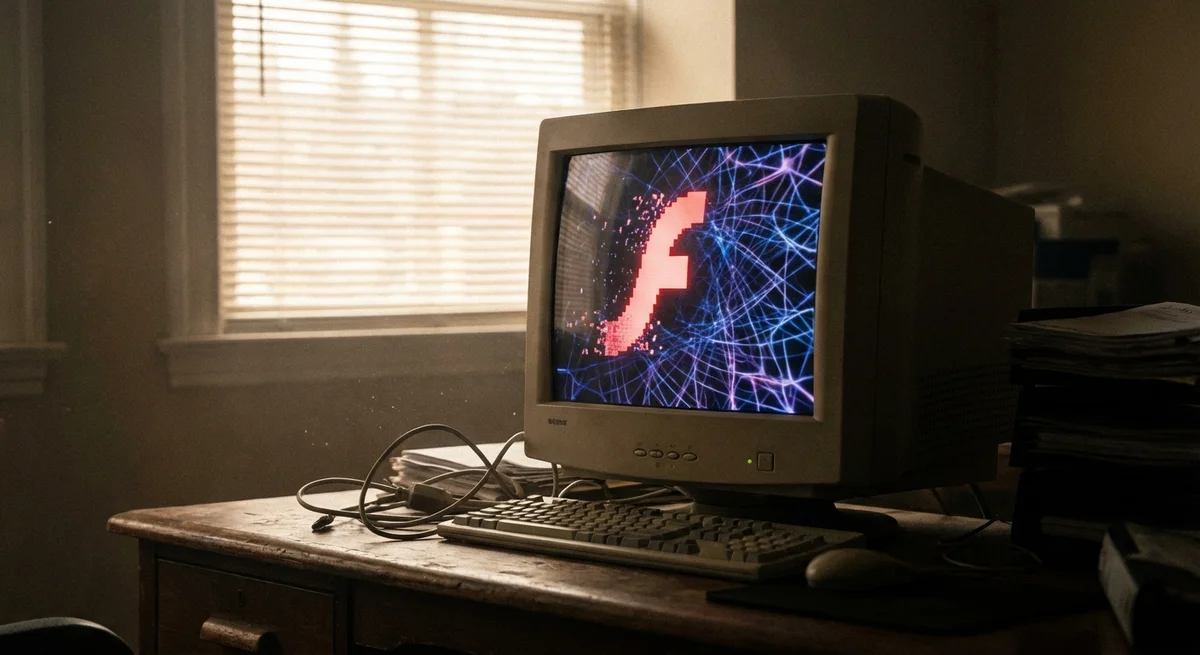
Remember when the internet was made of bouncing buttons, strange cartoons and games that took forever to load? That was the world of Flash, and it seemed eternal. Today Adobe delivered the final blow to that nostalgia. The company has decided to shut down Animate, the direct heir of the technology that once shaped the look of the World Wide Web. After almost thirty years of service, the application is being retired, and the reason has nothing to do with technical obsolescence. It is cold corporate strategy. Adobe no longer wants to spend resources supporting tools of the past while the gold mine of artificial intelligence looms on the horizon.
The history of this software began back in 1996, when the world was only getting used to dial-up connections. It was then FutureSplash Animator, which later became Macromedia Flash and the de facto standard for any interactive content. Adobe acquired the technology in 2005, but never managed to shield it from criticism by Steve Jobs and the rapid arrival of HTML5. In 2016 the company tried to rebrand, turning Flash into Animate to shake off the dust of the ages and appeal to modern artists. But as time has shown, even a new sign does not help when the foundation of the house begins to crack under the weight of new industry standards.
Now Adobe is making a sharp turn toward neural networks. Over the past year we have watched the company aggressively build Firefly into all of its products, from Photoshop to Premiere Pro. Developing and maintaining a classic vector animation tool requires a huge staff of engineers and testers.
In a brutal race with OpenAI, Google and startups such as Runway, Adobe simply cannot afford the luxury of keeping a "suitcase without a handle". Every dollar that used to go toward fixing bugs in Animate now goes toward training generative video models. It is a pragmatic business choice, made by a company that understands tomorrow belongs not to those who can move keyframes by hand, but to those who can write the right text prompt.
For the professional community, the news came as a painful blow. Thousands of animators around the world spent years honing their craft in this very environment. Despite all of Adobe's whims, Animate remained a unique hybrid of vector drawing and classic animation. Users will now have to either move to alternatives such as Toon Boom or accept that their workflow will soon change beyond recognition. Adobe is clearly hinting that the future of animation is not drawing lines but managing data flows that generate the picture in fractions of a second. That raises reasonable concerns among professionals: will creativity turn into simple moderation of whatever the algorithm offers?
Seen more broadly, the closure of Animate is a symptom of a major transformation of the entire software market. We are entering an era in which "traditional" software with buttons and toolbars is starting to look like an anachronism. Adobe is the first of the giants to opt for such a radical cut to its legacy for the sake of the future. The company understands that if it does not build the world's best AI animation tool today, some brash Silicon Valley startup will take its place tomorrow. In this battle there is no room for sentimentality toward brands thirty years old. Legends die to make room for the code of the next generation.
The bottom line: Adobe has finally acknowledged AI as its number one priority, even at the cost of shutting down iconic products. Can generative video fully replace the flexibility of vector animation, or are we losing an important layer of digital culture?
- Nov 2, 2026Arca gives AI agents finance tasks lasting up to 10 days, but leaves the trades to humans
- Nov 2, 2026Meta's Muse assistant keeps dossiers on loved ones and gets root on Ubuntu by default
- Nov 1, 2026Local models lose to Opus and Codex: 0.21 on a MacBook versus 1.00 for Codex
- Nov 1, 2026Kimi scores 96.2% on a 1C database analytics test and emerges as a fallback if Claude access is blocked
Test Frontier LLMs & Autonomous Agents in One Workspace
Run Claude Opus 5.5, GPT-6, Gemini 3.1, and DeepSeek side-by-side in Nomad AI (nomadnet.ai) — unified model routing, deep research, and multimodal workflows under one subscription.
The AI world, distilled — once a week
Seven stories that actually mattered, hand-picked. No noise, no reposts, no press releases.
Done! Check your inbox for a confirmation.