FedEx bets on AI: when your package gets smarter than the logistics manager
FedEx is moving its enterprise logistics onto AI. For large customers, tracking is no longer just a dull status line in an app; it now means managing expectations in real time. The system crunches massive volumes of data to predict delays and offer flexible delivery options before the customer even starts to worry. FedEx paid special attention to returns, the most painful stage of online retail. Returns used to mean an endless chain of support tickets and lost money. Now algorithms automate the process, saving millions on empty truck runs. For FedEx, this goes beyond optimization: it's a way to survive in a world where Amazon sets the standards. Logistics is becoming invisible and genuinely smart.
AI-processed from AI News; edited by Hamidun News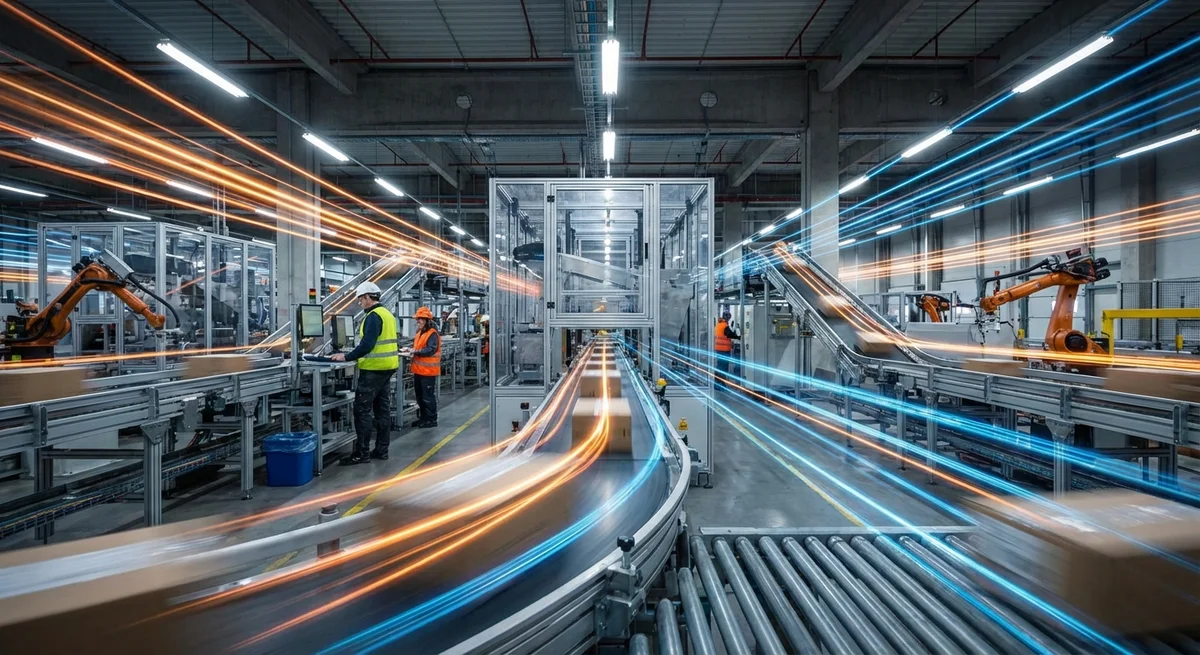
Imagine your package isn't just a cardboard box but a digital object with its own intelligence. We've long since accepted logistics as slow, clumsy, and often frustrating. FedEx, however, has set out to prove that the era of "dumb" boxes is over. While we keep refreshing the tracking page out of habit, the company is building a system in which AI manages every stage of a product's journey. That includes the stage retailers try hardest not to talk about out loud: returns.
Logistics used to effectively end the moment a truck pulled out of the warehouse gate. After that came a "gray zone" where the customer saw only terse updates like "in transit." But times have changed. Today's shoppers, raised on Amazon's standards, want more than a rough location for their shipment; they want the exact time it will reach their door. Any slip in the schedule now feels like a personal insult. FedEx spent a long time playing catch-up, but its current push to integrate neural networks into enterprise customers' workflows is an attempt not just to match competitors but to seize the lead in the technology race.
FedEx's new system sits at the intersection of predictive analytics and deep automation. For large companies that move thousands of items every day, any delay snowballs into an avalanche of support tickets and angry emails. Now algorithms analyze real-time data streams and predict potential problems before they happen. If a coastal storm or a port strike threatens to blow deadlines, the system automatically reroutes shipments or notifies the recipient with alternative options. That shifts logistics from constant firefighting to deliberate planning.
Reverse logistics deserves a closer look. Returns are sheer hell for any large business. Products come back, get lost in intermediate warehouses, sit idle as dead stock, and eventually lose their value. FedEx's AI takes over sorting and optimizing these flows. The system figures out where it makes the most sense to send a returned item at any given moment: back to the central warehouse, to the nearest distribution center for resale, or to a disposal facility. This approach saves millions of dollars by cutting empty truck runs and unnecessary warehouse operations.
Why is FedEx pouring so many resources into this right now? Because data has become more valuable than jet fuel. In a fiercely competitive market, the winner isn't whoever has the most planes but whoever uses them most efficiently. Moving onto AI means FedEx stops being just a shipping company and becomes a full-fledged technology partner for businesses. That changes the rules for all of retail. Returns used to be a pure loss; with smart management, they become a controllable business process that can be optimized.
We're approaching the point where supply chains become fully transparent and autonomous. This isn't only about the self-driving trucks we're all waiting for, but also about invisible algorithms making thousands of decisions in milliseconds. FedEx is betting that in the future, customers shouldn't have to think about delivery at all. It should simply happen, quietly and precisely, like well-tuned software. If the experiment succeeds, the "lost package" will go the way of paper maps.
The big question: can legacy giants like UPS answer with something on the same scale, or will FedEx take the tech-driven delivery market for good?
- Nov 2, 2026The Verge reviewer builds a $50 Meta Muse Charm alternative with Claude Code
- Oct 31, 2026Worldwide Express hands disputed invoices to AI agents and cuts unresolved disputes by 75%
- Oct 30, 2026AWS gives coding agents a live site preview straight from an isolated session
- Oct 30, 2026Agent traffic on Zocdoc is up 30x since July, and ChatGPT faces two health lawsuits
Ship AI Faster with Founders, Engineers & Weekly Architecture Reviews
Inside Vibe Club (hamidun.com/club) — weekly live masterminds with Zhemal Khamidun, Tech Radar, full LMS access, and 370+ production Claude Code skills.
The AI world, distilled — once a week
Seven stories that actually mattered, hand-picked. No noise, no reposts, no press releases.
Done! Check your inbox for a confirmation.