Samsung and Glass Substrates: Koreans Find a Way to Cool Down AI-Chip Fever by 2027
The semiconductor industry has hit a physical ceiling, and this is no exaggeration. While we marvel at the new capabilities of large language models, engineers at factories in South Korea and Taiwan are scratching their heads over how to prevent these models from literally burning down data centers. Traditional organic substrates, on which chip crystals are mounted, are beginning to fail. They warp from heat, limit connection density, and simply cannot keep pace with the appetite of modern GPUs. In this situation, the transition to glass looks not just logical, but like the only salvation for the future of AI-hardware. Samsung Electro-Mechanics has decided that the time for laboratory experiments has ended. The company officially transferred its glass substrate project from its Frontier Technology Research division to an active business department.
AI-processed from 36Kr (36氪); edited by Hamidun News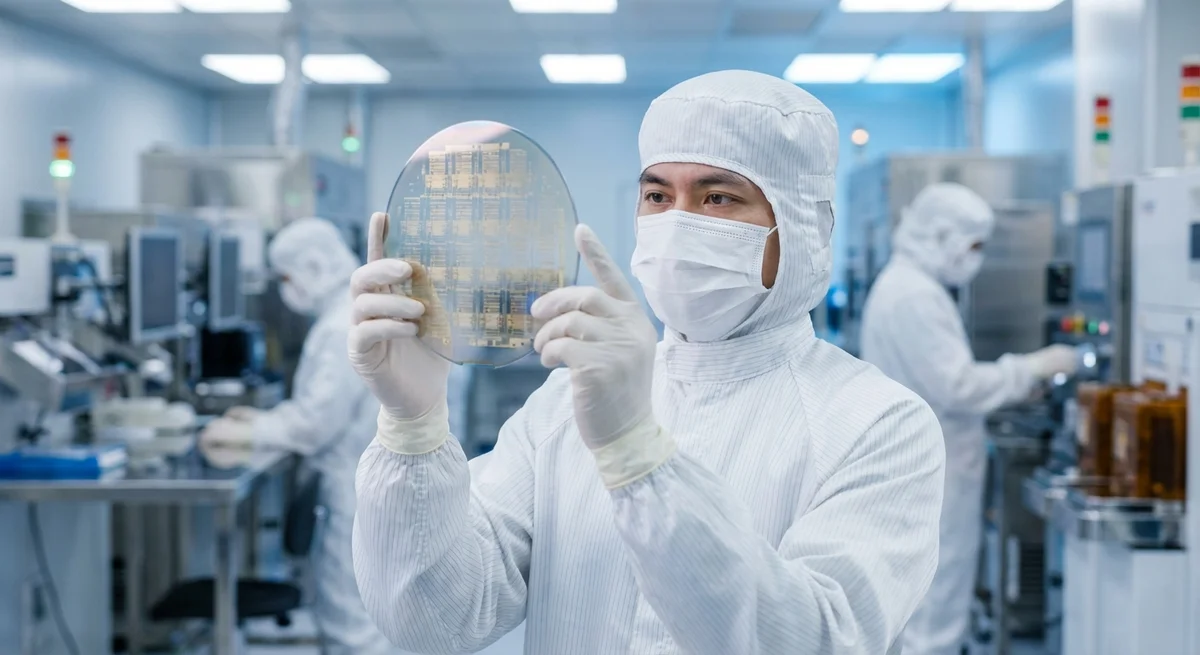
The semiconductor industry has hit a physical ceiling, and this is no exaggeration. While we marvel at the new capabilities of large language models, engineers at factories in South Korea and Taiwan are scratching their heads over how to prevent these models from literally burning down data centers. Traditional organic substrates, on which chip crystals are mounted, are beginning to fail. They warp from heat, limit connection density, and simply cannot keep pace with the appetite of modern GPUs. In this situation, the transition to glass looks not just logical, but like the only salvation for the future of AI-hardware.
Samsung Electro-Mechanics has decided that the time for laboratory experiments has ended. The company officially transferred its glass substrate project from its Frontier Technology Research division to an active business department. In corporate parlance, this means a shift from "how do we do this" to "who will we sell this to and how quickly." Insiders confirm that the Koreans have already begun preparing for mass production, scheduled for 2027. This is not just a reshuffling of office furniture, but a strategic maneuver in the war for the advanced chip packaging market.
Why all the fuss about this glass? It all comes down to physical properties. Glass is much harder than plastic and organic polymers, it does not deform at the extreme temperatures that have become the norm for chips like Nvidia's H100 or future Blackwell. This allows more chiplets to be placed on a substrate and connected with incredible density. Essentially, glass allows you to turn several separate crystals into one giant superchip that works faster and consumes less energy.
Samsung understands that if they are the first to perfect this technology, they can dictate terms to the entire industry, including Intel, which is also actively exploring this direction. The transfer of the project to a business division also means that Samsung is already working extensively with "global customers" on creating prototypes. In other words: Nvidia, AMD, and possibly Apple have already received or will soon receive test samples to understand how to fit their future architectures into a glass format.
The race for 2027 has begun, and Samsung clearly has no intention of surrendering leadership to TSMC, which currently leads in traditional packaging but could sleep through the glass revolution. Of course, we still need to get to 2027, and glass production for chips is an incredibly complex technological process. Glass is fragile, it requires completely different methods for drilling microscopic holes and applying conductive traces. However, the fact that Samsung has already allocated business resources to this speaks to high confidence in success.
We stand on the threshold of a moment when computer architecture will change at a fundamental level. And the irony here is that the salvation for the most advanced digital technologies will be a material that humanity has been using for thousands of years. The key point: Samsung is betting on physics, not just transistors. If glass substrates take off in 2027, we will see a new leap in AI performance that we can only dream about on current silicon. Will Intel be able to respond faster?
Need AI working inside your business — not just in your newsfeed?
I build production AI for companies — custom CRM, internal tools, autonomous agents, workflow automation. Owned by you, shaped to your process, no per-seat tax. Built by Zhemal Khamidun, CPO of AlpinaGPT (AI platform, 6,000+ users).
The AI world, distilled — once a week
Seven stories that actually mattered, hand-picked. No noise, no reposts, no press releases.
Done! Check your inbox for a confirmation.