SpaceX Absorbs xAI: Why Does Elon Musk Need Server Racks in Orbit
Elon Musk has finally erased the boundaries between his empires, merging SpaceX and xAI into a single structure. This deal instantly transformed the combined company into the most valuable private player in the market, but financial records are just the tip of the iceberg here. The real intrigue lies in plans to build data centers directly in outer space. Musk has moved money from one pocket to another again, but this time the scale of the maneuver changes the rules of the game for the entire artificial intelligence industry. The context of what is happening is simple and harsh: space on Earth is running out, as is cheap energy. Modern clusters like Memphis Supercomputer, where Grok is being trained, consume hundreds of megawatts, require complex water cooling systems, and cause headaches for environmentalists and energy engineers.
AI-processed from TechCrunch; edited by Hamidun News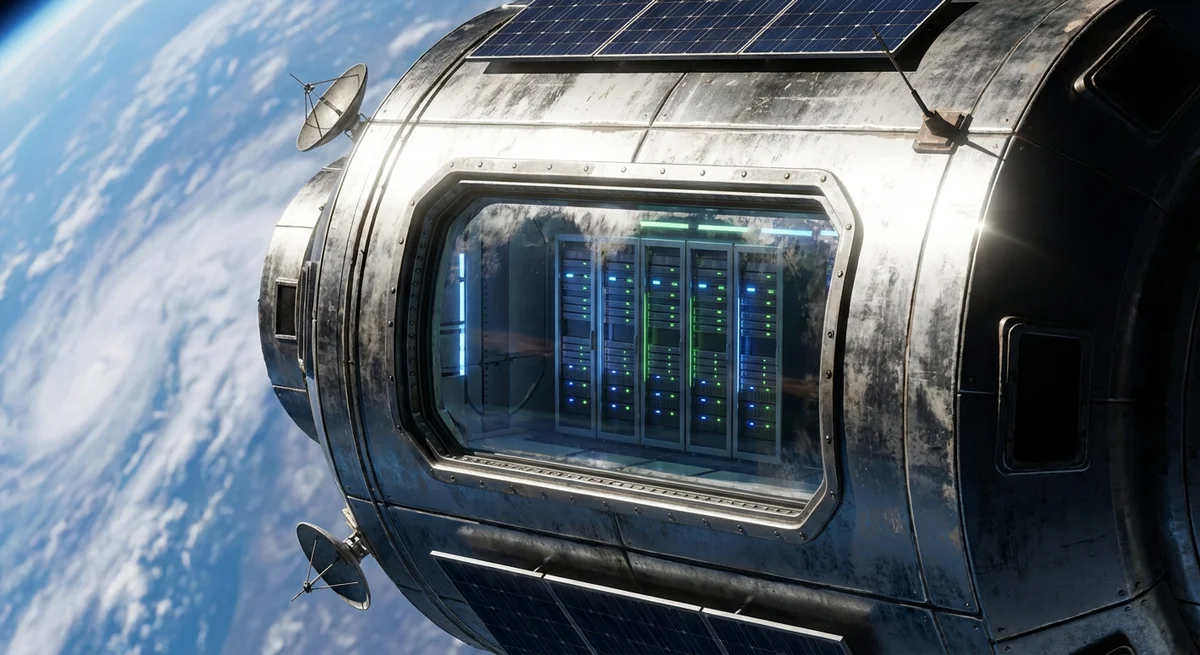
Elon Musk has finally erased the boundaries between his empires, merging SpaceX and xAI into a single structure. This deal instantly transformed the combined company into the most valuable private player in the market, but financial records are just the tip of the iceberg here. The real intrigue lies in plans to build data centers directly in outer space. Musk has moved money from one pocket to another again, but this time the scale of the maneuver changes the rules of the game for the entire artificial intelligence industry.
The context of what is happening is simple and harsh: space on Earth is running out, as is cheap energy. Modern clusters like Memphis Supercomputer, where Grok is being trained, consume hundreds of megawatts, require complex water cooling systems, and cause headaches for environmentalists and energy engineers. Microsoft and Google have already begun buying up nuclear power plants to feed their neural networks. Musk, however, decided to take a different path and literally rise above the problem. In space, there is no shortage of sunlight to power panels, and the vacuum provides endless opportunities for heat dissipation if radiators are designed correctly.
Technically, this looks like a logical development of the Starlink network. Thousands of satellites already orbit above our heads, providing connectivity, but now they can become nodes of a distributed supercomputer. Placing computational power in orbit allows xAI to ignore the constraints of earthbound power grids and build clusters on a scale that would be physically impossible within a single city or even a state. SpaceX here acts not just as the owner of rockets, but as a logistics giant, capable of cheaply launching tons of hardware to the necessary altitude.
Of course, skeptics will immediately point to signal delay and cosmic radiation, which does not spare delicate GPU electronics. But for model training, a delay of a few milliseconds is not critical, and SpaceX has spent years perfecting chip protection technologies. Moreover, having its own fleet of reusable rockets allows for quick updates of "hardware" in orbit, replacing outdated H100s with fresher solutions without needing to construct new buildings and lay cables underground.
This deal also solves an important strategic task for Musk — creating a unified ecosystem. Data from Tesla, Optimus robots, and Starlink satellites will now be processed within a single company that also builds the infrastructure for itself. This makes xAI the only player that does not depend on cloud services from Microsoft or Amazon. In a world where control over computation is becoming more important than control over oil, Musk is building his own, independent from states "computational superpower."
The key question: will space become salvation from AI's energy hunger, or will we simply litter the orbit with burned-out graphics cards?
Want to stop reading about AI and start using it?
AI News is a curated feed of AI/tech news. Hamidun Academy teaches you to use AI systematically in your work.
The AI world, distilled — once a week
Seven stories that actually mattered, hand-picked. No noise, no reposts, no press releases.
Done! Check your inbox for a confirmation.