SpaceX and xAI: Elon Musk Is Assembling a Super-Puzzle of Rockets and Neural Networks
Elon Musk is in talks to merge SpaceX and xAI. This is not just bureaucratic reshuffling but an attempt to build a closed ecosystem in which data from Starlink satellites and rocket sensors feeds Grok, while AI helps design extremely complex systems. After xAI's success in raising billions of dollars, the consolidation looks like an attempt to speed up the road to AGI. If the deal goes through, Musk gains unique leverage over OpenAI and Google by joining the physical world with digital intelligence.
AI-processed from Bloomberg Tech; edited by Hamidun News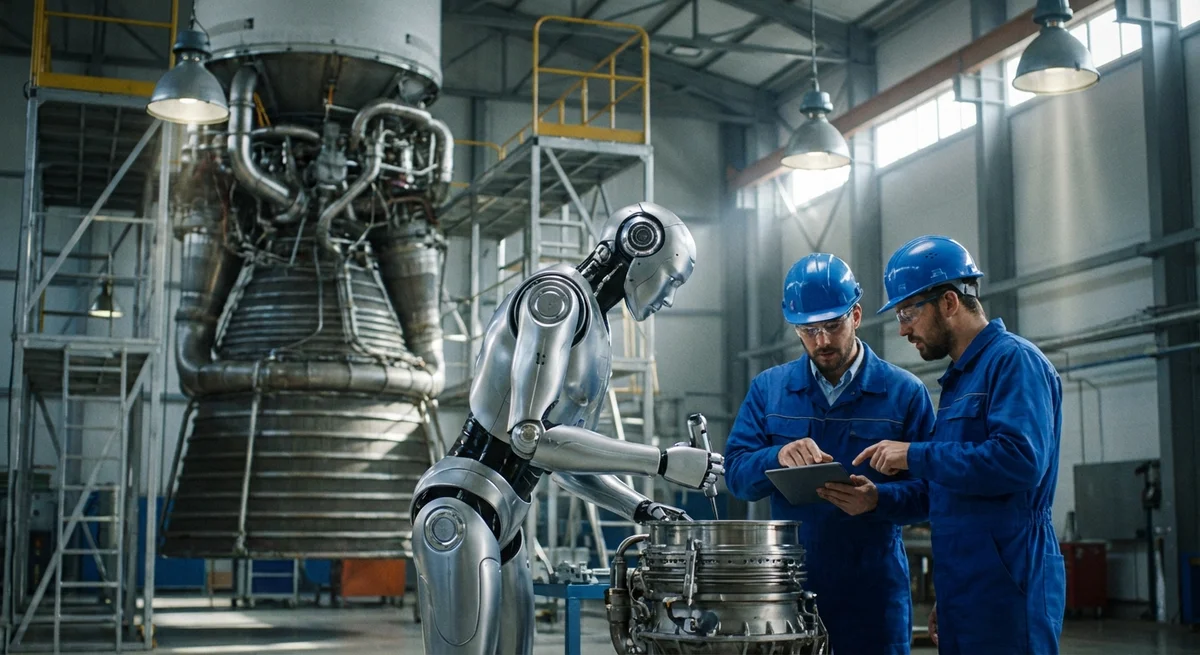
Elon Musk is once again making lawyers and investors clutch their heads as he moves pieces around his global chessboard. This time the subject is a possible merger of space giant SpaceX and ambitious AI startup xAI. If you thought Grok existed only to give ironic replies to users on the social network X, you clearly underestimated the appetite of the richest man in the world. This is not merely an attempt to optimize taxes or simplify the management structure, but a strategic maneuver that could change the rules of the race for strong artificial intelligence.
To understand why this is happening now, it helps to recall the context of recent months. Musk has been actively redistributing resources among his companies. We have already seen Tesla engineers move to xAI, and scarce Nvidia H100 chips originally intended for Autopilot suddenly turn up in the data centers of his AI startup.
Musk is building a single ecosystem in which each company acts as a donor for another. In this scheme SpaceX is not just rockets, it is Starlink. The satellite network enveloping the Earth generates colossal volumes of data and provides connectivity anywhere on the planet.
Training the next generation of AI requires not only text from the internet, which is already running out, but also real physical data about the world. SpaceX has it in abundance.
The technical synergy is obvious to anyone who understands the complexity of modern engineering. Designing Raptor engines or calculating trajectories for returning Falcon 9 boosters are tasks where AI can outperform any staff of engineers. By combining xAI's brains with SpaceX's production capacity and data, Musk creates a closed loop: AI helps build better rockets, and rockets deliver the infrastructure for even more powerful AI. It is a direct challenge to OpenAI and Microsoft, which have no "hardware" of their own in the physical world. While Sam Altman asks for trillions of dollars to build chip factories, Musk already has working factories and the largest rocket in history, Starship.
The financial side also looks logical, if provocative. SpaceX is valued at more than 200 billion dollars and is one of the most stable private companies in the world. xAI, by contrast, is in a phase of aggressive growth and constant search for investment. A merger would let xAI lean on SpaceX's enormous valuation, making the company practically invulnerable to competitors in raising capital. Investors who once feared putting money only into Musk's "software" would now buy a stake in a company that owns both the sky and the mind. Of course, this will raise questions from regulators and minority shareholders, but Musk rarely pays attention to such trifles when the colonization of Mars is at stake.
Ultimately, this merger tells us that Musk has finally lost faith in the idea of separate companies for separate tasks. He is building what could be called "Musk's universal intelligence." In this vision of the future, Tesla handles vision and movement on the ground, SpaceX handles expansion and global connectivity, and xAI becomes the central nervous system that ties everything together. If Grok gets direct access to Starship telemetry, we may see the first steps toward an AI that understands the laws of physics as well as we understand grammar. And that is perhaps the shortest path to AGI, which is so hotly debated in Silicon Valley.
The bottom line: Musk is finally moving to an "all-in-one" model, turning his companies into a single technological fist. Can anyone stand up to a structure that has both the best neural networks and the world's only working heavy-lift rockets?
- Nov 1, 202616 models tested on 7 search tools: Exa averaged 10.5 out of 14, SearXNG about 3
- Nov 1, 2026OpenAI Rewrites GPT Behavior Rules: Five Values and a Chain of Command
- Oct 29, 2026Gemini 4 Carbon tops independent rankings, but only cyber defenders can use it
- Oct 29, 2026Study: A Single Random Failure Makes AI Agents Abandon a Working Tool 11.6% of the Time
Test Frontier LLMs & Autonomous Agents in One Workspace
Run Claude Opus 5.5, GPT-6, Gemini 3.1, and DeepSeek side-by-side in Nomad AI (nomadnet.ai) — unified model routing, deep research, and multimodal workflows under one subscription.
The AI world, distilled — once a week
Seven stories that actually mattered, hand-picked. No noise, no reposts, no press releases.
Done! Check your inbox for a confirmation.