Neural Networks at the Checkpoint: How Telematics Is Replacing the Guard With a Logbook
Telematics and neural networks have finally met at the checkpoint. The Exzotron AI case shows how to automate vehicle entry to a facility without human involvement. The system does more than see a vehicle: it reads license plates and even the driver's documents, matching them against a database. That tackles the perennial problems of queues and manual-entry errors. While the world debates AI's creative abilities, the real economy is deploying the technology where it is needed most: logistics and access control. The takeaway: checkpoint automation is no longer an expensive toy and is becoming the standard for any business with its own vehicle fleet.
AI-processed from Habr AI; edited by Hamidun News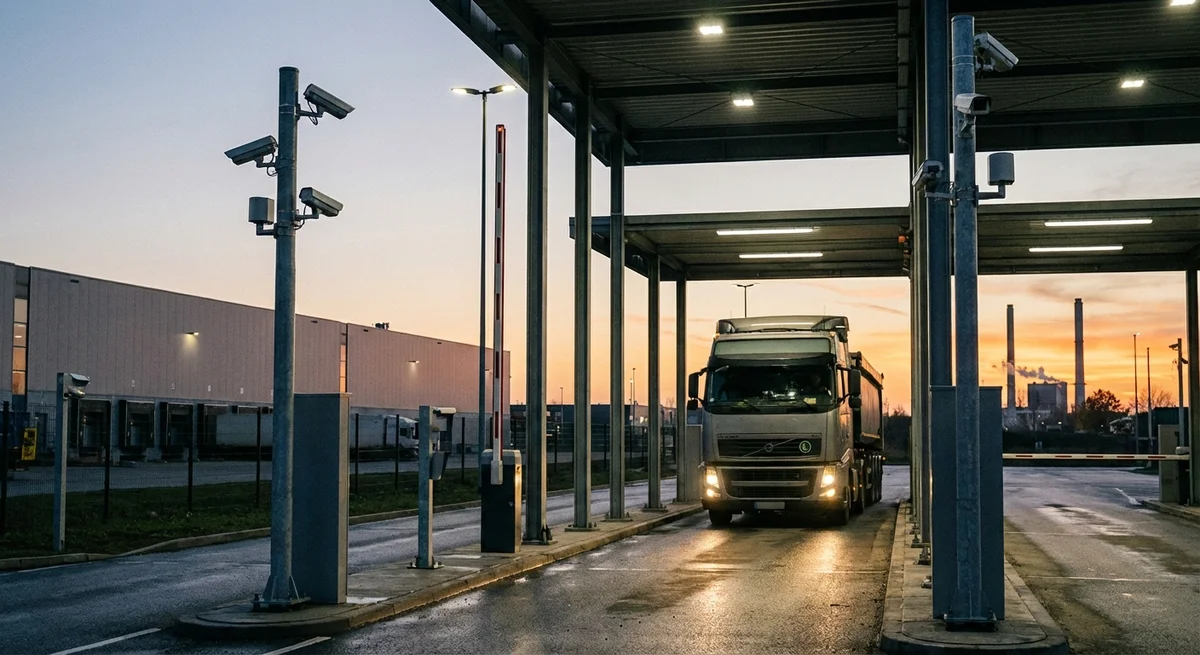
Picture a typical scene at the entrance to a large agricultural complex or a construction site: a line of trucks, a grim man in camouflage holding a greasy logbook, and attempts to decipher the handwriting on a waybill. This is a bottleneck where businesses lose time, money and nerves. But the era of paper bureaucracy at the barrier gate seems to be coming to an end. While we amuse ourselves generating pictures, neural networks are quietly taking over the most mundane and dusty work. Telematics and artificial intelligence are a pairing that was long overdue, since both fields do the same thing: collect and analyze data to bring order to chaos.
The developers at Exzotron Telematics decided people had been burdened with routine long enough, and rolled out a neural-network-based solution for automatic entry control. The logic is simple: why make a guard squint at license plates if a camera with the right software can do it faster and more accurately? The system does not merely record that a vehicle passed; it turns the image into structured data. The network is trained to recognize not only clean plates on a perfect sunny day but also those caked in a layer of native black soil, and to read information from documents the driver holds up to the camera.
Why does this matter right now? Because the "human factor" has become too expensive a pleasure. A person can get distracted, get one digit wrong or, let's be honest, wave in one of "their own" in violation of the rules. A neural network is impartial. It instantly checks the vehicle's plate against the list of permitted vehicles, verifies the pass's expiry date, and only then tells the controller to open the barrier. All of this feeds into the broader telematics system, turning scattered data into a single stream of management reporting.
Linking telematics with AI is not just a trendy upgrade but a shift from passive observation to active management. Before, we simply knew where a vehicle was. Now the system understands whether it has the right to be there and whether the driver's documents are all in order. That saves tens of minutes on every trip. Across a fleet of one hundred vehicles, hundreds of hours a month are saved that previously just burned away in checkpoint queues. For a business, this is a direct benefit that can be counted in rubles, not in abstract "innovation."
Of course, deploying such systems is not always a walk in the park. You have to account for lighting, camera angles and the specifics of the documents themselves. But the Exzotron case shows the technology is mature enough to leave the lab and go into real fields. We often expect something magical from AI, like a machine uprising or solving the riddles of the universe, while it quietly learns to read the digits on metal plates better than we do. And, frankly, that is far more useful for the economy.
Ultimately, we are watching neural networks become an invisible layer of infrastructure. Soon we will stop noticing their work, as we stopped noticing GPS. Cameras at entrances will simply do their job, and guards will finally be free for something more intellectual than copying digits into a notebook. Or, at least, to drink tea without the risk of missing an important fuel tanker.
The takeaway: the real economy has finally accepted AI as a working tool. Will neural networks be able to eradicate corruption and on-site errors completely, or will human ingenuity find a way to trick even the smartest algorithm?
Test Frontier LLMs & Autonomous Agents in One Workspace
Run Claude Opus 5.5, GPT-6, Gemini 3.1, and DeepSeek side-by-side in Nomad AI (nomadnet.ai) — unified model routing, deep research, and multimodal workflows under one subscription.
The AI world, distilled — once a week
Seven stories that actually mattered, hand-picked. No noise, no reposts, no press releases.
Done! Check your inbox for a confirmation.