GPT-4 Without a VPN: How Telegram Bots Replaced Official Services for Russians
While Sam Altman builds fences out of geoblocks, Russian developers are cutting windows through the API. Telegram is no longer just a messenger: it has become the main entry point to AI for users in Russia. The scheme is simple. A developer buys API access from OpenAI, Anthropic or Midjourney, wraps it in a convenient bot and sells it to you at a markup. In return, you pay in rubles, with no complicated registration and no hunt for a foreign card. The market is maturing. Crude, hastily built bots have given way to powerful aggregators that combine GPT-4, Claude 3.5 and Gemini in one window. Convenient? Certainly. But remember that you pay an "accessibility tax" and hand your data to an intermediary. Here is how this segment grew into a serious business.
AI-processed from Habr AI; edited by Hamidun News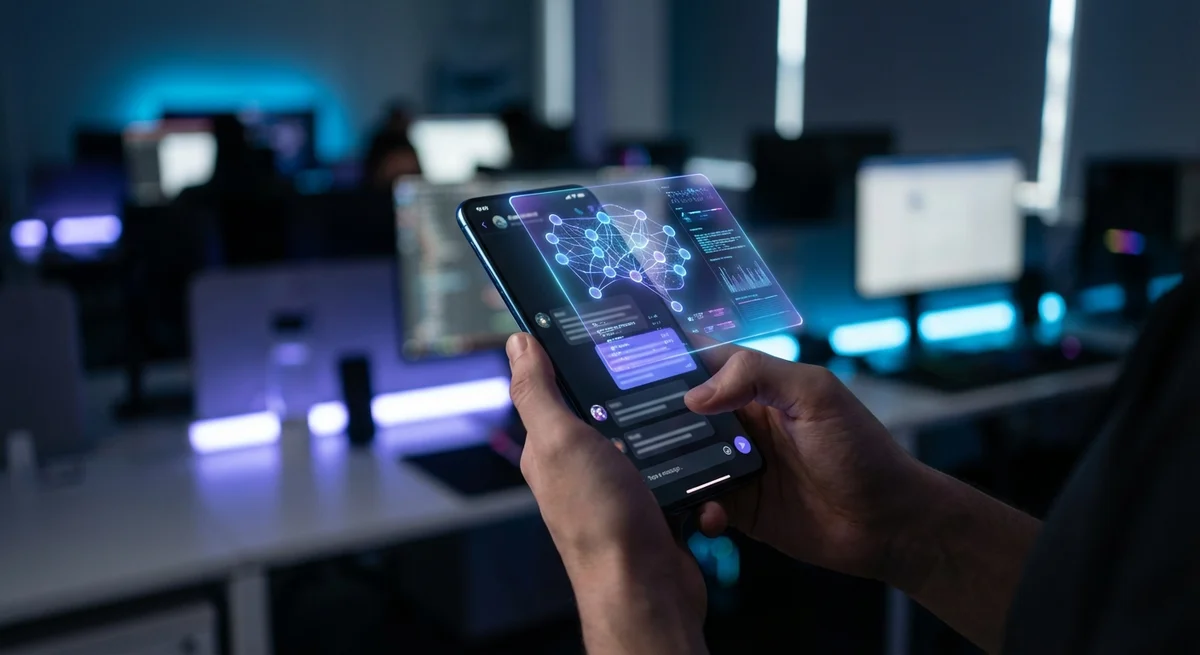
Neural networks burst into our lives so fast that we barely had time to be scared before we started delegating reports and presentation images to them. For users in Russia, though, this technological feast came with a side of bureaucracy. OpenAI, Google and Anthropic have all fenced Russia off behind a digital curtain, demanding a VPN, foreign SIM cards and foreign credit cards. A dead end? Not quite. Nature abhors a vacuum, and Russian developers quickly filled the niche, turning Telegram into the country's main AI hub.
What has changed in the past couple of years? At the start we saw primitive wrappers that simply forwarded your text to GPT-3.5 and returned the answer after a delay. Now the industry has moved up a level. Telegram bots have evolved into full-featured all-in-one tools. This is no longer just a chat with a machine. Modern products offer access to the whole zoo of models at once: write code with Claude 3.5 Sonnet, or draw in Midjourney v6, all without leaving your familiar messenger. Developers realized that selling mere "access" is no longer enough; you have to sell a service.
Why does this matter right now? The market is oversaturated, and the fight has shifted to quality. Users have become pickier: plain text is not enough for them anymore. They want context handling, dialogue memory and high-resolution image generation. In response, bot makers have started to move beyond Telegram and build full web aggregators. It is a logical step: a messenger interface has its limits, while a web version can host a complete workspace that is sometimes even more convenient than the native interfaces from OpenAI or Google themselves.
The economics of the phenomenon are interesting too. In essence, we are watching classic arbitrage of traffic and technology. Developers buy API tokens in bulk and sell them at retail with a markup for convenience. And people pay. They pay not because they cannot set up a VPN, but because their time is worth more. Being able to pay for a subscription with a Russian card and get GPT-4 in two clicks outweighs the wish to save a couple of dollars on a direct subscription. This created a unique local market which, ironically, turned out to be more flexible than the official distribution channels of the Silicon Valley giants.
Still, let's be honest: these are all still crutches. Using intermediaries always carries risks. First, privacy: your prompts pass through third-party developers' servers before reaching OpenAI. Second, dependence: if OpenAI decides tomorrow to tighten API access from certain IP addresses or toughens its terms of use, this entire ecosystem could wobble. But until that happens, Telegram remains the most democratic way to touch the future.
Bottom line: The AI intermediary industry in Russia has outgrown its "Wild West" stage and become a service business. If you are still struggling with account registration through virtual numbers, maybe it is time to simply find a good bot. The only question is whether you are ready to trust a third party with your data for the sake of comfort.
- Nov 2, 2026Meta's Muse assistant keeps dossiers on loved ones and gets root on Ubuntu by default
- Nov 1, 2026Local models lose to Opus and Codex: 0.21 on a MacBook versus 1.00 for Codex
- Nov 1, 2026Kimi scores 96.2% on a 1C database analytics test and emerges as a fallback if Claude access is blocked
- Nov 1, 2026OpenAI Rewrites GPT Behavior Rules: Five Values and a Chain of Command
Test Frontier LLMs & Autonomous Agents in One Workspace
Run Claude Opus 5.5, GPT-6, Gemini 3.1, and DeepSeek side-by-side in Nomad AI (nomadnet.ai) — unified model routing, deep research, and multimodal workflows under one subscription.
The AI world, distilled — once a week
Seven stories that actually mattered, hand-picked. No noise, no reposts, no press releases.
Done! Check your inbox for a confirmation.