Musk's Energy Gambit: While Microsoft Waits for Nuclear, Memphis Is Already Humming
Elon Musk is once again proving that speed is everything. In Memphis, xAI stood up a 55,000-GPU cluster in a record 19 days, backed by $18 billion in investment. Calling it a server room misses the point: it's a bid for dominance in both energy and compute. While Microsoft and Google sign contracts for nuclear power deliveries by 2030, Musk is building a reality in which AI capacity becomes the new oil. This is the start of the largest infrastructure monopoly yet, one where controlling energy means controlling intelligence. Traditional Big Tech risks falling hopelessly behind, stuck in corporate bureaucracy and long-range plans.
AI-processed from Habr AI; edited by Hamidun News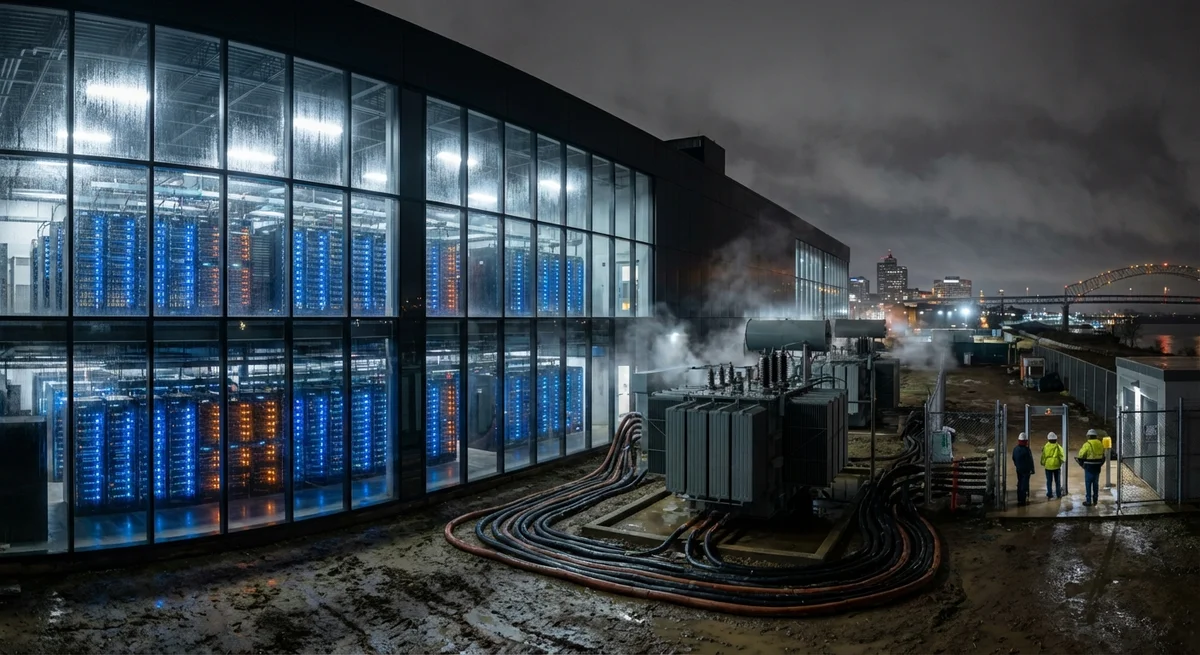
The world has grown used to Big Tech's grand promises, but Elon Musk just showed the difference between "we're planning it for next decade" and "we did it yesterday." While Microsoft looks for salvation in reviving old nuclear reactors and promises carbon neutrality by 2030, 55,000 GPUs are already humming at full tilt in Memphis. xAI delivered the project in an astonishing 19 days. Beyond being another speed record, it's a strategic gut punch to an entire industry accustomed to leisurely corporate cycles, endless approvals, and five-year plans.
Behind these numbers lies something far bigger than a desire to train Grok 3 faster than rivals at OpenAI. We're talking about $18 billion invested in a single facility and an appetite for 2 gigawatts of power. For scale: that's the consumption of a small city, or a couple of modern nuclear reactor units. Musk isn't simply building another data center. He's laying the foundation for a new kind of monopoly that could easily eclipse John Rockefeller's Standard Oil. Only instead of oil, this empire runs on pure electricity and compute cycles.
Why Memphis, and why now? The answer is a global infrastructure famine. All last year, the industry complained about the H100 shortage and the impossibility of getting the chips. Now the chips are available, but a new problem has emerged: there's simply nowhere to plug them in. Old-school power grids weren't designed for loads this monstrous. Microsoft took the white-collar route: strike a deal with the government, revive the Three Mile Island nuclear plant, wait five or six years, and get clean energy. Musk chose the pirate's route: go where there's surplus power and deploy the hardware before local lawyers can draft the first environmental impact report.
This arms race fundamentally changes the rules. The winner used to be whoever had the most elegant algorithm or the most talented research team. Now it's whoever has the thicker cable and more transformers in the backyard. Musk's strategy ties everything together: Starlink satellites for instant connectivity, Tesla's industrial batteries for load balancing, and thousands of Nvidia chips for compute. It's vertical integration on steroids. While Google and Amazon try to squeeze their AI ambitions into strict ESG reports, xAI simply grabs the physical resources needed to train next-generation models.
The most ironic part is how the market and competitors are reacting. Next to this build-out, the traditional players look like lumbering dinosaurs. Yes, nuclear power is green, the right thing to do, and very promising in the long run. But in AI, six years is an eternity, long enough for the technology to turn over three times. By 2030, when Microsoft gets its first "nuclear" electricity for its servers, Musk's models may be several generations ahead, simply because they had the hardware to train on the whole time.
We're entering an era in which control over energy infrastructure becomes the primary geopolitical and economic lever. Whoever first solves the problem of powering millions of GPUs will dictate terms to everyone else. And judging by the pace of work in Memphis, that someone has no intention of waiting for official permission from nuclear energy commissions. Speed of infrastructure deployment is becoming a critical advantage that no amount of money can make up for later.
The bottom line: Musk is turning the AI race into a battle for physical infrastructure, where Big Tech's bureaucracy becomes its biggest weakness. Can the classic giants rebuild their processes fast enough to avoid losing the race for energy?
- Nov 1, 2026Google taught its StreamVibe video agent to decide when to step in on its own: +10.7%
- Oct 30, 2026Mistral opens Large 4 weights: strong at code, but Chinese models score 32 to its 26
- Oct 30, 2026128 AI Agents With No Boss Passed 49% More Tests Than One
- Oct 29, 2026AI Verified Part of Signal's Code with Math in Half a Day for $500, Versus Five Months by Hand
Test Frontier LLMs & Autonomous Agents in One Workspace
Run Claude Opus 5.5, GPT-6, Gemini 3.1, and DeepSeek side-by-side in Nomad AI (nomadnet.ai) — unified model routing, deep research, and multimodal workflows under one subscription.
The AI world, distilled — once a week
Seven stories that actually mattered, hand-picked. No noise, no reposts, no press releases.
Done! Check your inbox for a confirmation.