Galaxy S26 Ultra: Samsung bets on hardware to answer the flood of software AI
Samsung plans to turn the Galaxy S26 Ultra into a full-fledged AI terminal. While rivals polish their software, the Korean company is betting on new hardware: the expected 2nm process should deliver the horsepower needed to run heavy models directly on the device. Beyond the flagship, the industry expects the first serious answer to Meta's glasses and updated Buds 4 Pro with an advanced AI translator. This isn't just a yearly refresh to bump numbers on a spec sheet. It's Samsung's attempt to lead the race for personal AI agents while Apple Intelligence is still learning to understand context. The big question is whether this will be a breakthrough, or whether we'll once again get a cosmetic makeover. *Meta is designated an extremist organization and banned in Russia.
AI-processed from ZDNet AI; edited by Hamidun News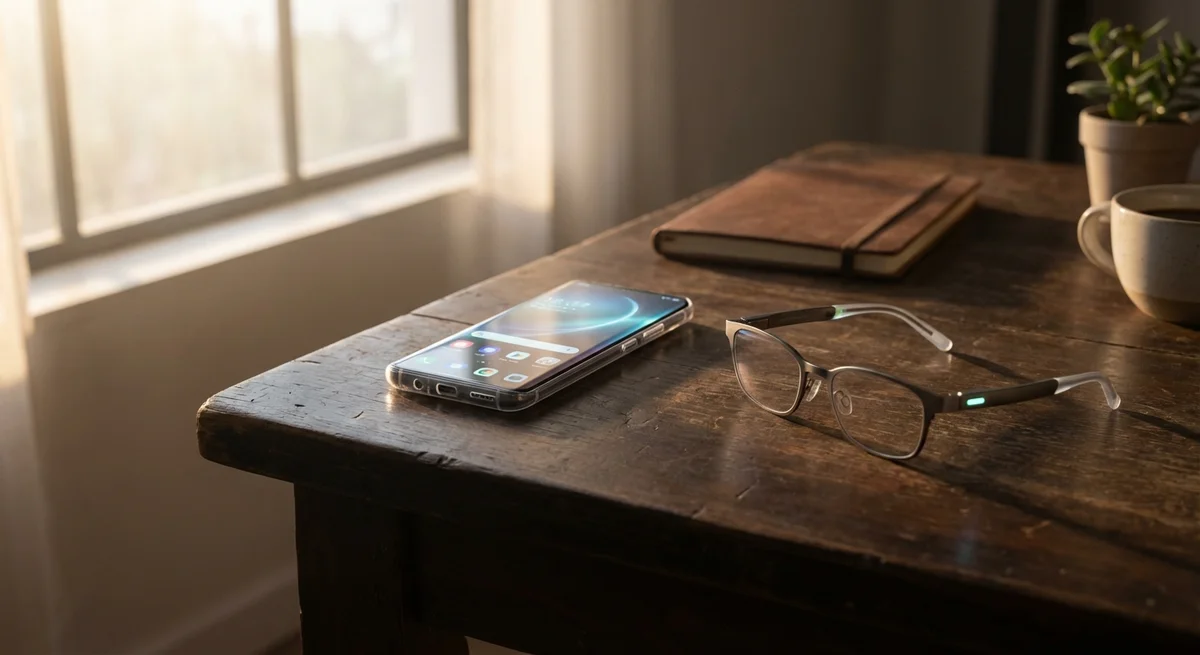
Every year we see the same picture: phone makers try to sell us the same devices with a couple of extra megapixels and a new body color. But 2026 could be the moment when Samsung either has to outdo itself or finally admit that the era of the classic smartphone's dominance is over. Rumors around the upcoming Unpacked 2026 suggest the company is betting on silicon rather than design.
The spotlight is on the Galaxy S26 Ultra, which is supposed to become the brand's first truly "neural" flagship. In 2024, Galaxy AI showed us what cloud computing could do; the S26 Ultra is set to move all of that into the user's pocket, without needing a constant connection to Samsung's or Google's servers.
The real story here is an architectural shift. Samsung is working hard to adopt chips built on a 2nm process. This isn't just a dry spec for tech geeks; it's a critical requirement for mobile AI to survive. To run complex language models locally, a phone needs enormous power efficiency and NPU performance. If the rumors hold, the S26 Ultra will be able to process the context of your messages, documents, and actions in real time without sending a single byte of data to the cloud. That's a direct challenge to Apple, which is still cautious about local computing at this scale. Samsung understands that privacy and speed will be the main currencies over the next two years.
But the phone is only one piece of the puzzle. The most intriguing item on the Unpacked 2026 agenda looks to be smart glasses. After the success of the Ray-Ban and Meta collaboration, the wearables market suddenly came back to life.
Samsung, in partnership with Google and Qualcomm, is preparing a device that could become the "smartphone killer" people have been talking about for a decade. The idea is simple: why pull your phone out of your pocket if an AI assistant sees the world through your eyes? Samsung's glasses are expected to integrate deeply with the Gemini ecosystem, offering augmented reality for navigation and instant text translation right in front of your eyes.
It's a logical move for a company trying to grow beyond being a simple hardware maker and become a provider of intelligent experiences.
Audio won't be forgotten either. The Buds 4 Pro will apparently complete their transformation from earbuds into personal language hubs. We've already seen early forms of simultaneous translation in current models, but in 2026 Samsung plans to make it fully automatic. New audio processing algorithms will isolate the voice of the person you're talking to in a noisy crowd and translate it with minimal latency, creating a "Babel fish" effect. This is a key part of Samsung's strategy to build a seamless environment where devices talk to each other and help users interact with the world, not just consume content.
Why does this matter right now? The smartphone industry has hit a plateau, and consumers see less and less reason to upgrade every two years. Samsung needs to create an urgent need for new hardware. If the S26 Ultra really delivers a level of AI interaction that older models can't match because of hardware limitations, it could restart the sales cycle. The risk is high, though: if the AI features turn out to be marketing toys that quickly get old, the brand's credibility as an innovator will take a hit. In 2026, Samsung will have to prove that its vision of the future isn't just slides in a keynote but working tools that change everyday life.
The bottom line: will 2026 mark the beginning of the end for classic smartphones in favor of wearable AI devices, or will Samsung just build another very powerful but boring phone?
*Meta is designated an extremist organization and banned in Russia.
- Nov 1, 202616 models tested on 7 search tools: Exa averaged 10.5 out of 14, SearXNG about 3
- Nov 1, 2026Google's StreamVibe video agent beats other models by 10.7% on response timing and quality
- Nov 1, 2026OpenAI Rewrites GPT Behavior Rules: Five Values and a Chain of Command
- Nov 1, 2026Voice bots built on LLMs turn to Jev, a fast classifier, for decisions in 200–500 ms
Test Frontier LLMs & Autonomous Agents in One Workspace
Run Claude Opus 5.5, GPT-6, Gemini 3.1, and DeepSeek side-by-side in Nomad AI (nomadnet.ai) — unified model routing, deep research, and multimodal workflows under one subscription.
The AI world, distilled — once a week
Seven stories that actually mattered, hand-picked. No noise, no reposts, no press releases.
Done! Check your inbox for a confirmation.