Factories on Autopilot: Why AI Still Isn't Trusted With the Start Button
We're used to AI in our phones and cars, but on the shop floors of major plants, neural networks are still passive observers. Machine learning excels at equipment diagnostics and vibration analysis, yet actual process control remains in the hands of classical algorithms. The problem isn't a lack of compute. It's the cost of a mistake and the opacity of AI's "black box." The industry is gradually moving from simple monitoring to predictive analytics, but a fully autonomous plant where AI replaces the operator is still a long way off. The main barrier today isn't technology. It's conservatism and industrial safety requirements.
AI-processed from Habr AI; edited by Hamidun News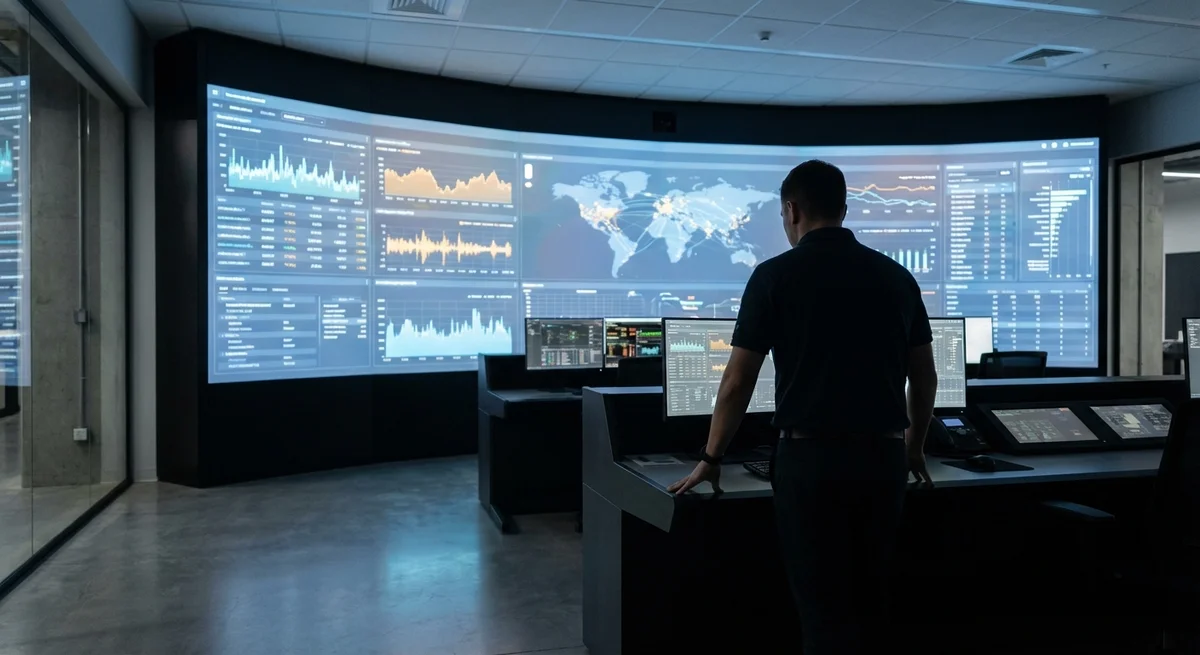
The world watches, transfixed, as self-driving cars maneuver through dense city traffic, processing gigabytes of lidar and camera data in real time. You'd think that if an algorithm can safely get someone home through rush hour, running a stable industrial process at a plant would be a walk in the park. Reality is harsher. In modern industrial control systems (ICS), AI still resembles an intern who is allowed to look at the gauges but forbidden to touch the levers. The result is a paradox: an industry with enormous budgets lags a decade behind the consumer sector in deploying active AI.
The main reason for this slow pace lies in a fundamental difference between the tasks. With a car, an AI error is a local tragedy. At a petrochemical plant or a nuclear power station, a wrong command from a neural network can trigger a regional-scale disaster.
That's why industrial operators have relied for decades on the good old PID controller and hard-coded logic, where every step is predictable and described by a mathematical formula. A neural network, by contrast, is inherently a "black box." It may deliver a perfect result 99% of the time, but no one can guarantee that in the remaining percent it won't decide the best way to cool a reactor is to shut off all the pumps.
Still, the ice has started to break in technical diagnostics. Today, companies are actively deploying machine learning to monitor instrumentation and rotating equipment. Instead of waiting for a turbine bearing to shatter, algorithms analyze micro-vibrations, temperature changes, and acoustic noise. They spot anomalies weeks before even the most experienced field inspector would notice them. This is predictive maintenance, an area where AI already makes real money, saving millions on unplanned repairs. Here, AI acts as the ideal advisor: it flags the problem, but a human makes the final call on replacing the part.
The move from diagnostics to control also runs into data quality. Unlike a video stream, which is a clear, structured environment for AI, data from plant sensors is often noisy, out of sync, or missing entirely because of communication failures. Training a neural network to run a complex distillation column requires flawless historical data spanning years of operation, and most plants simply don't have it. On top of that, processes change constantly: equipment wears out and feedstock composition shifts. Under these conditions, a static model quickly goes stale, and retraining it on the fly is extraordinarily complex and risky.
The industry is now trying to find a compromise in "hybrid models." Engineers are experimenting with combining classical process physics with the flexibility of machine learning. In these systems, AI doesn't replace the main controller; it only adjusts its setpoints, optimizing fuel consumption or product yield within a narrow, safe range. It's a cautious approach that lets plants tap the advantages of neural networks without putting safety at risk. We're in a trust-building phase: AI has to prove its reliability across thousands of diagnostic scenarios before anyone trusts it to operate even a single valve.
The bottom line: industrial AI remains a "smart thermometer," not the plant's "brain." Are we ready to hand critical infrastructure over to algorithms that can't be fully verified?
- Nov 2, 2026The Verge reviewer builds a $50 Meta Muse Charm alternative with Claude Code
- Nov 2, 20268 Skills for video in Claude Code: from 244 pixel effects to rough-cut editing
- Nov 1, 2026Pika Labs releases open video model H3 Flex: 6 steps instead of 50
- Nov 1, 2026Google's StreamVibe video agent beats other models by 10.7% on response timing and quality
Test Frontier LLMs & Autonomous Agents in One Workspace
Run Claude Opus 5.5, GPT-6, Gemini 3.1, and DeepSeek side-by-side in Nomad AI (nomadnet.ai) — unified model routing, deep research, and multimodal workflows under one subscription.
The AI world, distilled — once a week
Seven stories that actually mattered, hand-picked. No noise, no reposts, no press releases.
Done! Check your inbox for a confirmation.