The Illusion of Omniscience: How Chatbots Turn Us Into Overconfident Amateurs
Chatbots have become the perfect catalyst for the Dunning-Kruger effect. Studies indicate that people who use neural networks to solve tasks tend to overestimate their real knowledge, sometimes catastrophically. The problem is the absence of cognitive friction. When an answer arrives instantly and without effort, the brain doesn't form deep connections, yet it wrongly ticks the box marked "topic mastered." We are producing a generation of experts who cannot justify their conclusions without a smartphone in hand. This is not just a matter of laziness but a fundamental shift in how we perceive our own competence. In a world where anyone can look like a genius with the right prompt, real expertise is becoming critically scarce.
AI-processed from Futurism; edited by Hamidun News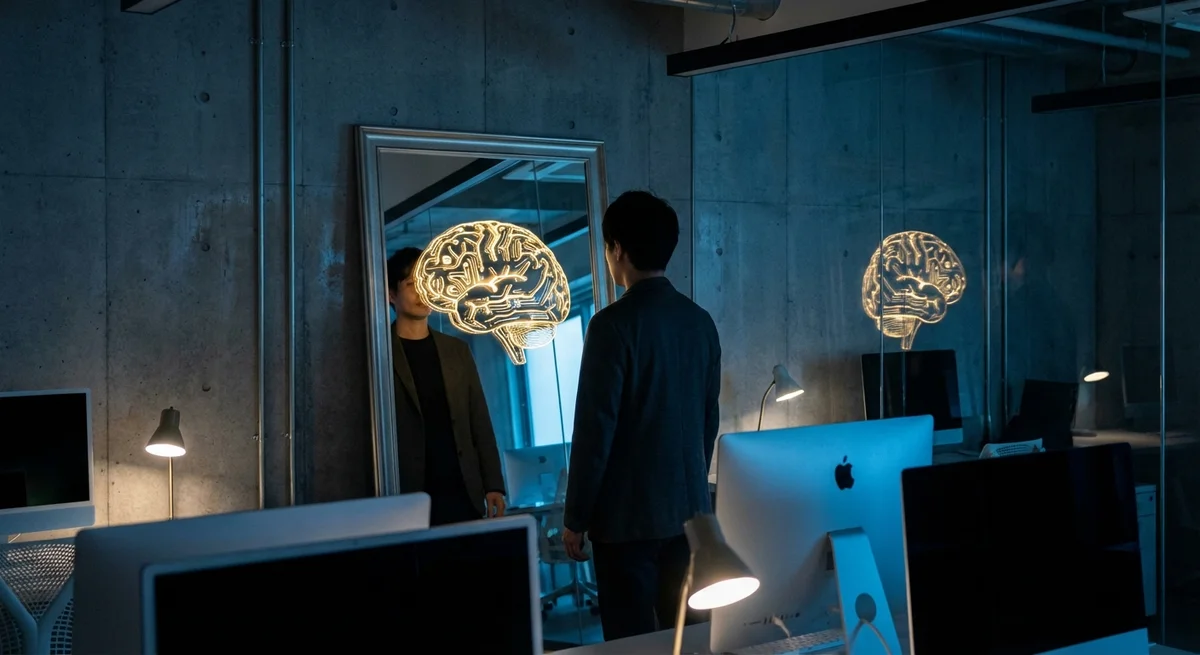
Imagine suddenly feeling like an expert in quantum physics, Baroque architecture and Rust code all at once. All it took was a ChatGPT subscription and a couple of well-chosen prompts. This pleasant feeling of omnipotence, which modern generative AI gives us, turns out to be a treacherous trap. We are entering an era in which the line between "I know" and "I know where to ask" is being erased for good. The consequences of that blurring can be far more serious than a few wrong answers on an exam or a silly mistake in a work chat. We are watching the birth of a perfect machine for producing the Dunning-Kruger effect.
Social psychologists David Dunning and Justin Kruger described the cognitive bias back in the late 1990s: people with low competence in a given area draw wrong conclusions and make poor decisions, yet cannot recognize their own mistakes precisely because of that low competence. Reaching this state used to require at least reading a couple of superficial articles or watching a dubious video. Now neural networks deliver structured, confident and seemingly logical answers within seconds. The user who receives such a result subconsciously appropriates that knowledge. The brain is fooled by the form of presentation: if I managed to formulate the question and get a complex answer, then I must have a grip on this field.
The problem lies in how we learn. Real understanding of a subject always takes effort, the so-called cognitive friction. To truly learn something, you have to doubt, look for connections, make mistakes and correct them. AI removes this friction entirely. When an algorithm hands over a ready-made solution, our brain skips the stage of critical synthesis. We become operators of someone else's intelligence, mistaking its computing power for our own erudition. It is like someone who has used a calculator since first grade and starts to consider himself a mathematician without understanding the principles of long division.
Research shows an alarming trend in education and in the corporate world. Students who use AI assistants score well on short-term tests but fail deeper checks of their understanding of the underlying logic a week later. They remember the answer but not the path to it. In business this is even more pronounced: middle managers start presenting strategies and analyses generated by a neural network, sincerely believing them to be flawless. They cannot verify the model's hallucinations because they lack the foundational knowledge to spot the catch. Confidence grows in proportion to the sophistication of the tools, while real competence stagnates.
Ironically, tech giants promote AI as a tool for democratizing knowledge. But knowledge is not merely a set of facts available at a click. It is neural connections formed through intellectual work. The ease with which AI solves our problems deprives us of the intellectual pain necessary for growth. We risk becoming a civilization of high-tech amateurs. We trust the black box not because we understand how it works, but because it speaks beautifully and confidently, flattering our ego and confirming our own prejudices.
In the long run, this threatens a systemic crisis of expertise. If anyone can generate a legal document or medical advice, the value of real experience in society's eyes falls. But when AI makes a mistake, the confident amateur is defenseless. He doesn't merely not know the answer: he doesn't know that he doesn't know it. This intellectual fast food satisfies quickly and creates an illusion of fullness, but leaves the brain depleted. It is time to admit that knowing how to use prompts does not make us smarter. It only makes us more efficient users of other people's thoughts.
The bottom line: AI is an exoskeleton for the mind, not a replacement for it. If you use it without taxing your own gray matter, your cognitive muscles will inevitably atrophy. Are we ready for a world where, behind the facade of brilliant neural-network answers, lies the emptiness of our own incomprehension?
- Nov 2, 2026NC State's AICG Framework Cuts MAE by 50.3% on Math Answer Grading
- Nov 2, 2026We Audited 929 Automations at Alpina: What Corporate AI Training Should Look Like in 2026
- Nov 2, 2026I Interrogated 6 AI Models About Myself Through a Procurement Manager's Eyes: Amazon, Esoterica, 'Telo Hudelo' and 5 Holes We Closed in a Day
- Nov 2, 2026TJ Digital: 23% of AI-cited pages open with a direct answer, versus 14% of uncited ones
Test Frontier LLMs & Autonomous Agents in One Workspace
Run Claude Opus 5.5, GPT-6, Gemini 3.1, and DeepSeek side-by-side in Nomad AI (nomadnet.ai) — unified model routing, deep research, and multimodal workflows under one subscription.
The AI world, distilled — once a week
Seven stories that actually mattered, hand-picked. No noise, no reposts, no press releases.
Done! Check your inbox for a confirmation.