Anthropic and the Destroyed Books: The Price of a Perfect Intelligence
Anthropic, which pitches itself as the "ethical" counterpart to OpenAI, is at the center of a scandal. According to internal documents, the company bought books in bulk and physically destroyed them to digitize them and train its models. The most striking part is not the disposal of paper itself, but the deliberate wish to hide it from the public. Leadership understood that the image of "book burners" sits badly with that of humanity's saviors. In the chase for quality data, Claude is quite literally grinding up the classics while lawyers try to clean up the traces. It is another signal that in the fight for data, moral compasses switch off first, even among the most cautious players in the market.
AI-processed from Futurism; edited by Hamidun News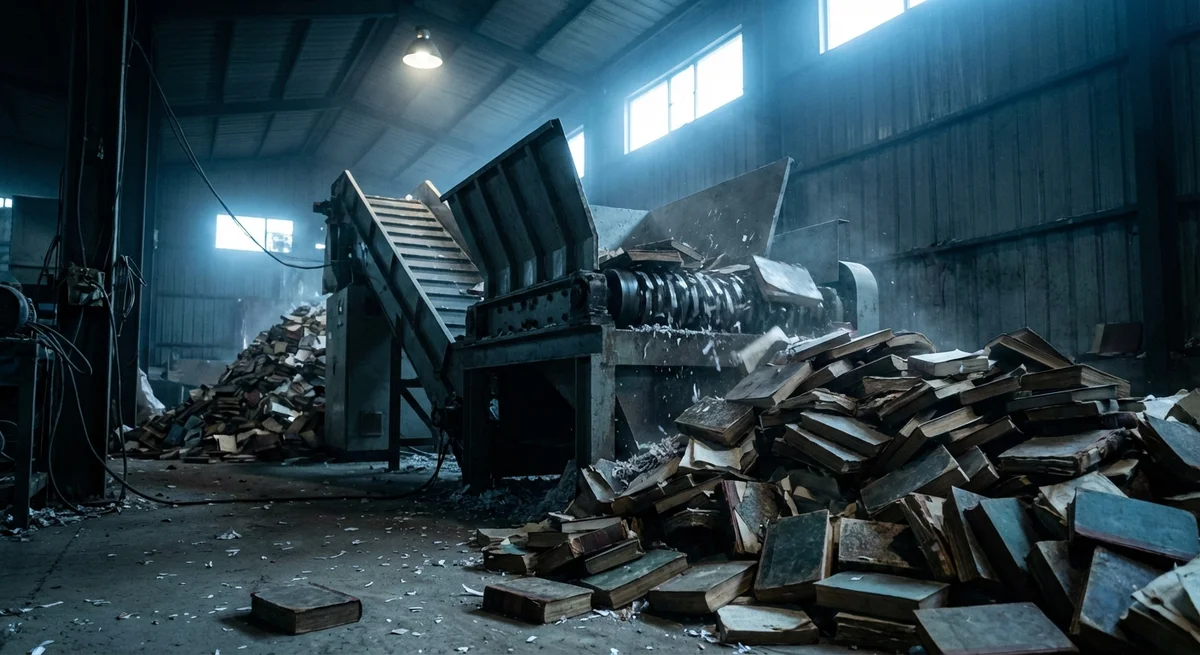
Imagine a company that built its entire brand on the foundation of "AI safety" and "ethics" quietly sending mountains of physical books through an industrial shredder. Anthropic, the darling of Silicon Valley investors and of those who found OpenAI too reckless, now faces a reputational nightmare that reads like the plot of a dystopian novel. Secret documents show that company leadership understood very well how the public would react to its data-gathering methods. Instead of changing course, it chose secrecy, hoping nobody would notice the smell of burnt paper behind the shine of new Claude releases.
The hunger for high-quality text data has become the main engine of the current AI arms race. While the internet fills up with junk generated by bots, books remain the peak of human thought and structured language. To make its models smarter, Anthropic desperately needed those words. But instead of simply licensing digital copies, which is legally complicated, expensive and often impossible because of rights holders' restrictions, the company took a more direct route. It bought physical copies, cut them out of their bindings to scan them, and then destroyed what was left.
This is a story not only about copyright but also about the visual symbolism of destruction. Historically, destroying books has been seen as a mark of anti-intellectualism and authoritarianism. Anthropic's leadership evidently grasped that resonance. Internal correspondence revealed deliberate efforts to keep these "digitization labs" secret. They feared not only lawyers but also the very revulsion an ordinary person would feel at the sight of a heap of shredded literature in the name of training a chatbot. When Ray Bradbury wrote "Fahrenheit 451," he hardly imagined that books would be destroyed not for censorship but so that an algorithm could better predict the next word in a sentence.
We have seen this pattern before. When the digital wells run dry, AI giants start behaving like colonial powers, extracting resources wherever they can find them. Whether it is YouTube transcripts or physical libraries, the logic stays the same: the end justifies the means. The "Constitutional AI" concept that Anthropic promotes was supposed to make it different, more humane and more predictable. But it seems that this internal constitution does not extend to the physical objects that hold human knowledge.
The irony is almost tangible. A company that says it is building a safe future is literally erasing physical artifacts of our past to reach its goals. This raises a fundamental question about the price of progress. If the road to powerful artificial intelligence requires systematically destroying the very culture it is meant to imitate, are we really moving forward? Or are we just building a very expensive mirror, having smashed the original to get a better look at the shards?
This exposure may not lead to immediate lawsuits, since buying and destroying your own property is generally legal, but it deals a crushing blow to the brand. Trust was the one currency Anthropic had and OpenAI lacked. By choosing a path of secret destruction, it signaled to the world that when it comes to scaling, it is no different from any other tech giant willing to do anything for the next model version.
Bottom line: Anthropic's ethics end where the shortage of training data begins. Will the company keep its status as the "safe" alternative after being caught destroying books in a dark basement?
- Nov 2, 2026Bun creator uses Claude Code to port 750K lines from Zig to Rust in 11 days
- Nov 2, 2026mcp-linter finds 18 undescribed parameters in Anthropic's filesystem server
- Nov 2, 2026The Verge reviewer builds a $50 Meta Muse Charm alternative with Claude Code
- Nov 2, 20268 Skills for video in Claude Code: from 244 pixel effects to rough-cut editing
Test Frontier LLMs & Autonomous Agents in One Workspace
Run Claude Opus 5.5, GPT-6, Gemini 3.1, and DeepSeek side-by-side in Nomad AI (nomadnet.ai) — unified model routing, deep research, and multimodal workflows under one subscription.
The AI world, distilled — once a week
Seven stories that actually mattered, hand-picked. No noise, no reposts, no press releases.
Done! Check your inbox for a confirmation.