The US Is Losing Its Brains: How Silicon Valley Stopped Being the Center of the Universe
The United States faces a large-scale drain of intellectual capital that threatens its lead in the AI race. An outdated H-1B visa system that has turned into a lottery, plus sky-high living costs in San Francisco, are pushing top researchers toward Europe, Canada and China. While Washington builds barriers, cities like Paris and Toronto are creating conditions to relocate entire teams. This is not just migration but a tectonic shift: for the first time in half a century, the US is no longer the only option for people with ambitions in high tech.
AI-processed from Futurism; edited by Hamidun News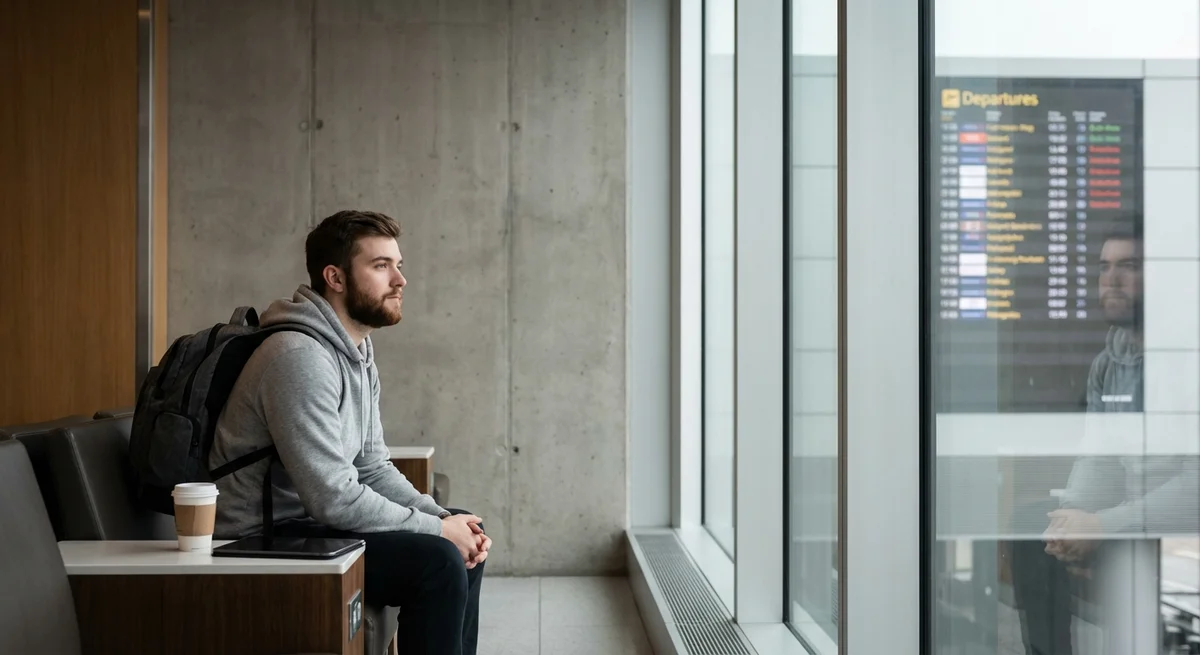
Imagine building the most powerful rocket in human history, but a guard at the factory entrance turns away your best engineers simply because they hold the "wrong" passport or their lottery visa ran out. It sounds like the plot of an absurd comedy, yet that is exactly what is happening in the United States right now. For decades, America worked like a giant vacuum cleaner, pulling in the brightest minds from Beijing, Delhi, Tel Aviv and Eastern Europe. Today that vacuum has started running in reverse, and the consequences for the artificial intelligence industry could be fatal.
The brain drain from the US has stopped being a topic for hallway chatter and become a tangible threat. A Stanford or MIT graduate used to dream only of an offer from Google or OpenAI. Today they increasingly eye Paris, London or Toronto. The reason is prosaic: the American immigration system is stuck in the last century and is wholly unprepared for the pace of the modern technology race. While politicians argue about borders, the people actually building the future end up in legal limbo.
Let's be honest: when you are building algorithms that can change the very nature of human work, the last thing you want is to play visa roulette. The H-1B visa, which holds up half of Silicon Valley, is a lottery in the most literal sense. You can be a mathematical genius and a leading LLM researcher, but if a computer algorithm doesn't pick your application, you have to pack up and leave the country within 60 days. Meanwhile, Canada and France are rolling out the red carpet for specialists of this caliber, offering simplified citizenship programs and government grants.
Bureaucratic absurdity is compounded by harsh economics. Silicon Valley is slowly turning into a golden cage. Even with an annual salary of three hundred thousand dollars, a young engineer feels distinctly middle-class when the rent on a tiny studio in Palo Alto eats half of their net income. Young talent increasingly asks: why pay a huge tax on living in the scene when you can build the same AI in Lisbon or Singapore, with a much better quality of life and less stress?
China adds a particular twist. For a long time, Chinese students who went to study in the US were considered a resource lost to the PRC. But Beijing learned its lesson and poured billions into building its own ecosystem. Now we are seeing the reverse process: the share of top AI researchers of Chinese origin working in the US has begun to fall rapidly. They are going home, where labs with unlimited budgets and no visa problems await them. For US national security, this should sound like an alarm bell, one that Washington, absorbed in trade wars, has somehow chosen to ignore.
We are used to thinking that technological leadership is a matter of how many Nvidia H100 GPUs fit per square meter of server room. But hardware is just a commodity that can be bought, copied or, in the worst case, stolen. A culture of innovation and a critical mass of brains are almost impossible to recreate. If the US does not reform how it attracts talent within the next couple of years, we will see the sunset of Pax Technologica as we know it. Artificial intelligence will still be built, but its "homeland" may turn out to be nowhere near California.
Bottom line: Technological dominance is not a birthright but the result of a fight for people. If America keeps closing its doors to geniuses, the future superintelligence will speak with a French or Chinese accent.
- Nov 2, 2026Meta's Muse assistant keeps dossiers on loved ones and gets root on Ubuntu by default
- Nov 1, 2026Local models lose to Opus and Codex: 0.21 on a MacBook versus 1.00 for Codex
- Nov 1, 2026Kimi scores 96.2% on a 1C database analytics test and emerges as a fallback if Claude access is blocked
- Nov 1, 2026OpenAI Rewrites GPT Behavior Rules: Five Values and a Chain of Command
Test Frontier LLMs & Autonomous Agents in One Workspace
Run Claude Opus 5.5, GPT-6, Gemini 3.1, and DeepSeek side-by-side in Nomad AI (nomadnet.ai) — unified model routing, deep research, and multimodal workflows under one subscription.
The AI world, distilled — once a week
Seven stories that actually mattered, hand-picked. No noise, no reposts, no press releases.
Done! Check your inbox for a confirmation.