RoboChallenge: Robots Sit a Single Exam (and It Matters)
The embodied intelligence industry has long resembled the Wild West: every startup touted results from its own closed scenario. RoboChallenge's annual report changes the rules. With standards in place, we can finally compare a Unitree robot with what Figure or Tesla are building on equal terms. This is not mere bureaucracy; it is a foundation for mass production. When tests become transparent, investors see real progress rather than polished marketing clips. The era of lab tricks is officially ending, giving way to pragmatic engineering.
AI-processed from Jiqizhixin (机器之心); edited by Hamidun News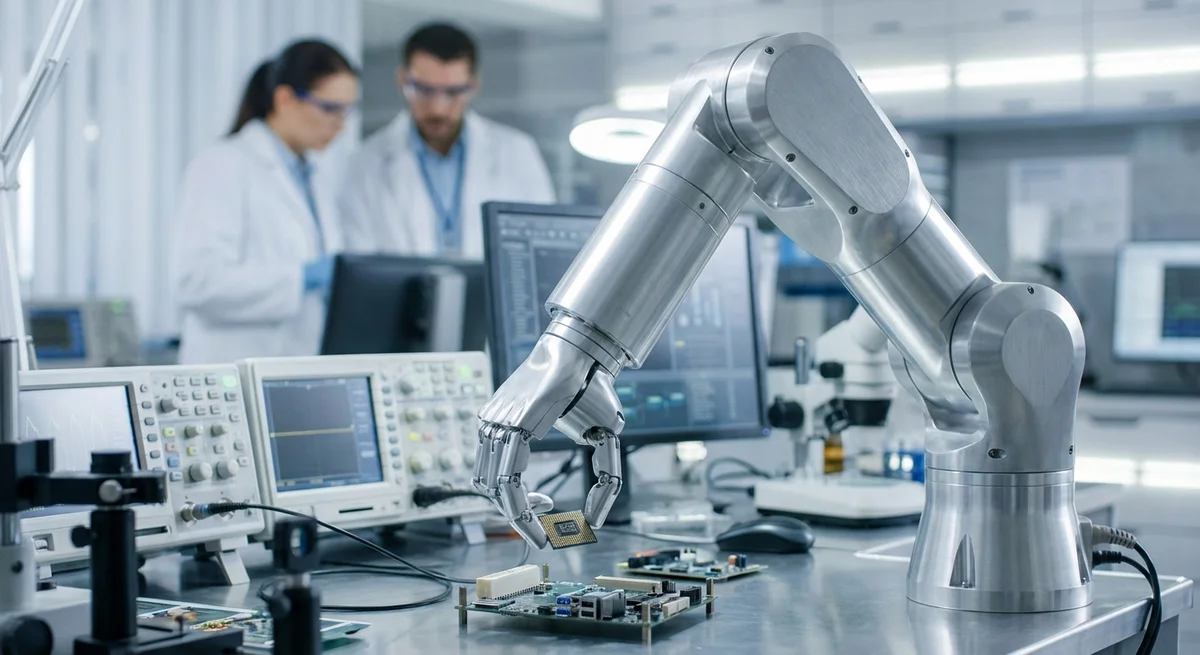
While we watched, transfixed, as yet another robotic arm folded a shirt in fast-forward, a crisis of trust was building in the robotics industry. The problem: until recently, there was no common yardstick for measuring machine intelligence. Every developer built its own greenhouse conditions in which its creation looked brilliant, but once the robot was released into the real world, the magic vanished. The annual RoboChallenge report on (embodied intelligence), now published, is the first serious attempt to bring order to this chaos and turn the "art of the demo" into a rigorous science.
Until now, (jushen zhineng) advanced in fits and starts, driven by hype rather than metrics. Large language models have benchmarks such as MMLU, but in robotics everything came down to subjective impressions. The RoboChallenge report proposes a move to strict standardization. That means object manipulation, navigation in unfamiliar spaces and interaction with humans will now be evaluated under universal protocols. You will no longer be able to call a robot "smart" if it has not passed a specific set of tests across different environments.
Why does the industry need this right now? The answer is simple: money and scale. Investors have poured billions into startups such as Figure, 1X and Tesla Optimus, yet they still cannot tell which of them is really closer to a commercial product. Standardization is a sign that the technology is leaving the stage of academic experiments. Once common rules of the game exist, competition shifts from PR to real-world effectiveness. We will finally see whose control algorithms handle unforeseen situations better, rather than simply replaying memorized movements.
Interestingly, the report pays particular attention to simulation. Training robots in the real world is expensive and slow, so the industry is betting on transferring skills from a virtual environment to the physical one (Sim2Real). RoboChallenge sets standards here too, defining how closely a digital copy must match reality. This is critical for training the complex neural networks that control a robot's "body." If the simulation lies, a robot on the factory floor turns into an expensive heap of scrap metal. Engineers now have a clear checklist for avoiding these errors.
What does this mean for the rest of us? Most likely, over the next couple of years we will see a sharp culling of weak players. Those who coasted on slick design and well-edited video will not pass the new standards. The surviving companies, meanwhile, will be able to strike deals with factories and logistics centers faster to deploy their solutions. Standardization always precedes a mass market. Remember how USB or Wi-Fi protocols changed the world of gadgets. The same thing is happening with robots now: they are ceasing to be exotica and becoming an industrial standard.
Bottom line: The era of "robot actors" is ending; the era of "robot employees" is beginning. Will your favorite startup be able to back its ambitions with numbers in the next report?
- Nov 2, 2026The Verge reviewer builds a $50 Meta Muse Charm alternative with Claude Code
- Nov 2, 20268 Skills for video in Claude Code: from 244 pixel effects to rough-cut editing
- Nov 1, 2026Pika Labs releases open video model H3 Flex: 6 steps instead of 50
- Nov 1, 2026Google's StreamVibe video agent beats other models by 10.7% on response timing and quality
Test Frontier LLMs & Autonomous Agents in One Workspace
Run Claude Opus 5.5, GPT-6, Gemini 3.1, and DeepSeek side-by-side in Nomad AI (nomadnet.ai) — unified model routing, deep research, and multimodal workflows under one subscription.
The AI world, distilled — once a week
Seven stories that actually mattered, hand-picked. No noise, no reposts, no press releases.
Done! Check your inbox for a confirmation.