AI for science: why neural networks haven't earned their lab coats yet
The AI for science (AI4S) industry is going through a crisis of inflated expectations. AlphaFold predicts protein structures, but ordinary LLMs stumble over elementary physical laws. The problem is that today's models are masters of correlation, not of cause and effect. Moving to AI4S 2.0 requires building in "first principles" and creating models that understand the physics of the world, not just the statistics of words. Without that breakthrough, AI will remain an advanced assistant rather than a full-fledged digital scientist capable of making discoveries on its own.
AI-processed from Jiqizhixin (机器之心); edited by Hamidun News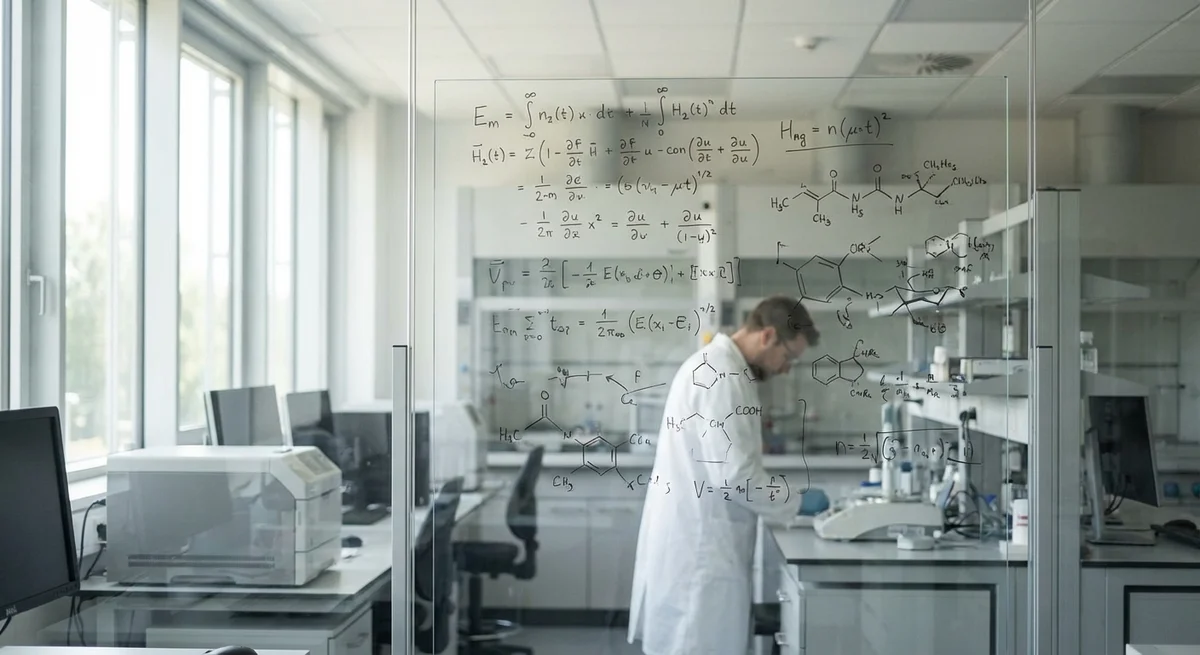
Let's be honest: while we enthusiastically discuss how the latest language model wrote code or composed poetry, things in real laboratories look far less rosy. There is a fashionable field called AI for science, or AI4S. It was supposed to overturn our understanding of chemistry, physics and biology. But look closely and today's "smart" models are still infinitely far from deserving the title of scientist. They resemble well-read students who have memorized the library but freeze when handed a test tube.
It all began with the first wave, now called AI4S 1.0. Its main hero was AlphaFold from Google DeepMind. It handled protein structure prediction brilliantly, and that was a genuine breakthrough. But here is the catch: it was a victory of brute force and pattern recognition. The model found regularities in a huge body of data that people had spent decades collecting. That is impressive, but it is not quite science in the classical sense. Science is not only about finding matches; it is about understanding why the world works this way and not another.
The main problem with today's top models is that they live in a world of words and pixels, not of atoms and forces. Scientists call this a lack of understanding of "first principles." When you ask an AI to design a new material, it starts combining the data it already knows. But it does not feel the laws of thermodynamics or quantum mechanics the way a physicist does. The result is hallucinations that look like scientific papers but fall apart at the first attempt to check them against reality. The models simply cannot reason within strict physical constraints.
The industry is now scrambling to find a path to AI4S 2.0. This is no longer just about "more data" or "more GPUs." It is about changing the architecture of machine thinking itself. We need what China calls "scientific intelligence": systems with physical laws built in from the start. Picture a neural network that cannot produce an answer that violates the law of conservation of energy, simply because its mathematical structure does not allow it. That is a fundamental shift from probabilistic guessing to deductive inference.
Moreover, real science requires autonomy. We are moving toward the concept of "closed-loop labs," where AI does not just give advice but plans the experiment itself, controls robotic manipulators and, most importantly, revises its own theory based on failures. Current LLMs hate being wrong; they try to please the user. A real scientist knows that a negative result is also a result. Until we teach AI to value mistakes and draw logical conclusions from them, it will remain an expensive toy in researchers' hands.
Data is a problem too. GPT-4 was trained on almost the entire internet. But in science, data is scarce, fragmentary and often locked in corporate archives. For AI4S 2.0 to become reality, we need to teach models to learn from small samples and to synthesize data through simulations. This is a huge challenge for engineers, and it is not yet clear who will find the key first. But one thing is certain: the next Nobel Prize that involves AI will be awarded not for "beautiful text" but for understanding the very essence of matter.
Bottom line: Today's AI is a brilliant librarian but a talentless experimenter. Can the AI4S 2.0 concept turn neural networks into independent researchers, or will we hit a ceiling where a machine is fundamentally incapable of an intuitive breakthrough?
- Nov 2, 2026Bun creator uses Claude Code to port 750K lines from Zig to Rust in 11 days
- Nov 2, 2026The Verge reviewer builds a $50 Meta Muse Charm alternative with Claude Code
- Nov 1, 202616 models tested on 7 search tools: Exa averaged 10.5 out of 14, SearXNG about 3
- Nov 1, 2026Google's StreamVibe video agent beats other models by 10.7% on response timing and quality
Test Frontier LLMs & Autonomous Agents in One Workspace
Run Claude Opus 5.5, GPT-6, Gemini 3.1, and DeepSeek side-by-side in Nomad AI (nomadnet.ai) — unified model routing, deep research, and multimodal workflows under one subscription.
The AI world, distilled — once a week
Seven stories that actually mattered, hand-picked. No noise, no reposts, no press releases.
Done! Check your inbox for a confirmation.