LLM-in-Sandbox: Giving a Neural Network Its Own Computer So It Stops Hallucinating Code
The new LLM-in-Sandbox concept offers a radical fix for the "smart but helpless" AI problem. Instead of forcing a model to merely generate code as text, it gets an isolated environment: a "sandbox" with a full operating system. The idea is to turn the LLM into a "universal agent" that doesn't just guess at a solution but tries it, gets compiler errors, fixes them and delivers a finished result. It is a bridge between a passive chatbot and a real digital employee. We used to worry that AI would "press the wrong button." Now it is being deliberately taught to press every button, but inside a safe perimeter.
AI-processed from Jiqizhixin (机器之心); edited by Hamidun News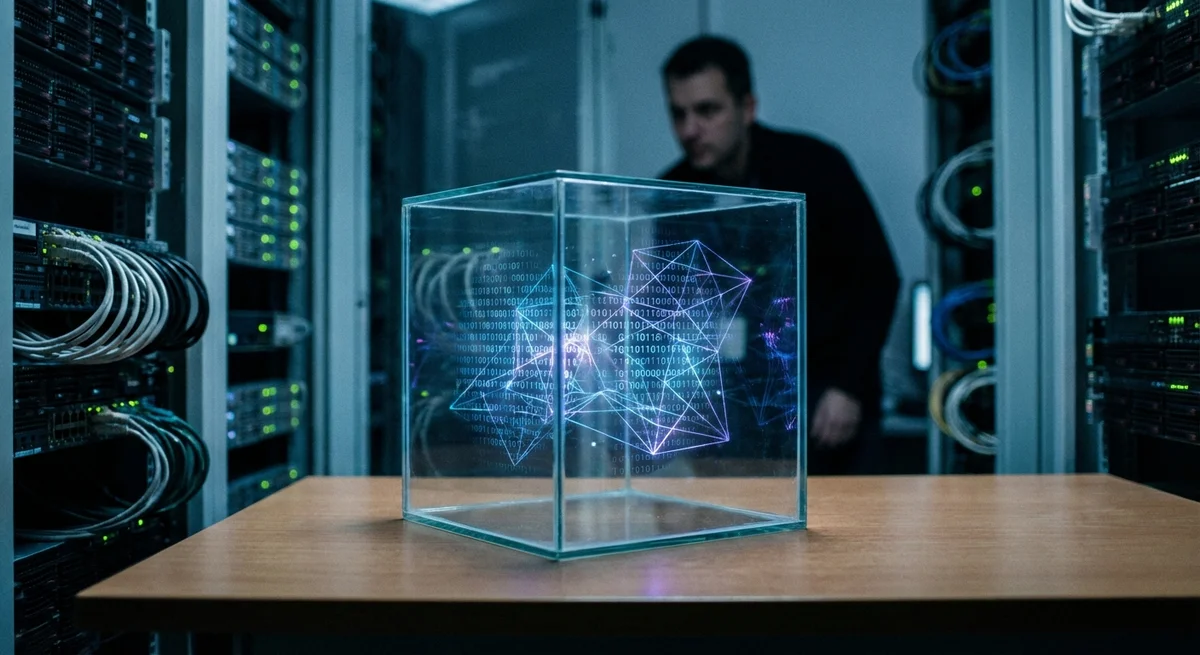
Let's be honest: copying code from ChatGPT, pasting it into an IDE, catching an error, copying the error back into the chat and repeating the cycle ten times is not the future. It is torture. That is why the concept in the headline, LLM-in-Sandbox, looks like just what the doctor ordered for the industry right now.
The idea is simple but fundamental. Researchers and engineers have finally admitted that it is not enough for a language model to merely "know" Python or Bash. It needs a "body", or in this case, a computer. LLM-in-Sandbox places a large language model in an isolated execution environment where it can behave like a full user: create files, run scripts, install libraries and, most importantly, see the results of its actions in real time.
Why does this change the rules of the game? Previously, LLMs worked in a vacuum. They hallucinated calls to nonexistent libraries simply because they had no way to check whether the pandas package was installed in a specific environment. In the sandbox approach, the model becomes what Chinese researchers call a "universal agent." It writes code, runs it, sees Error: module not found, runs pip install on its own and tries again. Without your involvement.
This moves interaction with AI from "question-answer" to "task-solution." You don't ask it to "write a script"; you tell it to "analyze this data and build a chart." And the model doesn't output text; it returns a finished .png file, because it had access to a terminal and a file system.
Of course, this raises the question of security, which is exactly why the word "Sandbox" is key here. Giving AI unrestricted access to your work laptop is on par with "handing a monkey a grenade." Isolated containers let the model break things, smash things and experiment without threatening the host system. It is the proving ground where digital intelligence learns to interact with the world of software not in theory but in practice.
We are watching the shift from the era of chatbots to the era of agents. If 2023 was the year of "Wow, it can write poems," then 2024-2025 is the time of "Wow, it set up the server by itself." LLM-in-Sandbox is not just a new tool; it is an acknowledgment that intelligence needs hands, even virtual ones.
The bottom line: Will we have the courage (and the compute) to let AI fix its own bugs, or will we remain a "gasket" between the neural network and the compiler?
- Nov 2, 2026NC State's AICG Framework Cuts MAE by 50.3% on Math Answer Grading
- Nov 2, 2026We Audited 929 Automations at Alpina: What Corporate AI Training Should Look Like in 2026
- Nov 2, 2026I Interrogated 6 AI Models About Myself Through a Procurement Manager's Eyes: Amazon, Esoterica, 'Telo Hudelo' and 5 Holes We Closed in a Day
- Nov 2, 2026TJ Digital: 23% of AI-cited pages open with a direct answer, versus 14% of uncited ones
Test Frontier LLMs & Autonomous Agents in One Workspace
Run Claude Opus 5.5, GPT-6, Gemini 3.1, and DeepSeek side-by-side in Nomad AI (nomadnet.ai) — unified model routing, deep research, and multimodal workflows under one subscription.
The AI world, distilled — once a week
Seven stories that actually mattered, hand-picked. No noise, no reposts, no press releases.
Done! Check your inbox for a confirmation.