Shengyi Electronics: How to Earn 350% More Profit on "Boring" AI Hardware
Shengyi Electronics has published its 2025 forecast, and the numbers are striking. Net profit is expected to rise 331–356% to 1.51 billion yuan. The reason is simple: an avalanche of demand for highly complex printed circuit boards (PCBs) for AI servers and next-generation data transmission systems. While software giants compete on model parameters, the makers of the industry's "foundation" are quietly booking record profits. It is a clear signal that the AI infrastructure hunger is only intensifying, and that quality requirements for components are rising faster than most players in the market can keep up with.
AI-processed from 36Kr (36氪); edited by Hamidun News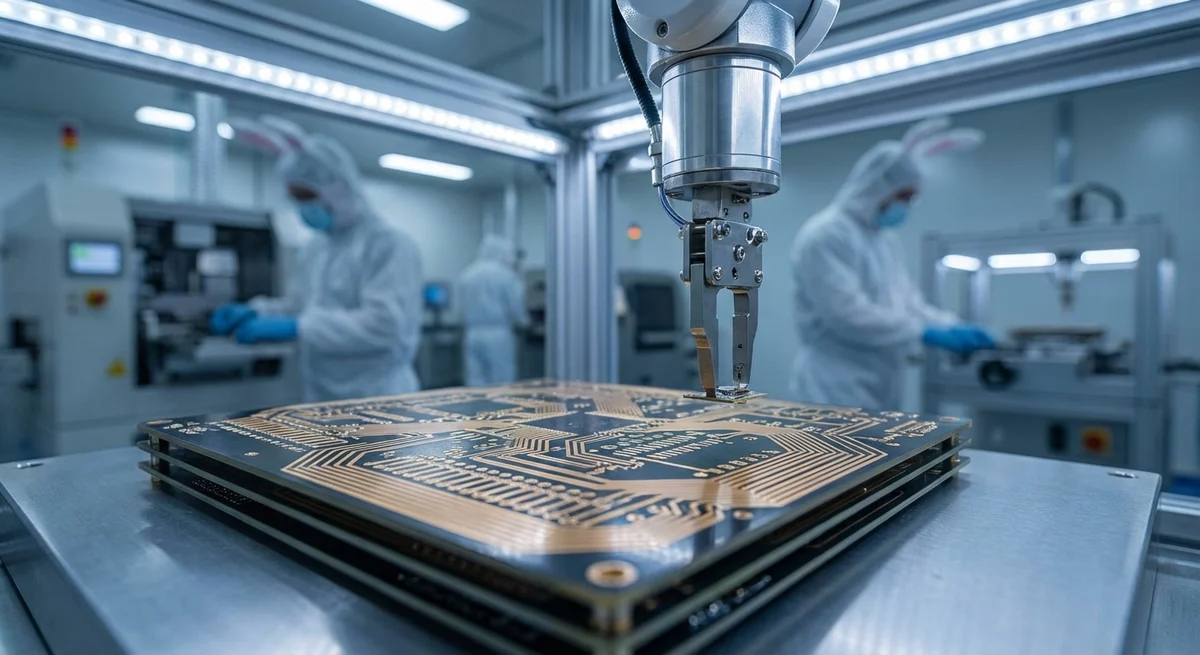
While venture capitalists and tech evangelists argue about when artificial intelligence will become conscious, pragmatic engineers in China's Guangdong province are simply counting money. Shengyi Electronics has released a preliminary report for 2025 that forces a fresh look at who is actually winning the current "gold rush." The net profit forecast of 1.43 to 1.51 billion yuan means growth of more than fourfold compared with the previous period. To be precise, the company expects a jump of 331–356%. This is not just a good quarter; it is a direct consequence of a tectonic shift in the architecture of computing systems.
Let's break down what happened. Printed circuit boards (PCBs) used to be treated as something like a consumable: important, but a fairly simple component. The era of large language models changed that. A modern AI server needs more than ordinary laminate. It needs multilayer boards with extremely low signal loss and high heat resistance, able to withstand the enormous loads of the latest-generation GPUs. Shengyi Electronics shifted its capacity in time toward high-end boards for servers and 800G switches. When the AI infrastructure market began to grow exponentially, the company was in the right place with the right product.
This financial success highlights a detail that is often overlooked amid loud announcements of new chatbots. The physical layer of AI is the bottleneck of the entire industry. Running Claude or GPT-5 takes thousands of server racks linked by miles of high-speed buses. Every one of those buses sits on a board that a company on Shengyi's level has to manufacture. A 350% profit increase says that demand for this hardware is not merely stable, it is scarce. Buyers are willing to overpay for quality and delivery times, as long as they do not have to halt the rollout of their data centers.
How Shengyi Electronics managed to outpace its competitors is also interesting. After the slump in consumer electronics, many component makers found themselves in crisis. But those who managed to jump on the AI server train now feel excellent. The move to 800G and higher data transmission standards requires technologies that only a few players possess. Shengyi invested in research and development (R&D) precisely when others were cutting costs. Now those investments are returning as super-profits.
What does this mean for us? First, the AI boom is not only a bubble of startup promises but also tangible growth in the real manufacturing sector. Second, global AI's dependence on Chinese component supply chains remains critical. Despite all the talk of diversification, giants like Shengyi Electronics remain irreplaceable links in building the computing capacity of the future. If you thought the most interesting part of AI happens in code, look at the financial reports of those who make that code physically possible.
Bottom line: Second-tier hardware makers are becoming the main beneficiaries of the AI race. Will Chinese factories have enough capacity to satisfy Silicon Valley's appetite in 2025?
- Nov 2, 2026LLM Agent Built a Gearbox in KOMPAS-3D, but Scored Only 50 out of 100 on the Specification
- Nov 2, 2026Agents ignored the prompt to read memory in 7 of 7 sessions: an analysis of 13 thousand logs
- Nov 2, 2026Karpathy Built HackerTube, a Catalog of 6,454 Videos, in Two Hours with Claude Code
- Nov 2, 2026We Audited 929 Automations at Alpina: What Corporate AI Training Should Look Like in 2026
Ship AI Faster with Founders, Engineers & Weekly Architecture Reviews
Inside Vibe Club (hamidun.com/club) — weekly live masterminds with Zhemal Khamidun, Tech Radar, full LMS access, and 370+ production Claude Code skills.
The AI world, distilled — once a week
Seven stories that actually mattered, hand-picked. No noise, no reposts, no press releases.
Done! Check your inbox for a confirmation.