OpenAI invests in Merge Labs to advance brain-computer interfaces
OpenAI is investing in Merge Labs, a company developing brain-computer interfaces. The goal is to integrate biological and artificial intelligence to expand human capabilities. The investment is meant to support research and development in connecting the brain to computers.
AI-processed from OpenAI Blog; edited by Hamidun News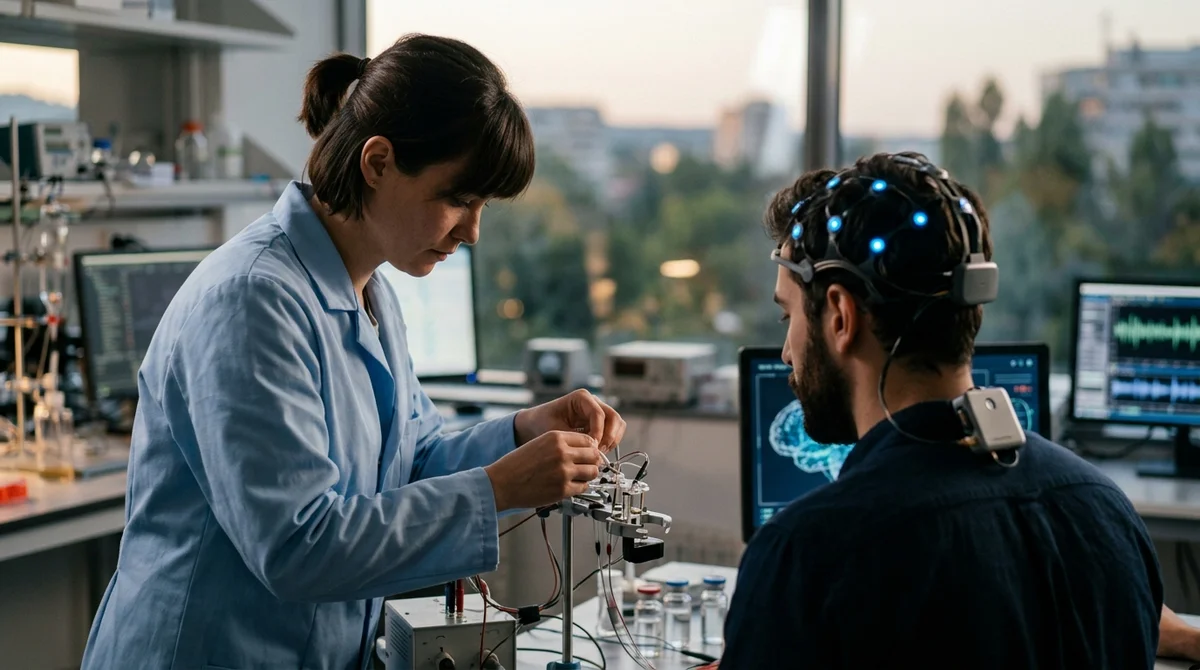
OpenAI, a leader in artificial intelligence development, has announced an investment in Merge Labs, a startup that specializes in building brain-computer interfaces. The news drew wide attention in the tech community because it marks an important step toward integrating biological and artificial intelligence.
Brain-computer interfaces are systems that let the human brain interact directly with computers. They hold huge promise across many fields, from medicine and rehabilitation to education and entertainment. Work in this area could help people with disabilities, improve cognitive function and even push the boundaries of human experience.
Merge Labs is developing advanced brain-computer interfaces that, in its words, can "maximize human ability, agency and experience." The company has not yet disclosed details of the specific technologies it is working on, but they are known to aim at two-way communication between brain and computer. That means information can flow from the brain to the computer and the other way around.
OpenAI's investment in Merge Labs highlights growing interest in brain-computer interfaces among large technology companies. It also suggests that OpenAI sees significant potential in the field and believes such interfaces could play an important role in the future of artificial intelligence. OpenAI may be planning to integrate brain-computer interfaces with its language models to create more intuitive and efficient ways for people to interact with AI.
For users, this means that interacting with technology could become more natural and intuitive in the future. Imagine controlling a computer with the power of thought, receiving information directly in your brain or even communicating with other people without words. That is, of course, still a long way off, but OpenAI's investment in Merge Labs is an important step in that direction.
However, the development of brain-computer interfaces also raises a number of ethical questions. It is important to ensure the security and privacy of the data collected by these devices. Possible social consequences must also be considered, such as unequal access to the technology and its potential misuse. Still, the potential benefits of brain-computer interfaces are enormous, and OpenAI appears ready to invest in their future.
In conclusion, OpenAI's investment in Merge Labs is a landmark event that could lead to revolutionary changes in artificial intelligence and neurotechnology. It opens new possibilities for expanding human capabilities and improving quality of life, but it also demands a responsible approach to developing and deploying these technologies.
- Nov 2, 2026Arca gives AI agents finance tasks lasting up to 10 days, but leaves the trades to humans
- Nov 2, 2026Meta's Muse assistant keeps dossiers on loved ones and gets root on Ubuntu by default
- Nov 1, 2026Local models lose to Opus and Codex: 0.21 on a MacBook versus 1.00 for Codex
- Nov 1, 2026Kimi scores 96.2% on a 1C database analytics test and emerges as a fallback if Claude access is blocked
Test Frontier LLMs & Autonomous Agents in One Workspace
Run Claude Opus 5.5, GPT-6, Gemini 3.1, and DeepSeek side-by-side in Nomad AI (nomadnet.ai) — unified model routing, deep research, and multimodal workflows under one subscription.
The AI world, distilled — once a week
Seven stories that actually mattered, hand-picked. No noise, no reposts, no press releases.
Done! Check your inbox for a confirmation.