Ant Group Teaches Robots to Live: New VLA Foundation Model Beats Pi0.5
While everyone was talking about chatbots, Ant Group quietly shipped a VLA (Vision-Language-Action) model that beat Physical Intelligence's much-praised Pi0.5 on the metrics. This release stakes a claim to leadership in "physical AI." The model is open, which is rare in itself at this level of complexity. Ant Group clearly wants to become the foundation for the next generation of robots, offering a base model that understands the world and can act in it. The race to build brains for humanoids appears to be entering a new phase, one in which China no longer intends to play catch-up.
AI-processed from Jiqizhixin (机器之心); edited by Hamidun News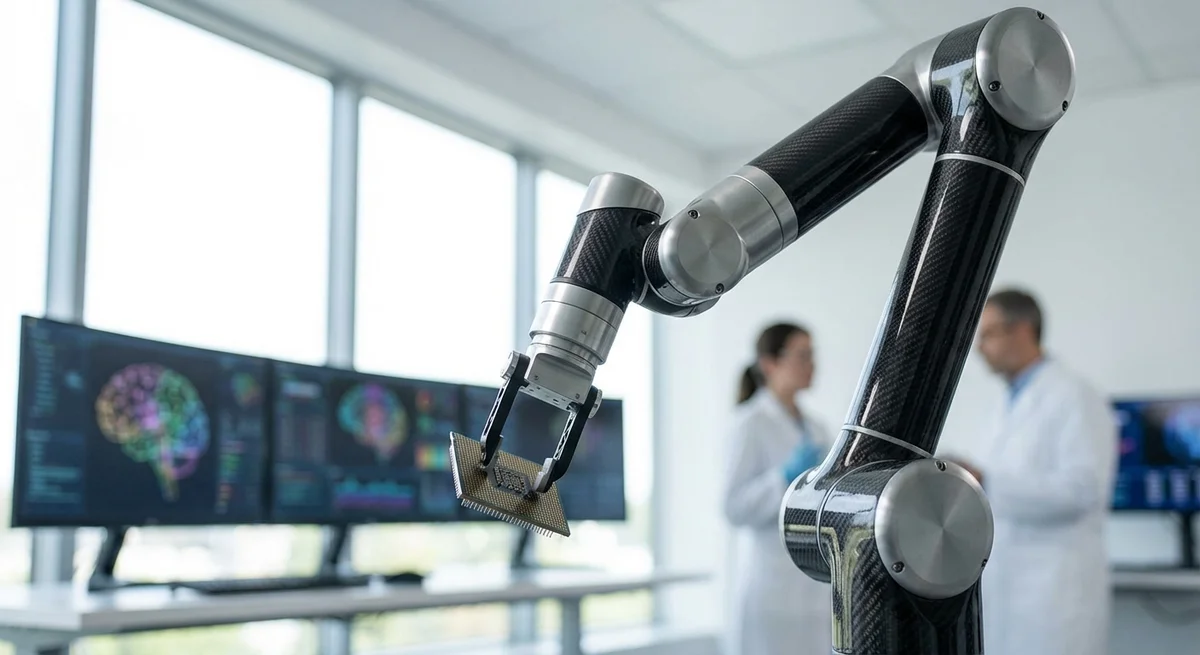
While Western venture capitalists shower startups like Physical Intelligence with money, a player they clearly didn't expect has appeared on the horizon. Ant Group, a company we usually associate with payments and fintech, has decided that robots need brains too. And not just any brains: an open VLA (Vision-Language-Action) model that, on many measures, leaves the industry's current favorite, Pi0.
5, behind. If you thought the battle for physical AI would stay inside Silicon Valley, I have news for you. First, let's unpack what VLA means.
This isn't another chatbot that writes poems. It's an attempt to build a single neural network that sees the world, understands text commands and, most importantly, knows how to move mechanical "arms" to complete a task. For a long time, robots were trained on each manipulation separately, but VLA promises generality.
Imagine telling a robot "bring me that red mug": it doesn't just recognize the object, it also plans a motion trajectory in real time, accounting for obstacles. That's the league Ant Group is now playing in. The twist is that Physical Intelligence's Pi0.
5 was considered the gold standard among open foundation models for robotics. It was a kind of GPT-3 for manipulators. Ant Group, however, claims its new model outperforms Pi0.
5 in command-execution accuracy and adaptability to new conditions. That's a serious blow to the pride of American engineers. The Chinese company didn't simply copy the architecture: it optimized how the model links visual data to physical actions, which produced smoother and more precise movements.
Why does this matter right now? We're on the verge of a humanoid robot boom. Hardware is getting cheaper and more accessible, but software remains the main problem: the general-purpose intelligence that would let a robot leave the sterile lab for a real warehouse or someone's apartment.
Ant Group is betting on openness. By releasing the model as open source, it is effectively inviting thousands of developers worldwide to test and improve its code. It's a classic move: if you can't win with closed patents, create a standard everyone will use.
It's interesting to watch Ant Group itself transform. After all the regulatory shake-ups in China, the company is looking for new footholds, and deep tech (DeepTech) looks like an ideal refuge. Robotics isn't only hype; it's also a huge market for logistics automation, and China has more logistics than anywhere else.
Ant Group's VLA model may have been trained from the start on data from real Alibaba warehouses, which would give it a big advantage over models trained in simulation. There's another important layer to this story: geopolitics. While the US imposes chip sanctions, China is responding with a leap in algorithms.
An open model of this complexity is a powerful instrument of influence. If tomorrow every other robotics startup in Europe or Asia builds on Ant Group's foundation, the question of whose ecosystem won will answer itself. We're watching the fight for AI leadership shift from text chats into the physical world.
The bottom line: Ant Group has set a serious precedent by releasing, openly, a model that outperforms its Western counterparts. Can Physical Intelligence or OpenAI respond with something more impressive, or will leadership in "robot brains" settle firmly in the East?
- Nov 1, 2026Local models lose to Opus and Codex: 0.21 on a MacBook versus 1.00 for Codex
- Nov 1, 2026Kimi scores 96.2% on a 1C database analytics test and emerges as a fallback if Claude access is blocked
- Nov 1, 2026OpenAI Rewrites GPT Behavior Rules: Five Values and a Chain of Command
- Nov 1, 2026Google admits AI Mode cuts search revenue, shares fall 15%
Test Frontier LLMs & Autonomous Agents in One Workspace
Run Claude Opus 5.5, GPT-6, Gemini 3.1, and DeepSeek side-by-side in Nomad AI (nomadnet.ai) — unified model routing, deep research, and multimodal workflows under one subscription.
The AI world, distilled — once a week
Seven stories that actually mattered, hand-picked. No noise, no reposts, no press releases.
Done! Check your inbox for a confirmation.