VSCode and 1.5 Million Victims: When an AI Extension Turns Out to Be a Trojan Horse
Two malicious AI tools have been found in Microsoft's VSCode extension marketplace, downloaded more than 1.5 million times. The attackers gained access to users' confidential data and source code and shipped it to servers in China. The marketplace's vetting mechanisms failed once again, while developers, chasing productivity, forgot basic hygiene. It is the largest supply chain attack through development tools in recent memory, and it calls the security of the entire VSCode ecosystem into question.
AI-processed from 3DNews AI; edited by Hamidun News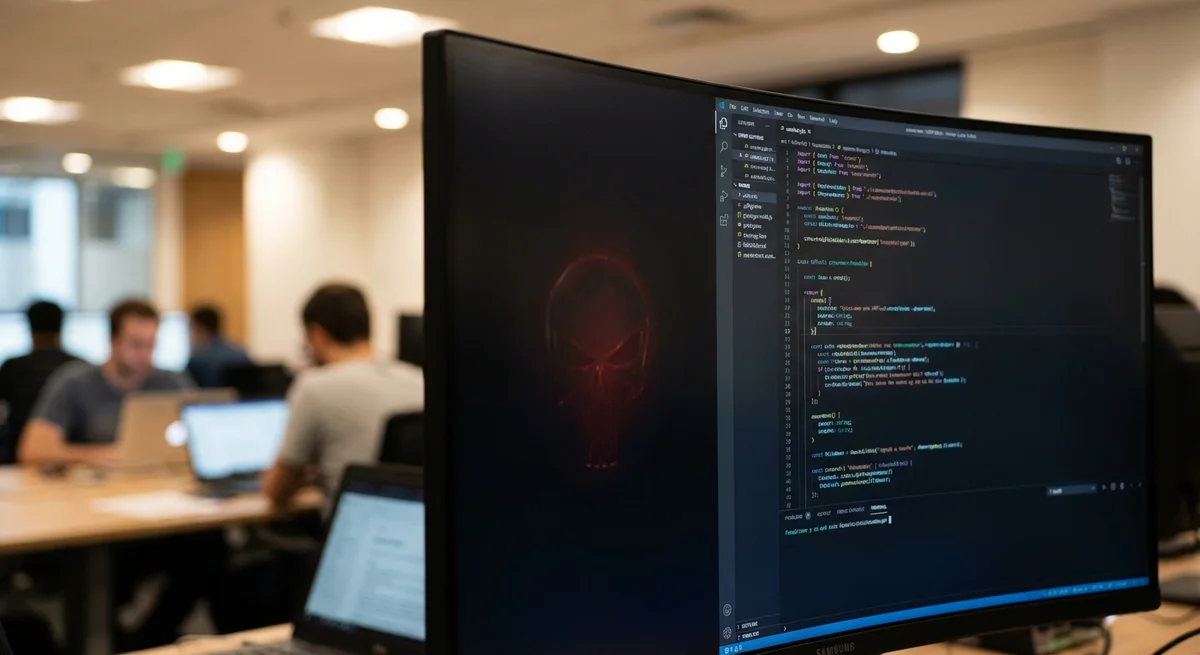
Imagine building a digital fortress, then leaving the key under the doormat simply because the key carries a tag reading "AI-enhanced." That is essentially what happened to 1.5 million Visual Studio Code users, who willingly installed malware on their work machines. The situation reads like a classic cyberpunk scenario: hackers exploit our obsession with artificial intelligence to break into systems from the inside, and they do it with great elegance. While the industry debates whether AI will replace programmers, the real threat came from the direction least expected: Microsoft's official extension marketplace.
Visual Studio Code stopped being a mere text editor long ago and has become a full-fledged operating system for developers. We trust the VSCode marketplace the way we trust the App Store or Google Play, assuming that a company on Microsoft's scale performs at least a basic audit of what reaches the storefront. Reality turned out to be harsher. Two extensions disguised as useful AI tools for writing code did not just sit in the store: they were actively promoted to the top, collecting hundreds of thousands of downloads. The irony is that developers, who in theory should be the most vigilant users, proved to be the easiest prey.
The attack mechanics were painfully simple, yet effective. The extensions offered "smart" autocompletion and refactoring help, which in the era of mass enthusiasm for Copilot and Claude looks perfectly natural. But under the hood, these tools were doing something else entirely: they scanned the system for access tokens, API keys and confidential code fragments, then neatly packaged the haul and sent it to servers linked to Chinese cyber groups. This is not just password theft. It is access to the intellectual property of hundreds of companies and a potential way to plant backdoors in their own products.
Why does this matter right now? We are in the "gold rush" phase of AI tooling. Dozens of new plugins appear every day, promising to speed up coding tenfold. In the rush, critical thinking takes a back seat. Developers install extensions without checking the author, reading reviews or examining the permissions the software requests. Hackers understand this psychology well: add the word AI or GPT to a name, and downloads grow exponentially while vigilance drops to zero.
Microsoft is once again at the center of a supply chain security scandal. This is not the first time junk or malware has turned up in the VSCode Marketplace, but a scale of 1.5 million systems is no longer a random mistake. It is a systemic failure. The problem is that the marketplace's automated checks are easily bypassed through code obfuscation or delayed loading of the malicious payload. If the company does not change its approach to verifying extensions, VSCode will turn from a convenient tool into the main security hole of any technology company.
This story is a cold shower for anyone used to trusting "official" sources. It is a reminder that in software there is no such thing as absolute security, especially when third-party add-ons are involved. While we wait for AI to start writing flawless code, hackers are already using AI as the perfect bait for the people who write that code. And judging by the number of victims, the strategy works flawlessly.
Bottom line: Trust in marketplaces is an illusion, and now 1.5 million people will pay for that illusion. Are you ready to check your list of extensions right now?
- Nov 2, 2026Bun creator uses Claude Code to port 750K lines from Zig to Rust in 11 days
- Nov 2, 2026mcp-linter finds 18 undescribed parameters in Anthropic's filesystem server
- Nov 2, 2026The Verge reviewer builds a $50 Meta Muse Charm alternative with Claude Code
- Nov 2, 20268 Skills for video in Claude Code: from 244 pixel effects to rough-cut editing
Test Frontier LLMs & Autonomous Agents in One Workspace
Run Claude Opus 5.5, GPT-6, Gemini 3.1, and DeepSeek side-by-side in Nomad AI (nomadnet.ai) — unified model routing, deep research, and multimodal workflows under one subscription.
The AI world, distilled — once a week
Seven stories that actually mattered, hand-picked. No noise, no reposts, no press releases.
Done! Check your inbox for a confirmation.