OpenAI poaches researchers from Thinking Machines Lab: what is going on?
OpenAI plans to recruit more researchers from Thinking Machines Lab after hiring two of its co-founders. The move would strengthen OpenAI's position in AI, but it may weaken Thinking Machines Lab. Details are in the article below.
AI-processed from Wired; edited by Hamidun News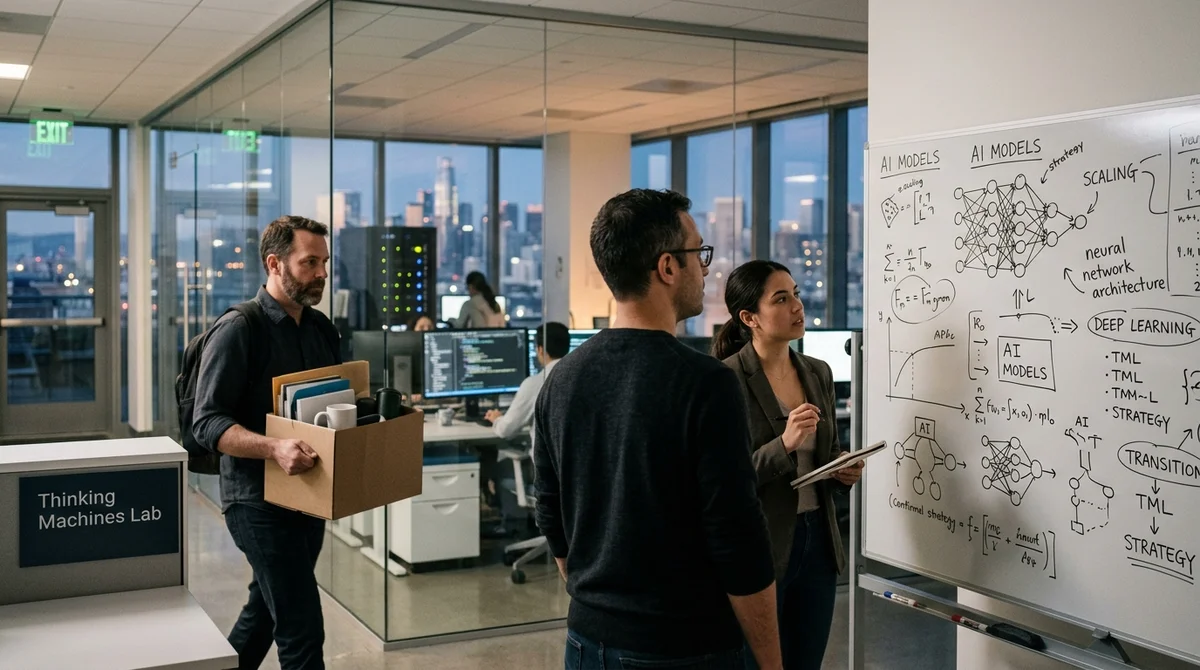
A new battle for talent is heating up in artificial intelligence. OpenAI, one of the industry's leaders, keeps expanding its team aggressively, and this time Thinking Machines Lab, known for its cutting-edge research, is in its sights. According to a source familiar with the situation, OpenAI plans to lure even more researchers away from Thinking Machines Lab, following its recent hiring of two of the lab's co-founders.
Thinking Machines Lab is a research group developing new approaches to artificial intelligence, including neuromorphic computing and symbolic AI. The lab is known for its innovative approach and has attracted many talented scientists. The departure of two co-founders to OpenAI was a serious blow to Thinking Machines Lab, and now that OpenAI plans to recruit even more researchers, the lab's future looks uncertain.
Why is OpenAI so interested in Thinking Machines Lab's scientists? The answer is simple: talent and experience. OpenAI wants to strengthen its position in artificial intelligence, and recruiting the best minds is one of the key ways to do it. The lab's scientists have unique knowledge and experience that could be very valuable to OpenAI. OpenAI is also likely interested in the technologies and projects Thinking Machines Lab is working on.
The move has several important consequences. First, it may further weaken Thinking Machines Lab, which would hurt the diversity of AI research. Second, it would reinforce OpenAI's position as the dominant player in the industry, which may lead to market monopolization and limit innovation. Third, it highlights the fierce competition for AI talent, which may drive up salaries and other perks for specialists.
Overall, poaching scientists from Thinking Machines Lab is a strategic step by OpenAI to strengthen its position in artificial intelligence. But it also has negative consequences that must be taken into account. It matters that competition for talent does not lead to market monopolization and limited innovation. Research diversity needs to be sustained, and conditions created for new players in the industry to grow.
The situation also raises important questions about the ethics of poaching employees and how companies should compete for talent. Competition drives innovation, but it should not lead to unfair practices or violations of employees' rights. New rules and norms governing competition for talent in AI may need to be developed.
In conclusion, OpenAI continues to expand its team aggressively, aiming for dominance in AI. This will undoubtedly reshape the industry landscape, and we can only watch how the continuing fight for talent and innovation unfolds.
- Nov 2, 2026Arca gives AI agents finance tasks lasting up to 10 days, but leaves the trades to humans
- Nov 2, 2026Meta's Muse assistant keeps dossiers on loved ones and gets root on Ubuntu by default
- Nov 1, 2026Local models lose to Opus and Codex: 0.21 on a MacBook versus 1.00 for Codex
- Nov 1, 2026Kimi scores 96.2% on a 1C database analytics test and emerges as a fallback if Claude access is blocked
Test Frontier LLMs & Autonomous Agents in One Workspace
Run Claude Opus 5.5, GPT-6, Gemini 3.1, and DeepSeek side-by-side in Nomad AI (nomadnet.ai) — unified model routing, deep research, and multimodal workflows under one subscription.
The AI world, distilled — once a week
Seven stories that actually mattered, hand-picked. No noise, no reposts, no press releases.
Done! Check your inbox for a confirmation.