AI Earbuds: Why You're Buying Regular Bluetooth Headsets at Future Prices
Marketers are trying to sell us an old idea wrapped in new packaging again. This time, our ears are in the crosshairs. You've surely seen headlines about "the world's first AI earbuds," promising instant translation, a personal assistant, and almost mind-reading. But if you take off the rose-tinted glasses and remove the ear cushions, reality turns out to be much more mundane: we're being offered ordinary Bluetooth headsets that simply relay your voice to your smartphone, and that to the cloud. This isn't innovation, it's just another interface for ChatGPT, for which they're charging a couple of extra hundred dollars. This is a classic case of "empty hype." After Humane AI Pin and Rabbit R1 spectacularly failed to replace the smartphone, the industry is frantically searching for a new form factor.
AI-processed from ZDNet AI; edited by Hamidun News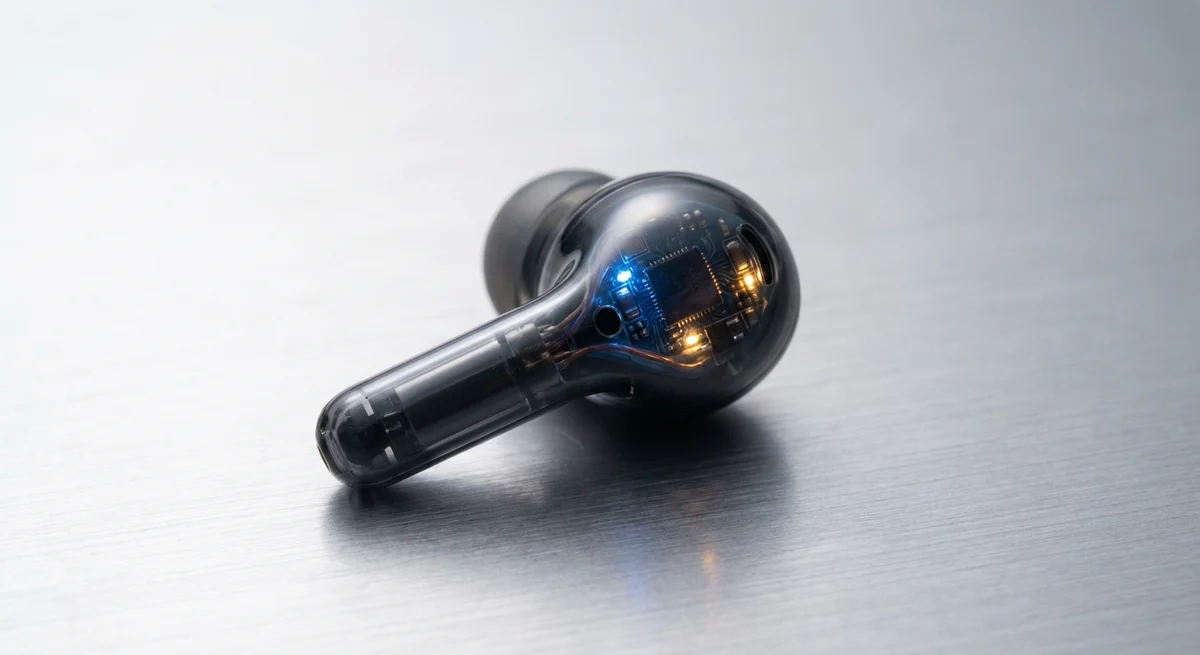
Marketers are trying to sell us an old idea wrapped in new packaging again. This time, our ears are in the crosshairs. You've surely seen headlines about "the world's first AI earbuds," promising instant translation, a personal assistant, and almost mind-reading. But if you take off the rose-tinted glasses and remove the ear cushions, reality turns out to be much more mundane: we're being offered ordinary Bluetooth headsets that simply relay your voice to your smartphone, and that to the cloud. This isn't innovation, it's just another interface for ChatGPT, for which they're charging a couple of extra hundred dollars.
This is a classic case of "empty hype." After Humane AI Pin and Rabbit R1 spectacularly failed to replace the smartphone, the industry is frantically searching for a new form factor. Earbuds seem like the perfect candidate: we wear them for hours anyway, they have direct access to our hearing and voice. But the current generation of "smart" audio devices are merely a "dumb" terminal, not an independent product. Until real computational power appears inside a small body, all of this will remain an expensive toy for those who like to buy promises instead of features.
The first and most important thing missing for a real breakthrough is local data processing. Today, when you ask your earbuds to translate a phrase, the signal travels a long route: from the microphone to your phone, from the phone to a server in California, gets processed there, returns to the phone, and only then reaches your ear. This 2-3 second delay completely kills any live conversation. For AI earbuds to become a reality, they need a built-in neural processor (NPU) capable of handling basic translation and speech recognition tasks directly "on board," without internet and unnecessary intermediaries.
The second problem is contextual awareness. A true AI assistant in your ear shouldn't wait for you to press a button or say a wake word. It should understand where you are and what's happening around you. If I'm walking through a train station in Tokyo, my earbuds should automatically start translating the announcer's broadcasts, understanding that I'm a foreigner in this environment. Modern sensors allow tracking head position and even gaze direction, but software still can't link this data with AI models in real time. We get a "smart" device that is actually blind to the surrounding world.
The third barrier is the interaction interface. Constantly talking to yourself on the street is questionable pleasure that still looks strange. We need more subtle ways to control it: gestures, jaw movement tracking, or even reading neural impulses. As long as control boils down to "tap three times and wait," this isn't magic, it's an annoying barrier. Plus, there's a huge range of privacy issues. If earbuds constantly listen to the world to "understand context," are we ready for every word we say to be analyzed by algorithms?
We shouldn't forget about the energy paradox either. Attempting to run a complex language model directly in the earbuds is the fastest path to a dead battery in thirty minutes. Modern lithium-ion batteries in TWS earbuds have extremely limited capacity. For AI earbuds to work at least a full workday, engineers will need a breakthrough either in neural chip energy efficiency or in battery chemistry. So far we're seeing only compromises: either the device works for a long time, but it's "dumb," or it tries to be smart, but requires constant charging.
Why don't tech giants like Apple or Sony rush to release their "AI-only" earbuds? Because they understand: the current chip architecture doesn't allow packing powerful AI into a compact body without overheating. We're at the same point smartphones were before the iPhone — the technologies exist, but they're not assembled into a single, working product without crutches. We don't need another microphone for a cloud chatbot; we need a device that sees and hears the world the way we do, and helps us navigate it in real time.
The bottom line: Will 2025 be the year real NPUs appear in earbuds, or will we continue buying "cloud crutches" in beautiful packaging?
Want to stop reading about AI and start using it?
AI News is a curated feed of AI/tech news. Hamidun Academy teaches you to use AI systematically in your work.
The AI world, distilled — once a week
Seven stories that actually mattered, hand-picked. No noise, no reposts, no press releases.
Done! Check your inbox for a confirmation.