Dr. YouTube: Google AI Overviews Trusts Vloggers More Than Doctors
German researchers have found a worrying pattern in Google AI Overviews. When answering health questions, the system, which is supposed to deliver vetted medical information, links to YouTube more often than to authoritative scientific resources or clinics such as Mayo Clinic. The tool reaches about 2 billion users a month, which makes the situation a stalemate. Google promised "reliability", yet in practice the search engine prioritizes content from its own video platform. This is not just a question of traffic but a real health risk. Advice from video bloggers is far from always medically checked, yet the AI delivers it in the tone of a confident expert.
AI-processed from Guardian; edited by Hamidun News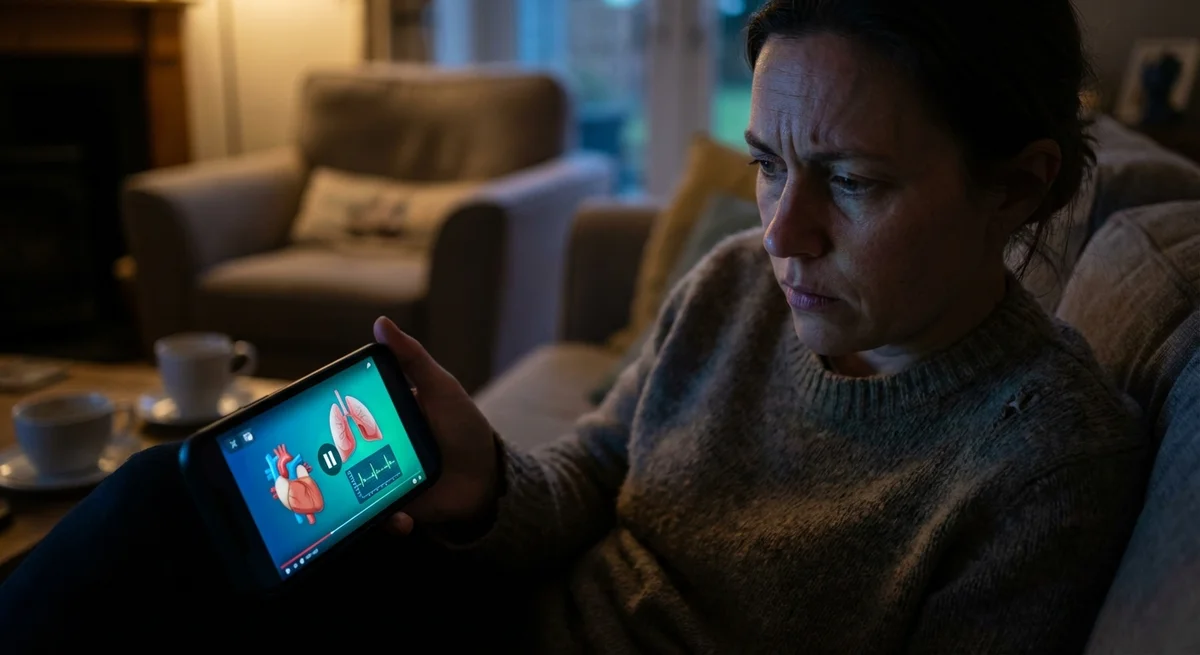
Imagine you are trying to find the cause of sudden chest pain, and instead of an ECG, your doctor suggests watching a popular lifestyle blogger's latest vlog. It sounds like an absurd scene from a near-future TV series, but for Google users it is becoming everyday reality. A new study by German specialists has shed light on how AI Overviews actually works, and the results are cause for concern, to say the least. It turns out that when questions of life and death are at stake, Google's artificial intelligence prefers to cite YouTube over specialized medical portals.
Context matters a great deal here. After AI Overviews launched, Google faced a wave of criticism over bizarre advice such as adding glue to pizza. Management then assured everyone that for "sensitive" topics such as medicine or finance, the AI would use only the most reliable, verified sources, on the level of the CDC or Mayo Clinic. The real data says otherwise. In its drive to keep users inside its own ecosystem, Google seems to have forgotten about safety. The researchers found that links to the video platform appear in AI summaries significantly more often than articles from peer-reviewed medical journals.
The problem is not only that Google promotes its own service. The core trouble lies in the nature of YouTube itself. It is a platform where content is created for views and retained attention, not for diagnostic accuracy. A video can be well optimized for search queries and have millions of likes while still containing pseudoscientific nonsense. An AI model trained on this data cannot always tell a professional surgeon from an enthusiast of alternative medicine. As a result, the user gets a "confident" answer built on a clip that the algorithm judged relevant simply because it was popular.
Why is this happening now? Google is locked in a fierce battle for the search market with OpenAI and Perplexity. To avoid losing its audience, the company needs to deliver fast, visual, engaging answers. Text from a medical reference is dull and dry, while a YouTube video is a ready-made script that is easy to boil down to a short summary. Visual content is indexed better and is easier to consume, which makes it ideal fuel for generative AI. But when the health of two billion people is at stake, this kind of optimization starts to look like a game of roulette in which public well-being is the stake.
Moreover, Google's strategy hits the entire industry of quality medical content. If AI takes facts from videos and presents them as its own, users have no reason to visit the sites of professional communities. In the long run, quality resources will simply be left without the budget to produce verified content, and the information space will end up filled with social media "experts". We risk a situation in which the only source of knowledge about disease is algorithmic selections driven by hype rather than evidence-based medicine.
The bottom line: Google has chosen to keep traffic inside its own ecosystem at the expense of data quality. Are we ready to trust our health to an algorithm for which a video's popularity matters more than a doctor's diploma?
- Nov 2, 2026Karpathy builds a YouTube clone with 6454 videos from Hacker News recommendations in two hours
- Nov 2, 2026Karpathy used Claude to build HackerTube from 6,454 videos recommended on Hacker News
- Nov 2, 2026Anthropic needs to grow revenue 32% a year to cover $850 billion in contracts
- Nov 2, 2026Bun creator uses Claude Code to port 750K lines from Zig to Rust in 11 days
Test Frontier LLMs & Autonomous Agents in One Workspace
Run Claude Opus 5.5, GPT-6, Gemini 3.1, and DeepSeek side-by-side in Nomad AI (nomadnet.ai) — unified model routing, deep research, and multimodal workflows under one subscription.
The AI world, distilled — once a week
Seven stories that actually mattered, hand-picked. No noise, no reposts, no press releases.
Done! Check your inbox for a confirmation.