California orders startup Rek to shut down human-vs-robot fights
The California State Athletic Commission has sent the startup Rek a cease-and-desist letter. The trigger was a September 18 fight in which Frankie LaPenna faced a humanoid robot controlled by a remote operator through a VR system. Rek calls itself a league of humanoid robot fighters. Judging by its appearance, the machine is built on an EngineAI platform, but with a "Terminator"-style head. The New York Times was the first to report the letter. • The fight took place on September 18; the letter became public on October 8. • The robot is not autonomous: a human controlled it through VR. • The regulator stepped in before any rules for such shows existed.
AI-processed from The Verge; edited by Hamidun News
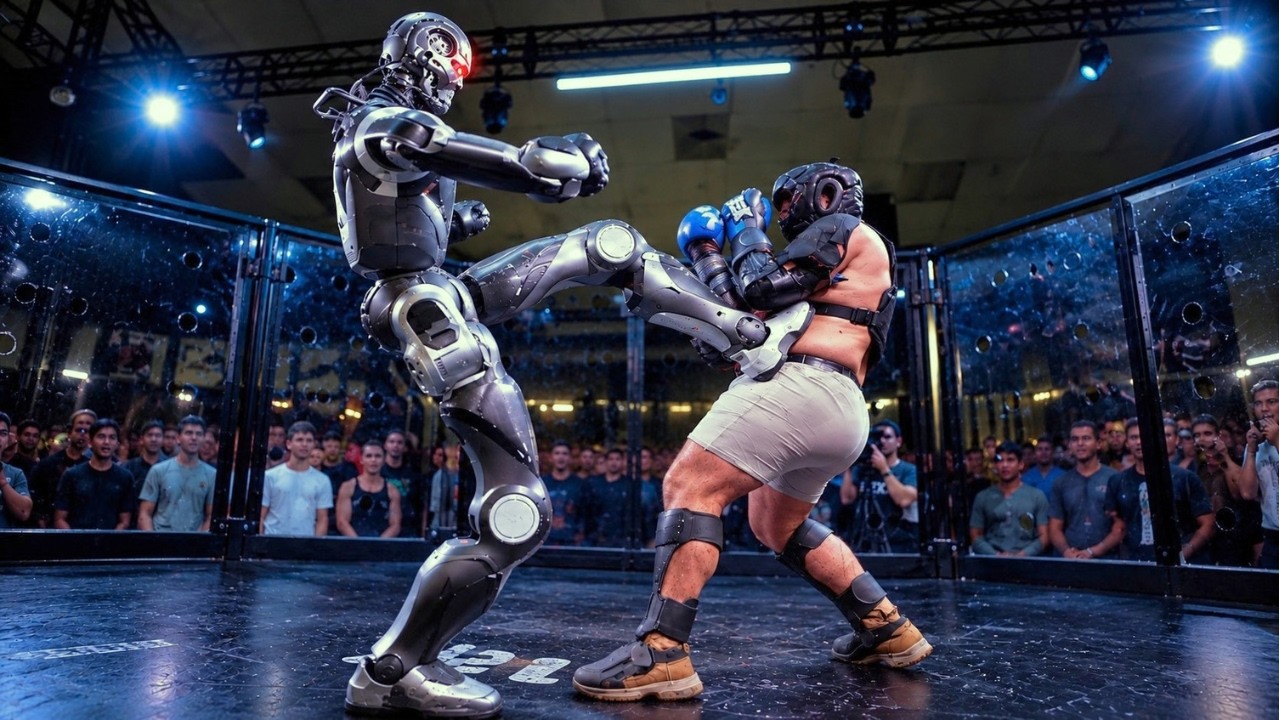
The California State Athletic Commission has sent the startup Rek a cease-and-desist letter. The fight between a human and a humanoid robot took place on September 18, and The New York Times reported the regulator's response on October 8, roughly three weeks later. It is one of the first cases of a government body publicly rebuking the organizer of a show that puts a humanoid machine in a cage against a human.
What happened in the cage
Frankie LaPenna fought the robot. Rek owns the machine, and a human controlled it through what the NYT describes as a "remote virtual reality system." The robot made no decisions of its own: the operator, wearing a headset, was essentially fighting with its hands.
On its website, Rek calls itself a "league of humanoid robot fighters." Judging by its appearance, the body comes from China's EngineAI, topped with a "Terminator"-style head. That makes sense for spectacle, but for a regulator it is one more reason to ask what exactly was happening in the ring. The full fight was published on YouTube under the title "First Human VS. Robot Fight in History."
What is known for certain
- Fight date: September 18, 2026.
- Participants: Frankie LaPenna vs. a Rek humanoid robot.
- Control: remote; the operator worked through a VR system.
- Platform: by outward appearance, an EngineAI robot with a custom head.
- Regulator's response: a cease-and-desist letter from the California State Athletic Commission.
- Source of the news: The New York Times, as relayed by The Verge on October 8.
The available portion of The Verge's article cuts off at a comment from Rek's CEO, so the wording of the commission's complaints and the company's response are not included here.
Why the commission stepped in
Athletic commissions in the US license professional combat sports: they approve fighters, require medical checks, and set rules for bouts. An organizer who sells or broadcasts a fight as a sporting event falls within their remit. This is our interpretation; the official grounds are not stated in the available excerpt.
The main question the regulator has no ready answer for concerns the human fighter's safety. In boxing and MMA, the rules are built around comparable fighters, weight classes, and protective protocols. A humanoid weighing dozens of kilograms with a metal body has entirely different strike mechanics. On top of that, an operator in VR does not feel pain and does not tire the way a human does. There is also the question of liability: if a fighter is injured, who is responsible — the robot's owner, the operator, or the platform's manufacturer?
What companies and investors should do
For robotics startups, the story shows something simple: spectacular demos involving people quickly move out of the realm of technology and into the realm of sports and safety regulation. If you are planning public shows with physical contact, before announcing them you should:
- find out whether the local regulator considers the event professional sport;
- request a written position from the commission or from lawyers in advance;
- arrange insurance and liability waivers for participants;
- state clearly whether the robot is autonomous or operator-controlled, so as not to mislead the audience.
Investors should watch how Rek responds to the letter: whether it moves its fights to another jurisdiction, changes the format, or challenges the demand. For now this is a single precedent, but precedents like this are what set the boundaries for the entire robot-entertainment industry.
- Oct 27, 2026Work Agents: 16 Researchers Build a Single Coordinate System for AI Agents
- Oct 27, 2026OpenAI Releases GPT-6.1 Terra: Astra-Level Computer Use at 1/10 the Price
- Oct 27, 2026DingTalk Open-Sources DWS and Brings 1000+ AI Agent Commands to HarmonyOS PC
- Oct 27, 2026OpenAI Releases GPT-6.1 Terra: Tokens Cost Half as Much, Hallucinations Drop From 88% to 38%
Key Questions Answered
What happened in the cage?
Frankie LaPenna fought the robot. Rek owns the machine, and a human controlled it through what the NYT describes as a "remote virtual reality system." The robot made no decisions of its own: the operator, wearing a headset, was essentially fighting with its hands. On its website, Rek calls itself a "league of humanoid robot fighters." Judging by its appearance, the body comes from China's EngineAI, topped with a "Terminator"-style head. That makes sense for spectacle, but for a regulator it is one more reason to ask what exactly was happening in the ring. The full fight was
What is known for certain?
Fight date: September 18, 2026. Participants: Frankie LaPenna vs. a Rek humanoid robot. Control: remote; the operator worked through a VR system. Platform: by outward appearance, an EngineAI robot with a custom head. Regulator's response: a cease-and-desist letter from the California State Athletic Commission. Source of the news: The New York Times, as relayed by The Verge on October 8. The available portion of The Verge's article cuts off at a comment from Rek's CEO, so the wording of the commission's complaints and the company's response are not included here.
Why the commission stepped in?
Athletic commissions in the US license professional combat sports: they approve fighters, require medical checks, and set rules for bouts. An organizer who sells or broadcasts a fight as a sporting event falls within their remit. This is our interpretation; the official grounds are not stated in the available excerpt. The main question the regulator has no ready answer for concerns the human fighter's safety. In boxing and MMA, the rules are built around comparable fighters, weight classes, and protective protocols. A humanoid weighing dozens of kilograms with a metal body
Delegate Deep Research, Coding & Workflows to an AI Agent
Deploy autonomous multi-step execution with NomadNet Agent (agent.nomadnet.ai) — automated web research, data synthesis, code generation, and complex task orchestration.
The AI world, distilled — once a week
Seven stories that actually mattered, hand-picked. No noise, no reposts, no press releases.
Done! Check your inbox for a confirmation.