Children and AI: how to protect youth from new threats?
Government consultations on banning social media for those under 16 reflect widespread concern about digital harm. A team of specialists in neuroscience, ethics and society (Neurosec) from Oxford University argues that such research should also extend to the question of whether young people should be given access to generative AI. In the case of social media, ministers and commentators have focused on features such as addictive feeds and age restrictions; work by our research group with young people shows that we should also consider such considerations – among many others – in the era of AI-driven technologies. Certainly, concerns about mental health, social comparison, and addictive design are clearly applicable when we think about young people's online experience, but the digital world of 2026 includes much more than Instagram and TikTok.
AI-processed from Guardian; edited by Hamidun News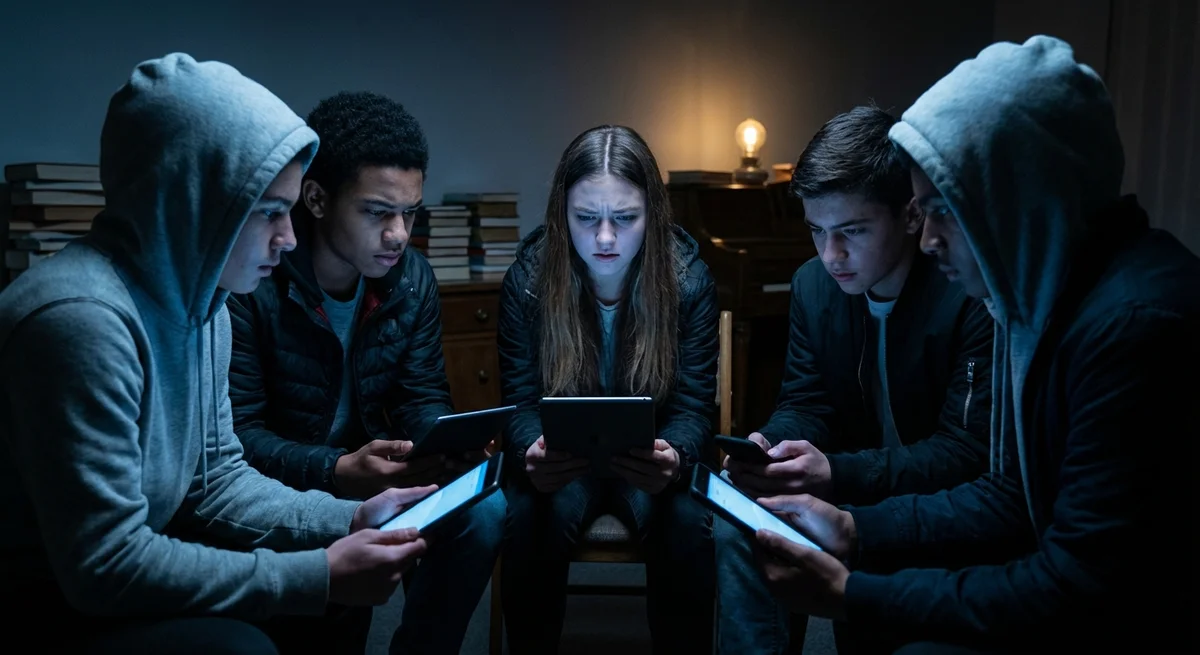
Government consultations on banning social media for those under 16 reflect widespread concern about digital harm. A team of specialists in neuroscience, ethics and society (Neurosec) from Oxford University argues that such research should also extend to the question of whether young people should be given access to generative AI.
In the case of social media, ministers and commentators have focused on features such as addictive feeds and age restrictions; work by our research group with young people shows that we should also consider such considerations – among many others – in the era of AI-driven technologies. Certainly, concerns about mental health, social comparison, and addictive design are clearly applicable when we think about young people's online experience, but the digital world of 2026 includes much more than Instagram and TikTok. AI-powered chatbots are increasingly present in the lives of young people in various fields, from education to communication.
Adolescence is a critical stage for the development of social understanding, sense of identity, and so on. This raises urgent questions such as: at what age should young people have access to AI that simulates friendship or intimacy? What precautions are necessary to protect young minds from manipulation and addiction based on artificial "connection"?
The impact of AI on children and adolescents is a new and little-studied area. However, it is already clear that AI can have both positive and negative impacts on their development. On the one hand, AI can provide access to educational resources, help develop creative abilities, and even offer support in solving personal problems. On the other hand, AI can promote the development of addiction, manipulate young minds, and create an illusion of reality, which can lead to problems with social adaptation.
It is important to understand that AI is just a tool, and its impact on children and adolescents depends on how it is used. Therefore, it is necessary to develop clear rules and guidelines for the use of AI in education and other areas related to children. It is also necessary to conduct research to better understand how AI affects the development of young people.
Thus, protecting children and adolescents from potential threats related to generative AI is a complex and multifaceted task. It requires joint efforts from governments, educational institutions, researchers, and parents. Only in this way can we ensure safe and beneficial use of AI for the younger generation.
In conclusion, it is important to remember that technology develops very quickly, and we need to constantly adapt our approaches to protecting children in the digital world. Generative AI is just one of many new technologies that can pose a threat to young people, and we must be prepared to deal with these threats.
Need AI working inside your business — not just in your newsfeed?
I build production AI for companies — custom CRM, internal tools, autonomous agents, workflow automation. Owned by you, shaped to your process, no per-seat tax. Built by Zhemal Khamidun, CPO of AlpinaGPT (AI platform, 6,000+ users).
The AI world, distilled — once a week
Seven stories that actually mattered, hand-picked. No noise, no reposts, no press releases.
Done! Check your inbox for a confirmation.