Suzhou Bets on Bringing AI Into Science and Manufacturing
Suzhou wants to become a leader in AI by integrating it into scientific research, technology development, engineering and manufacturing. The plan calls for an innovation ecosystem covering AI chips, algorithms, platforms and applications, along with the development of specialized models. The city is also aiming to become a leading hub for developing and applying AI in China.
AI-processed from 36Kr (36氪); edited by Hamidun News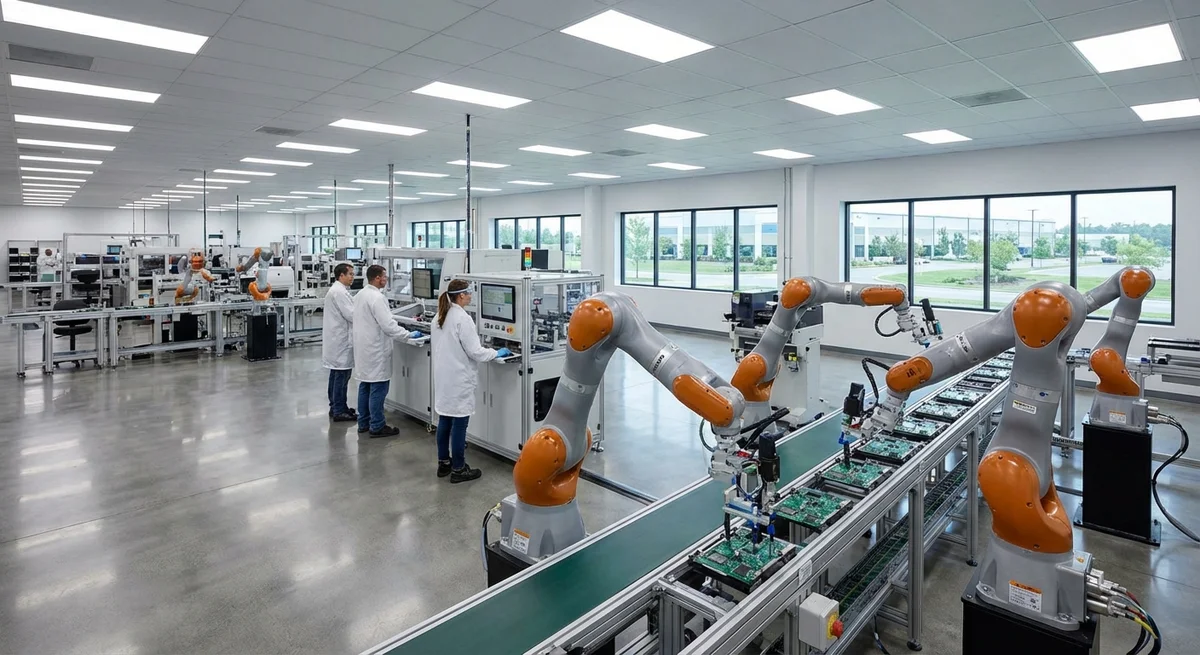
Suzhou authorities have announced plans for a large-scale rollout of artificial intelligence (AI) across all key sectors of the economy and science, as part of the city's socio-economic development program for the 15th Five-Year Plan (""). The initiative aims to build an integrated ecosystem in which AI plays a central role in scientific research, technology development, engineering implementation and, of course, the manufacture of finished products. The move is part of the broader "Digital Suzhou" initiative and seeks to take advantage of national AI development programs, such as the creation of a new-generation AI experimental development zone and a pilot zone for applying AI to new industrialization.
Suzhou wants to become China's leading center for developing and applying AI technologies.
A key element of the plan is a national testing base for AI applications in manufacturing. It will let companies develop and test new AI-based solutions in real-world conditions, speeding up adoption and improving production efficiency. Particular attention goes to specialized (vertical) AI models built to solve specific tasks in various industries.
The program calls for active development of the entire AI value chain, from chip and algorithm development to platforms and applications. This would let Suzhou build a comprehensive ecosystem that concentrates all the resources needed to develop and deploy AI. Special emphasis is placed on producing AI chips and quantum technologies, which the city expects will put it in a leading position in these promising fields.
The strategy has far-reaching implications for Suzhou's industry and for the Chinese economy as a whole. AI adoption is expected to raise productivity significantly, cut costs and create new products and services. It would also strengthen Suzhou's standing as one of China's leading centers of innovation and technology. If it succeeds, the initiative could become a model for other regions of the country seeking faster growth through AI.
The potential risks of widespread AI adoption need to be taken into account, however, including ethics, security and employment. AI development must go hand in hand with solving these problems so that the technology serves society. Only then can the potential of AI be fully realized and a sustainable, prosperous economy built.
In short, Suzhou's ambitious plans to integrate AI into science and manufacturing are an important step toward the digital transformation of the Chinese economy. The initiative's success will depend on the city's ability to build a favorable ecosystem for AI development, resolve potential problems and ensure that the technology serves society.
Test Frontier LLMs & Autonomous Agents in One Workspace
Run Claude Opus 5.5, GPT-6, Gemini 3.1, and DeepSeek side-by-side in Nomad AI (nomadnet.ai) — unified model routing, deep research, and multimodal workflows under one subscription.
The AI world, distilled — once a week
Seven stories that actually mattered, hand-picked. No noise, no reposts, no press releases.
Done! Check your inbox for a confirmation.